
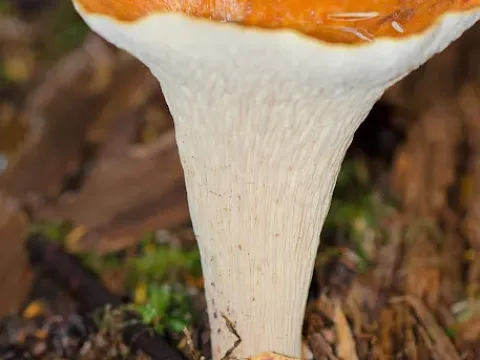
Scaly vase chanterelle
Gomphus floccosus
The scaly vase chanterelle (Gomphus floccosus), also known as Turbinellus floccosus, is a fungus in the Gomphaceae family. While primarily recognized in mycology as a saprotrophic species that breaks down organic matter, it can exhibit pathogenic characteristics in weakened woody plants.
What the section contains
Scaly vase chanterelle
The pathogen reproduces via spores, which are disseminated by wind or soil moisture. The fungus develops a dense mycelium capable of penetrating wood tissues and degrading structural compounds like lignin, effectively causing decay in the plant's root or basal sections.
Biological development of the fungus is highly sensitive to environmental parameters. It thrives in moderate temperatures and high humidity, which facilitate the production of its signature trumpet-shaped, bright orange fruit bodies with scaly caps.
In silviculture, the fungus is often studied due to its ability to inhabit the root collars of conifers. While it is not a primary parasite, its presence indicates significant environmental stress or existing damage within the plant's root zone.
Modern plant pathology considers this organism as an indicator species. Its presence in a nursery or garden suggests that current sanitation protocols may be insufficient to manage decaying wood debris that fuels fungal proliferation.
The most distinctive symptom is the appearance of vibrant orange, vase-shaped fruit bodies near the base of the plant. These clusters are often seen in late summer or autumn and are clear indicators of extensive mycelial activity in the soil.
Internal symptoms involve the formation of white rot within the wood. The affected tissue becomes soft and fibrous, losing its mechanical strength. Upon sectioning, one may observe dark "zoning lines" that delineate the advance of the fungal mycelium.
Visible signs on the plant foliage include yellowing, chlorosis, and general wilting. Because these symptoms mirror those of nutritional deficiencies or other root infections, a detailed inspection of the root collar is necessary for accurate diagnosis.
Below the soil level, the bark at the root collar often detaches easily from the wood. Beneath this layer, thick white fungal cords or mats of mycelium may be present, actively feeding on the cambium and underlying tissues.
Coniferous trees frequently react to the infection by exuding excessive resin near the ground level. While this is an attempt by the tree to wall off the infection, it is often a sign that the pathogen has already gained a significant foothold.
High humidity and soil moisture are essential for the survival and spread of the fungus. Areas with poor drainage, such as depressions or heavy clay soils, create the most favorable conditions for spore germination and colonization.
The presence of decaying organic matter, such as old stumps, woody debris, or fresh bark mulch, provides an ideal substrate for the fungus. It uses these resources to build up enough biomass to eventually attack healthy, yet stressed, root systems.
Shaded environments with limited air circulation are prone to higher infection rates. The lack of direct sunlight keeps the soil and root zone constantly moist, preventing the environmental desiccation needed to inhibit the fungus.
Physical injuries to the lower trunk or roots serve as entry points for the pathogen. Damage caused by landscaping equipment, lawnmowers, or burrowing pests creates immediate access for the mycelium to reach the internal vascular tissues.
Low soil aeration, often caused by compaction, limits the root's ability to respire and maintain health. This metabolic stress makes the plant far more susceptible to secondary fungal pathogens, including the scaly vase chanterelle.
The primary impact of the fungus is the destruction of root tissue, which compromises the tree's ability to transport water and nutrients. This results in progressive dieback, crown thinning, and eventual mortality of the affected plant.
Root system decay significantly reduces the structural stability of the plant. Infected trees may suffer from windthrow during storms, posing a danger to surrounding property and infrastructure even if the crown appears relatively healthy.
The long-term persistence of the mycelium in the soil makes the area problematic for replanting. Sensitive species introduced to an infested patch are at high risk of rapid infection as the fungal colony continues to consume remaining organic matter.
In nursery settings, the fungus causes major economic losses. Infected batches must often be destroyed to prevent the spread of the pathogen through nursery stock, which is a major concern for professional foresters and plant growers.
Increased vulnerability to secondary pests is a critical secondary harm. Insects such as bark beetles are attracted to the chemical signals released by trees weakened by fungal decay, leading to rapid infestations that exacerbate the plant's decline.
The primary defense is rigorous sanitation. Removing stumps, deadwood, and fallen branches from the garden or nursery prevents the buildup of the fungal substrate required for the pathogen's growth and survival.
Applying systemic fungicides containing copper or other active compounds can help control outbreaks in their early stages. Soil drenches are the preferred application method to reach the root zone where the mycelium resides.
Improvement of soil aeration and drainage is vital. Implementing proper landscaping techniques to prevent water pooling around the tree base is key to creating a hostile environment for the fungus.
All gardening tools should be disinfected after use to prevent cross-contamination. Any accidental damage to the trunk or roots must be treated immediately with protective pruning sealants or fungicides to prevent infection.
Maintaining high plant vigor through balanced fertilization and the use of biostimulants improves the plant's natural resistance. Healthy trees are better equipped to produce natural defense compounds that limit fungal colonization.