
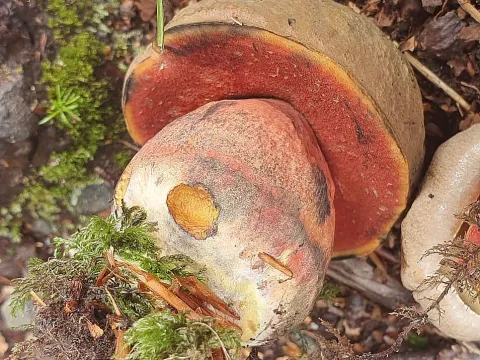
Scarletina Bolete
Sutorius luridiformis
The Sutorius luridiformis, commonly known as the Scarletina Bolete, is not a plant disease or a pathogen. It is a well-known mycorrhizal fungus that forms a beneficial symbiotic relationship with the root systems of various tree species.
What the section contains
Scarletina Bolete
Unlike parasitic fungi that cause plant diseases, this species does not damage or decay tree tissues. It works in partnership with the host tree, extending its root reach and improving nutrient absorption, specifically phosphorus and minerals.
In agricultural and forestry management, identifying this species as a disease agent is a misclassification. It acts as a vital partner for healthy plant growth and soil ecosystem stability.
This fungus is strictly associated with trees in deciduous forests, particularly oaks and beeches. It relies on the tree to supply carbon hydrates produced through photosynthesis, providing a mutualistic exchange rather than infection.
The organism does not produce toxins or enzymes that degrade living plant matter, making it a harmless and ecologically valuable inhabitant of forest soils.
Scarletina Bolete requires specific environmental conditions to fruit, including moderate to high soil humidity and temperatures ranging from 15 to 25 degrees Celsius during the growing season.
It prefers acidic to neutral soils enriched with decaying organic matter. The fungus is highly sensitive to soil compaction and pollution, often disappearing from areas with disturbed habitats.
Its life cycle is closely linked to the root health of its tree host. A robust tree root system ensures a steady supply of nutrients to the mycelium, allowing the fungus to thrive and produce its distinctive dark-colored caps.
Spore dispersal is facilitated by wind and local wildlife. Once the spores land in a suitable forest site, they germinate and search for a host root to establish a new mycorrhizal connection.
Sustainable forest management practices that maintain leaf litter and natural soil structure are sufficient to support the presence of this fungus, as it requires no protective measures against diseases.