
Naucoria
Naucoria segestria
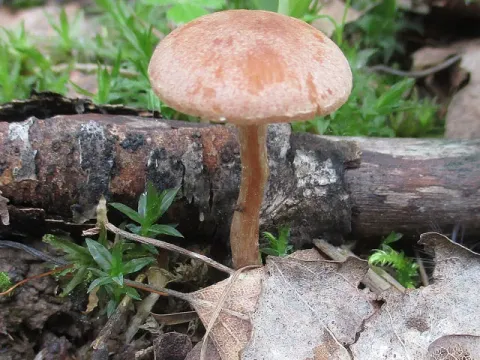
Naucoria segestria (modern taxonomy places this species in the genus Alnicola) is a gilled fungus belonging to the Hymenogastraceae family. It is primarily a wood-decaying fungus that acts as a saprotroph on soil or heavily decomposed organic matter.
What the section contains
Naucoria
In agronomy, its presence is often mistaken for a pathogenic infection. However, this species serves as a bio-indicator of high humidity and the presence of rotting organic matter in the root zone.
The fungus mycelium develops in the litter, breaking down cellulose and contributing to nutrient cycling in the ecosystem. It is not an obligate parasite capable of killing healthy trees.
Biologically, this species is closely associated with alder roots, forming mycorrhizal symbioses, which is why it is often observed in the vicinity of these tree species.
Reproduction occurs through spores, which are disseminated by wind and water, colonizing moist substrates rich in organic materials.
The primary sign of the fungus is the formation of fruiting bodies in the root zone of plants or directly on the damp soil nearby.
The caps of the mushrooms have a characteristic ochre or brownish color, often with a sticky surface, which is a distinguishing feature of Naucoria segestria.
The gills under the cap are a distinct rusty-brown color, which is caused by the maturation of spores during the autumn period.
The presence of the fungus is often accompanied by a specific mushroom odor in the root zone, which intensifies after heavy rainfall.
- Presence of fruiting bodies near tree trunks.
- Darkening and softening of plant residues in the soil.
- Increased moisture in the surface layer of the soil.
Fungal development is strictly limited by the moisture level of the substrate. Spore germination and mycelium growth require moisture levels above 60-70%.
Optimal temperature conditions for active fungal growth are in the range of +12 to +20 degrees Celsius.
The fungus prefers shaded areas where direct sunlight does not promote the rapid drying of the soil surface.
The presence of undecomposed wood, bark, or excessive leaf litter in the soil creates an ideal nutritional medium for fungal colonization.
The period of mass fruiting usually occurs in late summer and autumn, when high atmospheric humidity prevails.
This species is practically harmless to living, healthy crops, as it does not possess the enzymatic machinery to degrade living tree tissue.
The primary inconvenience lies in the accumulation of fungal biomass, which may compete with plants for mineral nutrients in the soil solution.
Indirect harm may manifest as the fungus acting as a signal for poor drainage or waterlogging, conditions that themselves inhibit plant root development.
In rare instances, the intensive development of saprotrophic fungi may contribute to root rot by creating a dense mycelial mat on the roots.
The economic impact of this fungus is minimal; it most often serves merely as a biological indicator of the site's condition.
Specialized chemical control against this fungus is unnecessary as it does not pose a serious threat to agricultural production.
The most effective preventive method is to improve site drainage to prevent water stagnation and reduce overall soil moisture.
It is recommended to clear the root zone of accumulations of plant debris, bark, and other organic waste on a regular basis.
Agrotechnical practices, such as regular soil cultivation and aeration, make the environment less suitable for the active growth of saprotrophic fungi.
If necessary, general-purpose fungicides can be used, though this is only justified in exceptional cases of total surface coverage by the fungus.