
Naucoria amarescens
Naucoria amarescens
Description
Symptoms
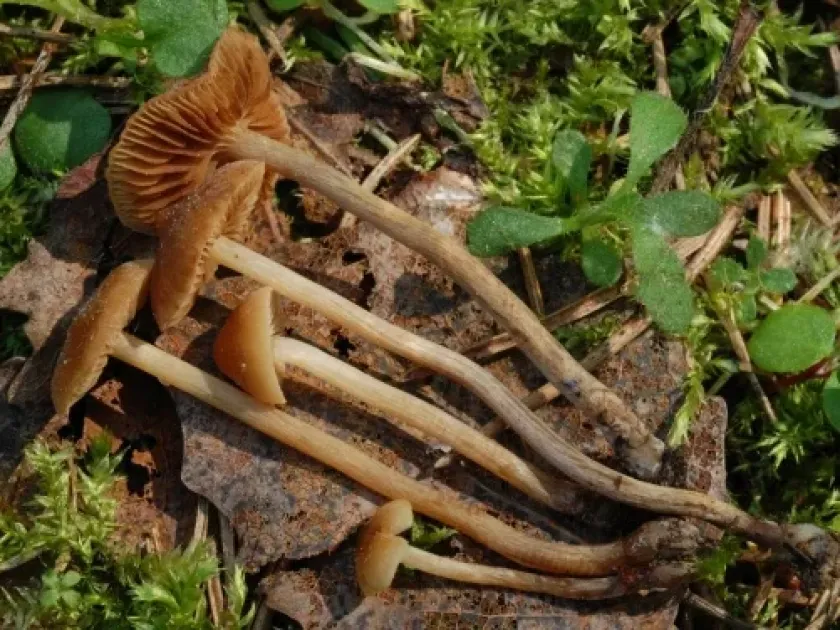
The primary indicators of Naucoria amarescens are its small fruit bodies that emerge from the soil during moist conditions.
The cap typically measures 1–3 cm in diameter, showing brownish to yellow-brown tones that fade when dry.
The gills are attached to the stem and are close together, gradually turning rust-brown as the fungal spores mature.
The stem is slender, fibrous, and fragile, lacking a distinct ring or annulus, which serves as a key diagnostic feature.
These mushrooms usually appear in groups or clusters, particularly in areas with high humidity or shaded soil conditions.
Pathogen
Naucoria amarescens is a fungal species belonging to the family Strophariaceae. In an agricultural context, it is crucial to note that this fungus is not a pathogen.
This organism is classified as a saprotroph, meaning it derives its nutrition from decaying organic matter, such as leaf litter and wood debris in the soil.
Unlike parasitic fungi, it does not infect living plant tissues, nor does it interfere with the physiological processes of agricultural crops.
The mycelium resides in the soil or humus layer, actively participating in the decomposition of organic material, which contributes to the nutrient cycle.
Thus, its presence in a field or garden should not be confused with a disease, as it does not pose a threat to plant health.
Conditions for development
The growth and fruit body formation of Naucoria amarescens are dependent on environmental factors like humidity and temperature.
Late summer and autumn are the peak periods for mushroom development when precipitation levels are higher and temperatures remain moderate.
The soil must be rich in decomposing organic matter to sustain the mycelium network throughout the season.
Shaded areas with minimal air movement are preferred by the fungus, as these environments maintain the stable moisture required for growth.
Excessive moisture or poorly drained soils can facilitate the development of these fungi in garden or park settings.
Why it matters
Naucoria amarescens causes no direct or indirect harm to living plants, crops, or trees, as it lacks parasitic capabilities.
There are no known toxins produced by this species that could negatively impact plant metabolism or root system health.
The presence of this fungus in a cultivation area is not indicative of any plant infection and does not warrant phytosanitary intervention.
From an ecological standpoint, it is a neutral or beneficial organism involved in the natural soil-building process.
Misidentifying this fungus as a plant disease can lead to unnecessary and potentially harmful use of fungicides in the garden.
Protection
As this species is not a pathogen, specific control measures such as fungicide applications are not required nor recommended.
If the appearance of mushrooms is considered undesirable for landscaping reasons, cultural management practices should be employed.
Improving soil aeration and drainage will significantly reduce the surface moisture required for fruit body formation.
Effective sanitation, including the regular removal of leaf litter and debris, will limit the available substrate for the fungus.
- Improve soil drainage systems.
- Maintain adequate space between plants.
- Remove excess organic waste regularly.
- Promote good air circulation.
Discussion
No discussions yet — be the first.