
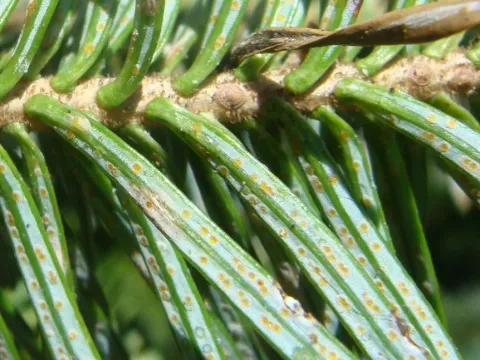
Naranus cryptomeriae
Naranus cryptomeriae
The disease is caused by the fungus Naranus cryptomeriae, a specialized micromycete that affects various conifer species, particularly those in the Cupressaceae family. It is a parasitic organism that thrives on host tissue.
What the section contains
Naranus cryptomeriae
The biology of this pathogen is closely linked to its ability to persist in infected plant debris, fallen needles, and living branches. Spores are primarily disseminated by wind, rain splashes, and insect vectors, facilitating rapid spread within plantations.
The infection cycle initiates when spores land on the needle surface under conditions of high humidity. The mycelium penetrates host tissue through stomata or small epidermal wounds, colonizing the internal cellular structures.
As the fungus grows, it secretes enzymes that break down cell walls, leading to tissue necrosis and the disruption of vital plant processes such as nutrient transport and photosynthesis.
The pathogen is highly adaptable to various environmental conditions within the host's native range. Its persistence in the environment makes management challenging, as it can remain viable in the soil litter for multiple growing seasons.
The primary symptom of infestation is chlorosis of the needles, which eventually progresses to a reddish-brown or dark brown discoloration. Infected needles typically lose turgor and become brittle.
Small dark fruiting bodies (pycnidia) appear on the surface of needles and young shoots. Under humid conditions, these structures may produce spore masses visible to the naked eye.
A classic sign is premature needle cast, which usually starts from the lower and inner sections of the canopy. As the disease spreads, the affected branches become sparse and eventually die back.
Chronic infection results in the necrosis of young shoots, often causing them to deform, twist, or curl. This loss of terminal growth significantly reduces the overall height and health of the tree.
- Discoloration of needles from green to reddish-brown
- Presence of tiny black fruiting bodies on twigs
- Premature needle drop starting from the lower crown
- Dieback of young terminal shoots
- General decline and lack of vitality in the plant
The development of the disease is highly favored by high humidity and frequent rainfall. Prolonged periods of overcast weather keep needles moist, providing an ideal environment for spore germination.
Poor ventilation in crowded plantations creates a stagnant microclimate where humidity levels remain elevated, accelerating the spread of the fungus among healthy trees.
Poor hygiene, such as the failure to remove dead branches or leaf litter, allows the pathogen to accumulate. This creates a persistent reservoir of inoculum that can trigger new infections annually.
In commercial nurseries, overhead irrigation can be a major factor in disease transmission. Water spray directly onto the foliage facilitates the splash dispersal of spores between individual plants.
Environmental stress, such as drought, temperature extremes, or nutrient deficiencies, weakens the trees' natural defenses, making them significantly more susceptible to Naranus cryptomeriae infection.
The main impact of Naranus cryptomeriae is the degradation of the aesthetic value of ornamental conifer plantings. Infected trees lose their lush appearance, requiring extensive pruning and treatment.
In nursery settings, the pathogen can cause significant economic loss due to stunted growth or mortality of young seedlings. Replacing destroyed stock is costly and time-consuming.
Infected trees suffer from reduced photosynthetic capacity, leading to overall physiological decline. This leaves them more vulnerable to secondary fungal attacks and pests that further compromise tree health.
Long-term infestation alters the architecture of the canopy, leading to thin and brittle structures that are prone to mechanical damage from wind and heavy snow loads.
The disease poses a threat to forest restoration efforts, as young regrowth can be rapidly decimated by high inoculum levels, impacting long-term timber production and ecosystem health.
Sanitation is the most effective initial step in managing this disease. Infected branches should be pruned back to healthy wood, and all removed debris must be destroyed by burning to eliminate inoculum.
Chemical control involves the application of fungicides, particularly copper-based sprays or systemic products. Preventive spraying should be timed to coincide with favorable conditions for spore release.
Optimizing plant care is crucial: ensure adequate spacing between trees to improve airflow and choose well-drained planting sites to prevent excessive humidity around the foliage.
Frequent monitoring for early signs of infection is vital. Detecting and treating the disease in its initial stages significantly reduces the risk of widespread canopy infestation.
Enhancing tree vitality through proper fertilization and the use of biostimulants can help the host build resilience, allowing it to withstand environmental stresses and recover from infection more effectively.