
Narcissus white mold
Ramularia vallisumbrosae
Description
Symptoms
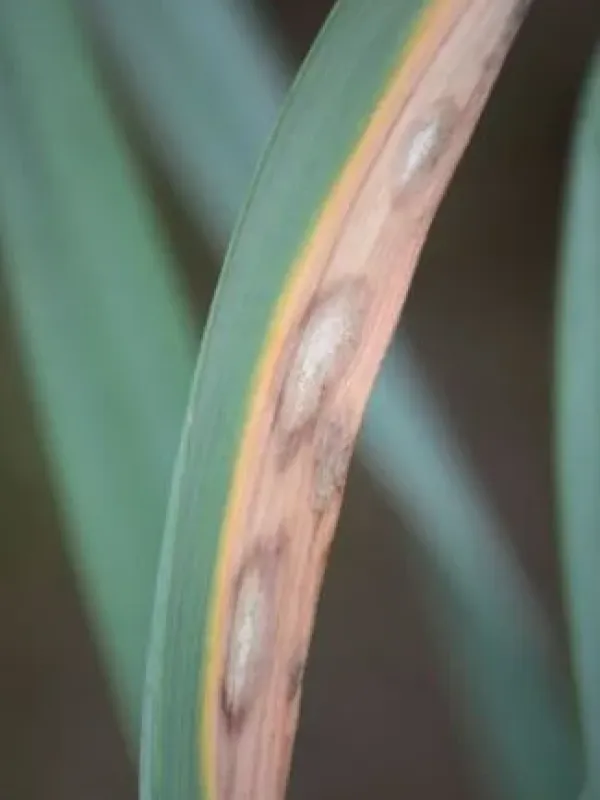
The first symptoms of Narcissus white mold appear as small, light yellow spots on the leaves. As the disease progresses, these spots expand and turn brown or reddish-brown, often surrounded by a chlorotic halo.
In humid weather conditions, a white or grayish velvety coating forms on the affected areas. This represents the fungal spore production, which allows the pathogen to spread rapidly to healthy tissues.
Severe infestations cause premature yellowing, twisting, and dieback of the foliage, leading to the collapse of the entire plant canopy. The infection often starts from the leaf tips and progresses downwards toward the base.
Flower stalks may also show similar spots, resulting in stem distortion and bud blight. This significantly reduces the decorative value of the plant and prevents normal flowering.
Diagnosis is sometimes challenging because the symptoms may resemble other foliar leaf spots. Observing the white sporulation layer in the early morning is key to confirming the presence of the pathogen.
Pathogen
The causative agent is the fungus Ramularia vallisumbrosae, a member of the Deuteromycetes class. This pathogen is highly host-specific, primarily affecting plants within the Narcissus genus.
The fungus overwinters in the soil and on crop debris as mycelium and conidia. In the spring, when environmental conditions become favorable, the infection revives and begins to colonize newly emerging shoots.
Dissemination occurs through rain splashes, wind, and mechanical transfer via gardening tools or human activity. The pathogen typically enters the plant through stomata or mechanical injuries on the leaf surface.
The life cycle of the fungus is closely synchronized with the daffodil growth period. Favorable conditions allow the conidia to germinate quickly, facilitating secondary infections across the entire planting area.
Understanding the biology of Ramularia vallisumbrosae is crucial for effective control. Since the fungus relies specifically on Narcissus, crop rotation and sanitation are highly effective management tools.
Conditions for development
Cool and wet weather during the spring is the primary condition for the development of Narcissus white mold. Frequent rainfall and persistent dew promote rapid spore germination and infection.
The optimal temperature range for mycelial growth is between +15°C and +20°C. During this time, the incubation period is significantly shortened, allowing the disease to spread rapidly through the garden.
Overcrowded plantings create poor air circulation, leading to high humidity around the foliage. This environment is ideal for the pathogen, as it prevents the leaves from drying out after rain.
Excessive nitrogen fertilization leads to succulent, lush leaf growth that is more susceptible to fungal invasion. Proper nutrition management is essential to keep the plant tissues firmer and more resistant.
Poor site management, including the presence of weeds and inadequate soil drainage, increases the vulnerability of the plants. Regular weeding and maintaining proper spacing between bulbs are vital for disease prevention.
Why it matters
The primary damage caused by white mold is the premature death of the foliage, which interrupts the process of photosynthesis. This limits the bulb's ability to store energy for the next growing season.
In subsequent years, affected bulbs often produce weak, stunted foliage or fail to produce flowers entirely. This gradual exhaustion leads to the loss of vigor and potential decline of the daffodil population.
For commercial bulb producers, this disease poses a significant economic threat. Infected bulbs may not meet quality standards, leading to rejection during phytosanitary inspections and financial losses.
In landscaping, the aesthetic impact is immediate, as yellowed and dying leaves ruin the appearance of flower beds well before the end of the natural spring season.
If left uncontrolled, the pathogen accumulates in the soil, creating a long-term problem. Reclaiming a site after a severe outbreak can be a difficult and lengthy process requiring deep soil management.
Protection
Prevention starts with good horticultural practices: ensuring excellent drainage, avoiding overcrowding, and practicing crop rotation. Removing and destroying all dead plant material after the season is critical.
Chemical control involves the timely application of systemic or contact fungicides approved for use on bulbous flowers. Products containing copper or modern strobilurin/triazole fungicides are effective in limiting spread.
Sourcing healthy, disease-free bulbs is the most reliable strategy. When planting, inspecting the bulbs and applying a preventative disinfectant dip can help reduce the initial infection pressure.
Maintaining a balanced nutrient program, focusing on phosphorus and potassium, helps improve the plant's natural immune response. Stronger plants are better equipped to withstand the initial stages of infection.
- Regular monitoring of plants for early symptoms.
- Prompt removal of heavily infected foliage.
- Improved site ventilation and weed control.
- Follow label instructions carefully when applying chemical fungicides.
Discussion
No discussions yet — be the first.