
Naranus
Naranus
The causative agent of this disease is a specialized microorganism classified in modern phytopathology as a dangerous parasite of the plant's vascular system. The name Naranus is used in scientific literature to describe the specific type of damage caused by the pathogen during its invasion of the host's xylem.
What the section contains
Naranus
The biological nature of the pathogen is linked to the disruption of nutrient transport, which results in systemic wilting. The agent is capable of surviving for long periods in soil residues as dormant structures, making it highly resistant to external environmental factors.
The infection spreads through contact, contaminated irrigation water, and infected tools. The pathogen's life cycle is closely synchronized with the growing season of the host crops it targets.
Microscopic analysis shows that the pathogen actively colonizes the intercellular space, gradually penetrating the vascular bundles. This blocks the natural flow of sap and initiates a cascade of pathological reactions within the plant tissues.
During active growth, the pathogen can reproduce rapidly, forming numerous colonies that clog the host plant's vessels. Without proper control, the pathogen population can cover significant crop areas in a very short time.
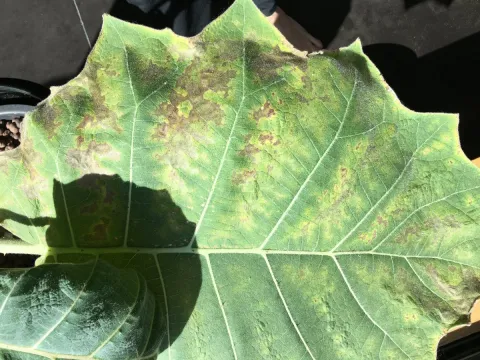
The first visible sign of the disease is chlorosis of the lower leaves, which gradually spreads to the upper tiers. The leaf blade begins to deform and turn yellow at the edges, losing its natural turgor rapidly.
In later stages, specific darkening of the vascular bundles becomes visible when cutting the stem or rhizome. The color of the infected vessels varies from light brown to dark brown, serving as a key diagnostic marker.
A characteristic symptom is the wilting of individual branches or parts of the plant during daylight hours, while turgor may partially recover at night. Eventually, the wilting becomes irreversible, leading to the death of the entire plant.
Under high humidity conditions, a faint mycelial film may appear on the stem surface, indicating that the pathogen is emerging to facilitate further spore dispersal.
The root system often takes on an unhealthy, grayish hue when infected with Naranus, and fine feeder roots begin to die off, significantly reducing the plant's nutrient absorption capacity.
High air temperatures combined with excessive soil moisture favor the development of the disease. Such conditions create an ideal microclimate for spore germination and active fungal penetration into plant tissues.
Deficient soil aeration and compacted ground slow down root system regeneration, making plants more vulnerable. Naranus is particularly active in areas with standing water after irrigation.
Disturbances in the soil's pH balance can provoke disease outbreaks because a weakened plant cannot produce an adequate immune response. Optimal environmental parameters for the pathogen are similar to those found in intensive greenhouse farming.
Infection outbreaks often correlate with periods of sudden temperature fluctuations, which induce stress in crops. Weakened immunity, combined with high pathogen concentration, leads to mass infection.
The spread of infection is facilitated by the use of unsterilized tools, as particles of contaminated soil are easily transferred to healthy plants during maintenance activities.
The primary damage lies in a sharp reduction in yield due to the disruption of physiological nutrient transport processes. Even with partial infection, the commercial quality of fruits or flowers is critically diminished.
In commercial farming, Naranus can cause total crop loss on specific field segments, leading to significant economic losses. Infected plants must be removed immediately to localize the source.
Systemic damage renders plants unsuitable for propagation, as the pathogen can be transmitted through seeds or cuttings, posing a threat to future growing seasons.
Costs for disease control, including fungicide applications and soil replacement, significantly increase production costs. Prevention is considered more cost-effective than treating symptomatic crops.
The accumulation of the pathogen in the soil makes it impossible to grow susceptible crops on the same site without deep fumigation, which limits crop rotation and land use efficiency.
The primary protective measure is strict adherence to crop rotation and the use of healthy, certified planting material. Selecting resistant varieties allows for the reduction of infection risks at early stages.
Regular disinfection of agricultural tools using fungicide solutions or alcohol-based mixtures helps prevent the mechanical transfer of pathogen spores between plots.
Maintaining proper irrigation schedules and ensuring high-quality drainage are critical agronomic practices for suppressing infection activity. Overwatering, which favors the pathogen, must be avoided.
Upon detection of disease signs, it is necessary to immediately remove and dispose of infected specimens along with the surrounding soil. The area should be treated with appropriate preparations.
- Application of biofungicides for preventive soil irrigation.
- Use of balanced fertilizers to strengthen the plant's natural immune system.
- Regular inspection of crops during morning hours for early symptom detection.
- Timely weeding to eliminate secondary hosts that may harbor the pathogen.