
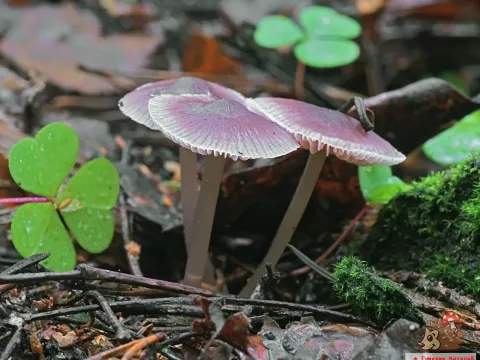
Mycena
Mycenaceae
Mycena fungi (family Mycenaceae) are primarily saprotrophic basidiomycetes that thrive on decaying organic matter, though they may opportunistically infect weakened plant tissues.
What the section contains
Mycena
The pathogen spreads through microscopic spores carried by wind, water splashes, or insects, which land on vulnerable or wounded parts of a plant, such as the crown or roots.
Once established, the mycelium penetrates the plant cells and secretes enzymes that break down cellulose, causing structural damage and interrupting the transport of nutrients.
These fungi are highly persistent in the soil, utilizing plant debris as a reservoir to survive during periods that are unfavorable for active plant growth.
Biologically, the organism plays a role in decomposition, but in managed agricultural or horticultural settings, it behaves as a stress-induced parasite that targets vulnerable host species.
The most distinctive sign of Mycena infestation is the appearance of small, cap-shaped mushrooms emerging from the base of the stem or root collar of a plant.
Affected plant tissues often show signs of necrosis, becoming soft, pulpy, and discolored, typically turning a paler or brownish shade compared to healthy tissues.
A white or greyish fuzzy mycelial mat may be visible on the surface of the bark or stem, indicating that the fungus has actively colonized the exterior of the plant.
As the infection progresses, the foliage exhibits symptoms of wilting, chlorosis, and premature senescence, as the fungal growth disrupts the plant's vascular integrity.
- Emergence of small, delicate mushrooms on the plant base.
- Softening and decay of bark or root tissues.
- Presence of white mycelium on infected plant parts.
- General stunting and yellowing of the leaves.
Mycena fungi thrive in conditions of high humidity and poor soil drainage, which often lead to waterlogging around the plant base, creating a perfect microclimate.
Moderate temperatures ranging from +15°C to +22°C are optimal for spore germination and rapid mycelial spread through the damp organic layers of the soil.
Overcrowded plantings that lack proper air circulation retain moisture for longer periods, providing the consistent dampness that these fungi require to establish themselves.
Physical injuries to the roots or stems caused by pests or mechanical farm equipment provide an entry point for the fungus, significantly increasing the probability of infection.
The presence of excess mulching or uncomposted plant material near the base of sensitive crops acts as a continuous source of inoculum for the spread of these fungi.
The primary harm caused by Mycena fungi is the gradual weakening and eventual death of individual plants, leading to gaps in crop stands and reduced yields.
Damage to the root collar interferes with the uptake of water and nutrients, causing the plant to starve even if water and soil nutrients are abundant.
Infection compromises the physical strength of the plant, making it more susceptible to lodging, breakage in strong winds, and further attack by other opportunistic pathogens.
In ornamental gardens and orchards, the presence of these fungi ruins the aesthetic value and long-term health of plants, requiring costly replacement of the affected flora.
The accumulation of fungal biomass in the soil creates a long-term sanitary risk for the field, necessitating expensive remediation or soil treatment for future seasons.
Effective control starts with strict sanitation, including the prompt removal and destruction of dead plant material to eliminate breeding grounds for the fungus.
Improving drainage and managing irrigation practices to ensure that the base of the plant remains relatively dry are crucial for preventing fungal colonization.
Applying preventative fungicides to the root zone and stems during the high-risk, humid growing season can provide a protective barrier against infection.
Regular monitoring for pests that cause mechanical injury to plants helps minimize the number of entry points available for the fungus to penetrate the host.
Maintaining soil health and promoting aeration through correct spacing and cultivation techniques helps build natural plant resistance and limits the spread of pathogens.