
Mycena inclinata
Mycena inclinata
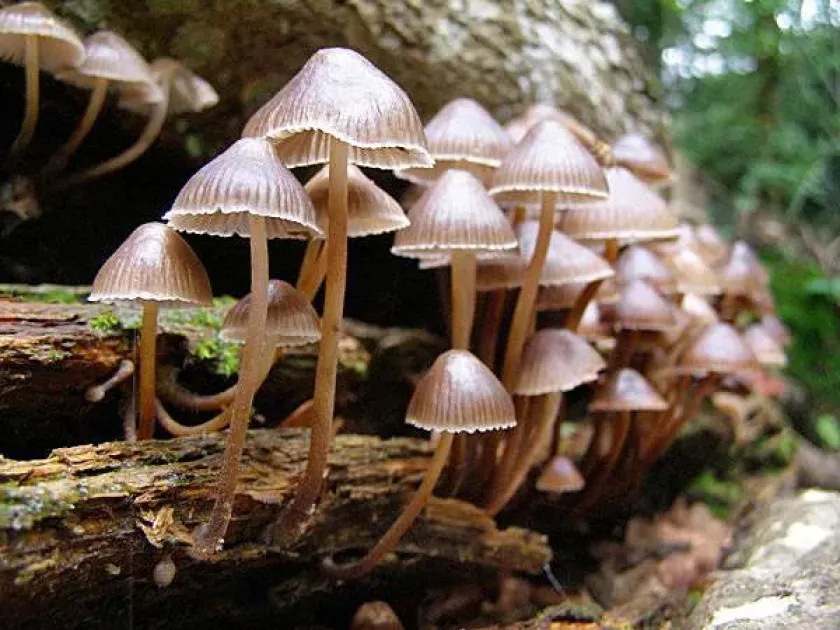
Description
Symptoms
The primary sign of the fungus is the presence of characteristic fruiting bodies forming dense clusters on the surface of stumps, fallen trunks, or at the base of living trees.
The caps of the fungus are bell-shaped and colored in ochre-brown tones, with the edges often noticeably lighter than the central part.
The surface of the wood affected by this fungus eventually becomes soft, spongy, and acquires a distinct fungal odor.
- Presence of clustered fruiting bodies.
- Changes in color and density of the wood at the fungus growth site.
- Appearance of white mycelium in bark cracks.
- Presence of spores appearing as a dusty coating on adjacent surfaces.
Visual inspection of affected areas reveals that the mycelium spreads primarily in the cambium and sapwood layers.
Pathogen
The causative agent is the fungus Mycena inclinata, which belongs to the Basidiomycota division. This species is a saprotroph that specializes in decomposing woody residues of deciduous trees.
Unlike aggressive pathogens, Mycena inclinata most often inhabits dead or severely weakened wood, triggering organic matter biodegradation processes.
The fungal mycelium penetrates deep into the wood structure, using an enzymatic apparatus to break down lignin and cellulose. It is a typical representative of forest mycobiota playing an essential role in nutrient cycling.
Fruiting bodies are formed in clusters, often with fused stem bases, making them easily identifiable when diagnosing affected areas.
The fungus is not an obligate parasite, but its active development indicates serious degradation processes in the wood base it has settled upon.
Conditions for development
Mycena inclinata prefers areas with high air and soil humidity, which is a critical factor for spore germination.
Optimal temperature conditions for mycelium development range from +15 to +22 degrees Celsius, which corresponds to the spring and autumn periods.
The presence of large amounts of plant debris, deadwood, and stumps contributes to the mass spread of this fungus in gardens and woodlands.
Dense plantings with poor air circulation create an ideal microclimate for the germination of Mycena basidiospores.
Bark damage caused by frost cracks or mechanical impact serves as an entry point for the initial colonization of mycelium on weakened trees.
Why it matters
Although Mycena inclinata is primarily considered a saprotroph, its presence on weakened living trees accelerates wood decay processes.
Biological destruction of wood leads to a loss of trunk strength, making the tree potentially dangerous during strong wind events.
The active metabolism of the fungus disrupts water and nutrient transport within the woody tissues, which gradually leads to the decline of the plant's overall health.
In commercial orchards or park zones, the massive emergence of Mycena inclinata indicates neglected tree conditions and the necessity of sanitation.
Affected wood loses its commercial value and becomes unsuitable for construction or woodworking due to deep mycelial penetration.
Protection
The main preventive measure is the timely removal of all stumps, rotten trunks, and wood debris from the site that serve as a substrate for the fungus.
Regular sanitary pruning of damaged branches is recommended, and any bark wounds should be treated with pruning paint or fungicidal pastes.
Ensuring optimal aeration and light levels in the garden helps lower humidity, preventing the development of Mycena inclinata spores.
Upon detection of fruiting bodies, they should be carefully removed and destroyed to prevent the mass release of spores into the environment.
The use of biological agents based on antagonistic fungi helps slow down the colonization of wood by unwanted saprotrophs.
Discussion
No discussions yet — be the first.