
Mycena maculata
Mycena maculata
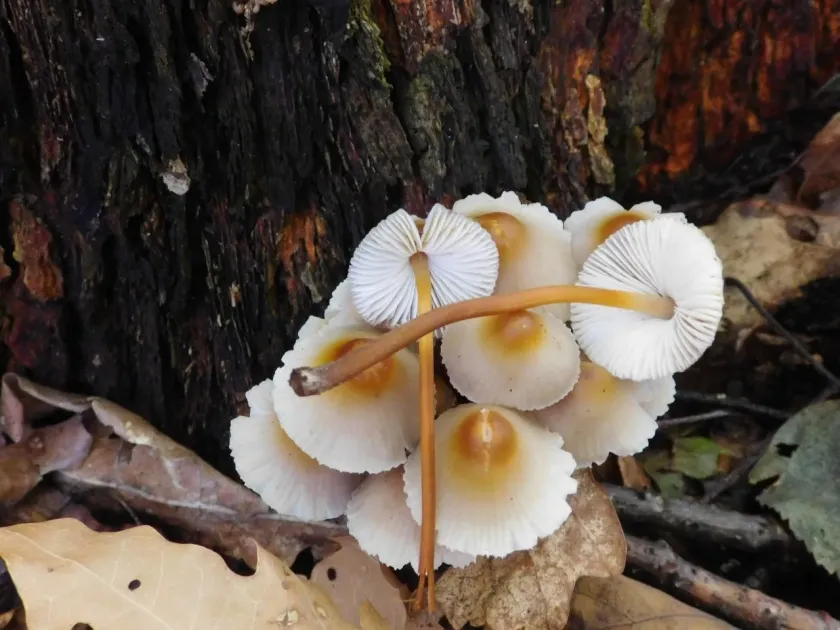
Description
Symptoms
The most visible sign of Mycena maculata is the emergence of small, delicate fruit bodies on rotting stumps or fallen logs. The cap is typically 2–5 cm in diameter and develops characteristic brown or reddish-brown spots.
The cap color ranges from whitish to grayish-brown, and the spotted appearance becomes more pronounced as the fungus matures. This spotting is a key identification feature distinguishing it from other Mycena species.
The gills underneath the cap are crowded and often decurrent (running down the stem). As the fruit body ages, these gills also develop distinctive reddish-brown staining, mirroring the spotting seen on the cap.
The stem is slender, smooth, and hollow. It is generally whitish or light gray, often becoming darker or spotted near the base due to the accumulation of fungal secretions and moisture.
- Presence of spotted fruit bodies on decaying wood.
- Darkening and softening of the wood tissue.
- Reddish-brown stains on the gills and stems of the mushrooms.
- Increased moisture levels within the wood fibers.
- Presence of a mild, earthy, or fungal odor around the affected areas.
Pathogen
Mycena maculata is a fungus species belonging to the Mycenaceae family. In agronomy and forestry, it is primarily recognized as a saprotroph, meaning it thrives on dead or decaying organic matter rather than living tissue.
The pathogen itself is a mycelial network that infiltrates moist, decomposing wood. By secreting specialized enzymes, the fungus breaks down complex polymers like lignin and cellulose, which are the structural components of timber.
Although it is not classified as a primary parasite of healthy plants, it plays a significant role in the degradation of weakened, sick, or damaged trees. It often acts as a secondary colonizer that accelerates the decay process.
The biological cycle involves the production of mushroom fruit bodies (sporocarps) which release millions of microscopic spores into the air. These spores are wind-dispersed and land on suitable substrates where they germinate under favorable conditions.
Understanding this fungus is important for maintaining forest hygiene. Its presence often indicates that a tree has already reached a stage of biological degradation, necessitating proper sanitation measures to prevent further spread.
Conditions for development
High humidity and consistent moisture are the most critical factors for the development of Mycena maculata. The fungus thrives in damp environments, particularly in forests or shaded gardens after extended periods of rain.
Temperature plays a crucial role in its growth, with an optimal range between 12°C and 20°C. In temperate climates, the most active growth period occurs during late summer and autumn when the air is cool and moist.
The fungus specifically targets dead wood, such as stumps, dead branches, or fallen leaves. It rarely colonizes healthy, fast-growing trees unless they have significant open wounds or necrotic areas.
Poor aeration and dense vegetation contribute to the development of this fungus. Stagnant air allows humidity to stay high near the ground, creating a perfect microclimate for mycelial expansion and spore production.
Natural debris piles and poorly maintained woodpiles serve as reservoirs for the fungus. If these are located near healthy, susceptible trees, the risk of cross-contamination during damp weather increases significantly.
Why it matters
The harm caused by Mycena maculata is primarily economic and structural. While not a killer of healthy trees, it contributes to the rapid degradation of valuable wood, including timber and wooden structures exposed to moisture.
In forest management, the presence of this fungus is a sign of tree senescence or decline. It accelerates the weakening of the tree structure, which can increase the risk of windthrow and wood failure in old-growth trees.
In landscaping, the appearance of these fungi on tree trunks or stumps detracts from the aesthetic quality of the area. It signals that the wood is rotting, which may pose a safety risk in high-traffic park zones.
The fungus can also harbor pests or other microbes that favor soft, decomposing tissue. By softening the wood, it creates an entry point for secondary infestations that may further compromise the tree's health.
In stored lumber, colonization by this fungus leads to significant quality loss, reducing the durability and structural integrity of the wood for construction or woodworking purposes.
Protection
The most effective management strategy is rigorous sanitation. Removing dead stumps, fallen branches, and piles of rotting organic matter significantly reduces the fungal spore load in the environment.
Proper tree care is essential to prevent susceptibility. This includes providing adequate water, nutrients, and pruning damaged limbs to allow the tree to maintain its natural defenses against opportunistic fungi.
When mechanical damage occurs on a tree trunk, it should be treated immediately with wound paint or a protective fungicide/antiseptic to prevent the fungus from gaining a foothold in the exposed heartwood.
Improving air circulation by thinning dense forest stands or garden shrubbery helps lower the relative humidity, making the environment less hospitable for fungal growth.
Regular monitoring of forest stands or park trees helps identify the early stages of decay. Early detection allows for the removal of affected parts before the fungus can spread to neighboring healthy trees.
Discussion
No discussions yet — be the first.