
Mycena haematopus
Mycena haematopus
Description
Symptoms
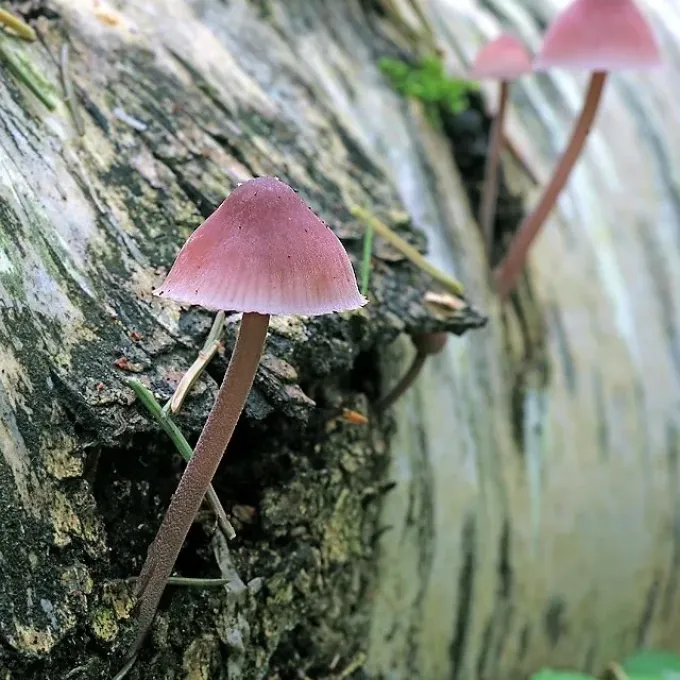
The most visible indicator of this fungus is the presence of small, bell-shaped fruit bodies growing on rotting stumps, logs, or woody debris.
The mushroom has a reddish-brown cap, and when the stem is cut or damaged, it exudes a distinctive red, blood-like latex, which gives the species its common name.
The fungus typically grows in clusters, covering pieces of decaying wood with dense patches of delicate mushrooms during the growing season.
Decayed wood occupied by the fungus often becomes soft, spongy, and lighter in color, reflecting the decomposition of the woody structure.
The mycelium resides strictly within the decomposing wood; there are no external signs of infection on nearby living plants or foliage.
Pathogen
Mycena haematopus, commonly known as the bleeding fairy helmet, is a species of fungus in the Mycenaceae family. It is vital to state that this species is not a plant pathogen and does not cause diseases in crops.
The fungus functions as a saprotroph, meaning it derives its nutrients by breaking down dead organic matter, specifically lignin and cellulose in decaying wood.
Reproduction occurs through spores released from fruit bodies, which are carried by wind or insects to colonize already dead or severely damaged wooden substrates.
Unlike parasitic fungi, this species lacks the enzymatic machinery and biological mechanisms required to penetrate and infect healthy, living plant tissues.
In terms of agricultural pathology, it poses zero threat, serving solely as a decomposer within its natural woodland or garden habitat.
Conditions for development
High moisture levels are the primary requirement for the development of the fruit bodies of this fungus, making it common after periods of rain.
The species prefers shady, humid environments where the substrate remains damp for extended periods, preventing desiccation.
Dead deciduous wood is the essential substrate for this species, providing the necessary nutrients for the mycelial growth and subsequent fruiting.
Mild to moderate temperatures in spring and autumn facilitate the most active growth phases, as the fungus is well-adapted to these seasonal conditions.
In well-maintained gardens where debris is regularly removed, the lack of dead wood substrate naturally inhibits the growth of this saprotrophic species.
Why it matters
There is no economic or agronomic damage associated with Mycena haematopus, as it cannot affect the health or vitality of living plants.
The fungus does not cause necrosis, wilting, or root rot, as it is strictly limited to non-living organic substrates.
No agricultural intervention is required because the fungus does not compete with crops for nutrients and does not act as an opportunistic parasite.
Its presence is purely an indicator of natural decay processes occurring in discarded or dead wood on the site.
Labeling this species as a disease is an error, as it acts as a natural recycler rather than a source of plant decline or yield loss.
Protection
Since the species is not a pathogen, specific control measures such as fungicides are completely unnecessary and environmentally unjustified.
If the appearance of mushrooms is unwanted, the simplest solution is to remove the dead wood, logs, or stumps that serve as the fungus's food source.
Standard horticultural hygiene, such as clearing fallen branches and maintaining a clean orchard floor, naturally manages the presence of saprotrophs.
Improving air circulation and sunlight exposure in the garden prevents the accumulation of the moisture required for fungal fruiting.
Resources should be directed toward managing actual parasitic threats rather than attempting to eradicate beneficial saprotrophic organisms.
Discussion
No discussions yet — be the first.