
Mycena bulbosa
Mycena bulbosa
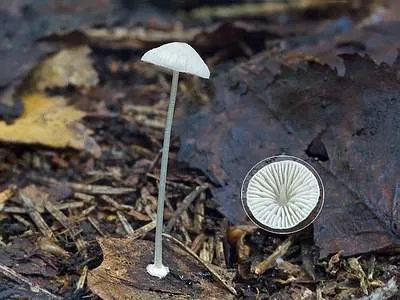
Description
Pathogen
Mycena bulbosa is a small mushroom species belonging to the Mycenaceae family. In agronomic practice, it is classified as a saprotroph, meaning it feeds on dead organic matter rather than living plant tissues.
The fungus functions by breaking down complex organic compounds like cellulose and lignin. It is commonly found in environments where plant debris, such as grass stems or crop residues, remains in contact with moist soil.
It is distinguished by a small, bulbous base at the bottom of the stem, which helps it anchor onto thin, decaying plant fragments. The mycelium is white, delicate, and spreads extensively within the substrate.
The life cycle of Mycena bulbosa is heavily dependent on the presence of moisture. Spores are released into the air and land on organic substrates, where they germinate under suitable environmental conditions.
It is important for farmers to distinguish this saprotroph from pathogenic fungi. While it may appear on the base of crops, it does not possess the mechanisms required to infect or damage healthy, living plant cells.
Conditions for development
The primary driver for the development of Mycena bulbosa is high humidity. It thrives in stagnant, water-rich environments where organic debris stays perpetually damp.
Temperature plays a crucial role in its metabolism, with optimal growth occurring between +12°C and +20°C. Extreme heat and lack of moisture typically lead to the rapid desiccation of its fruiting bodies.
Shaded areas within fields, often caused by dense canopy cover or lodged crops, provide the microclimate necessary for the mycelium to proliferate. Fields with poor drainage are particularly susceptible.
The fungus persists in the soil and on crop residues throughout the year. It becomes most visible in autumn or during periods of prolonged rainfall when the saturation level of organic matter is high.
The chemical composition of the substrate, specifically its neutral to acidic pH, also influences the distribution of the fungus. It is most frequently found in environments that lack rapid decomposition by bacteria.
Why it matters
Mycena bulbosa causes no direct economic damage to agricultural crops. It is not a parasite and cannot invade living plant tissues under normal field conditions.
Its presence is purely an indicator of environmental conditions, specifically high moisture content in the lower canopy or on the soil surface. This moisture itself can be a risk factor for other, truly pathogenic diseases.
The fungus contributes to the natural decomposition of plant waste. While this is beneficial for soil health, excessive fungal growth on lodged stems can sometimes complicate harvesting operations.
There are no reports of mycotoxin production by this species that could pose a threat to plant growth or food safety. It is considered an ecologically neutral component of the soil mycobiota.
Growers should monitor its presence as a potential sign of poor aeration or drainage issues on their fields rather than as a target for chemical intervention.
Protection
There is no need for fungicidal control against Mycena bulbosa, as it does not pose a threat to crop yields. Chemical treatments would be both economically and environmentally unjustified.
The most effective management strategy involves improving field drainage to prevent the accumulation of surface water, which naturally discourages the growth of this fungus.
Proper tillage practices, such as the deep incorporation of post-harvest residues into the soil, are effective. This promotes faster mineralization of the debris by soil microbes, leaving no substrate for Mycena bulbosa.
Crop rotation and weed management also help minimize the density of organic debris, preventing the buildup of suitable environments for this saprotrophic fungus.
- Improve soil drainage systems.
- Practice deep incorporation of residues.
- Avoid excessive field irrigation near the harvest period.
Discussion
No discussions yet — be the first.