
Mycena belliarum
Mycena belliarum
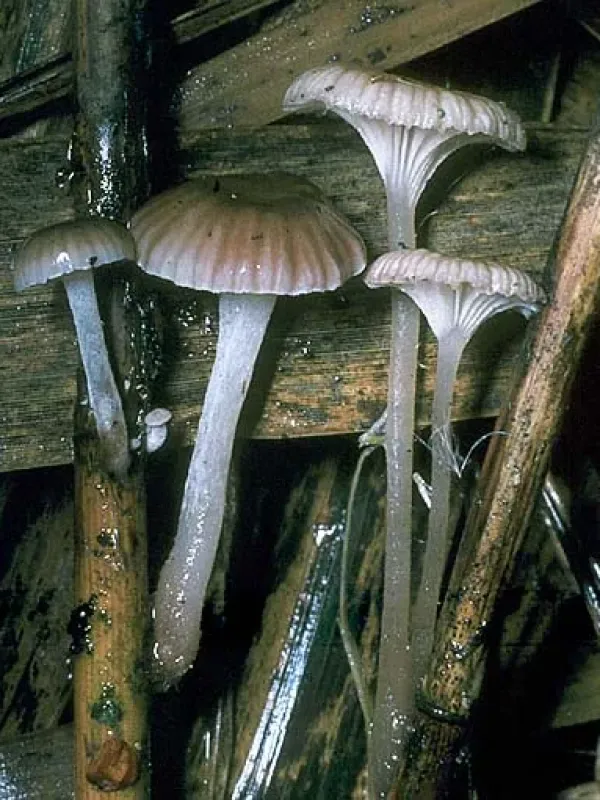
Description
Symptoms
The initial symptoms are often characterized by wilting, particularly during peak daylight hours. Plants may show a gradual loss of turgor, with leaves turning chlorotic or yellowing from the edges inward.
Necrotic spots often develop at the base of the stem. These lesions can expand rapidly, girdling the stem and eventually causing the plant to lodge or die entirely due to the disruption of vascular functions.
In conditions of high humidity, the fruiting bodies of the fungus may emerge near the base of the plant or directly from the soil surface. They appear as small, fragile, mushroom-like structures, often white or cream in color.
Root systems of infected plants typically exhibit browning and decay. The tissues lose their firm consistency, become brittle, and may emit a distinct odor associated with decomposing organic matter.
Patches of dead or dying plants in the field or greenhouse are common signs of an established infestation. This localized dying often indicates a high concentration of the pathogen in the soil substrate.
Pathogen
The disease is caused by the fungus Mycena belliarum, which belongs to the Basidiomycota division. While many members of the genus Mycena are primarily saprotrophic, this specific species can act as a pathogen under stress conditions for host plants.
The fungus produces small mushroom-like fruiting bodies. Its life cycle involves the production of basidiospores, which act as the primary inoculate, spreading through wind currents or water splashes to healthy plants.
The mycelium of the fungus is capable of colonizing the root system and the stem base of crops. By secreting extracellular enzymes, it breaks down the structural components of plant tissues, facilitating colonization and nutrient extraction.
Biological resilience is a key feature of this pathogen. It can survive in the soil profile as mycelium or rhizomorph-like structures, waiting for favorable moisture levels to initiate growth and infection processes.
Identification typically requires laboratory analysis, as macroscopic features can be easily confused with other saprotrophic soil fungi. Accurate diagnosis relies on microscopic examination of fungal spores and hyphal structures.
Conditions for development
Mycena belliarum development is heavily dependent on moisture. Excessive irrigation, poor drainage, or prolonged wet weather significantly increase the probability of an outbreak.
The optimal temperature range for the fungus is between 15°C and 22°C. While extreme heat may suppress its growth, the fungus often remains viable in the soil, ready to resume activity once cooler, wetter conditions return.
Poor aeration, often caused by high planting density, creates a stagnant microclimate. This lack of airflow prevents the soil surface from drying and encourages the rapid germination of spores.
Organic debris remaining from previous crops provides a perfect substrate for the fungus to establish itself. High levels of decomposing matter in the soil serve as a primary food source for the pathogen before it targets living tissues.
Lack of crop rotation leads to the accumulation of fungal propagules in the soil. Over successive seasons, the infectious pressure increases, making it difficult to maintain healthy crops without intervention.
Why it matters
The primary economic impact is the loss of seedling stand density. This uneven growth leads to reduced yields, which may necessitate reseeding or result in a significant waste of inputs.
By interfering with the plant's vascular system, the fungus reduces nutrient and water uptake. This manifests in stunted growth, lower fruit quality, and overall reduced vigor of the crop.
Infected plants are often predisposed to secondary infections, making it harder to manage the health of the entire field. This complexity increases the need for comprehensive protection measures.
Economic damage includes direct crop loss, as well as the costs associated with fungicide applications and additional soil management practices. In greenhouses, total loss of a crop batch is possible if the disease is not detected early.
The potential for the pathogen to persist in the soil limits the use of infected areas, forcing growers to invest in soil sterilization or crop rotation, which impacts operational planning.
Protection
Effective management begins with strict moisture control. Improving drainage systems and ensuring that the base of the plants remains dry are essential preventive steps.
Using high-quality, treated seed materials reduces the risk of initial infection. Ensuring that the nursery or planting site is free of organic debris is equally critical for prevention.
Implementing proper spacing between plants ensures adequate airflow, which is a major deterrent to fungal development. Regular weeding reduces the environment favorable for the pathogen.
Biological control agents, such as Trichoderma-based products, can be applied to the soil to suppress the growth of the pathogen and promote better root health.
- Strict crop rotation with resistant or non-host species.
- Complete removal and destruction of crop residues after harvest.
- Soil sterilization (solarization or steaming) in greenhouse environments.
- Regular monitoring of soil pH and balancing nutrient levels to prevent stress.
Discussion
No discussions yet — be the first.