
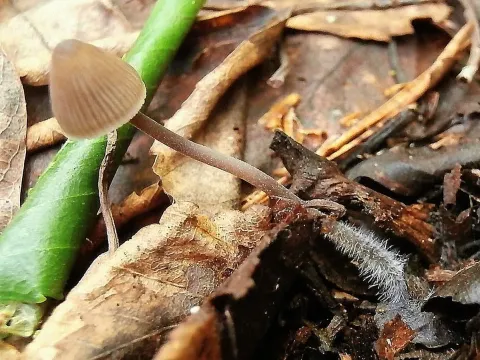
Mycena abramsii
Mycena abramsii
Mycena abramsii is a species of fungus in the Mycenaceae family. It is important to clarify that this fungus is a saprotroph and not a plant pathogen.
What the section contains
Mycena abramsii
As a saprotroph, Mycena abramsii obtains nutrients by breaking down non-living organic matter, specifically decaying wood of deciduous trees. It does not infect healthy living plants or crops.
The fungus plays an ecological role by recycling essential nutrients back into the soil through the decomposition of lignin and cellulose in dead wood tissue.
Morphologically, the species features small, delicate fruiting bodies with grayish, conical caps. Its white spore print is a key feature used for mycological identification.
Because it lacks the ability to overcome plant immunity, it remains confined to dead substrates and does not pose a threat to agricultural or horticultural yields.
The development of Mycena abramsii depends heavily on environmental moisture levels. High humidity is required for the formation of its fruiting bodies.
It prefers temperate climates with temperatures ranging from 15 to 22 degrees Celsius. Extreme heat or drought will inhibit the growth of the mycelium.
The fungus thrives in shaded, cool environments where the wood substrate is protected from direct sunlight and desiccation, such as dense forest floors or garden areas with high debris buildup.
A consistent supply of organic substrate, particularly decaying wood, is necessary for the fungus to establish its mycelial network. It is typically found in environments with rich organic matter.
Spore dispersal occurs through air currents, allowing the fungus to colonize new suitable habitats during favorable weather conditions characterized by rainfall and high humidity.
Mycena abramsii is considered harmless to cultivated crops and garden plants. It has no biological capacity to infect or damage living plant tissue.
There is no evidence of phytotoxicity associated with this species. It does not compete with plants for nutrients, nor does it secrete chemicals harmful to roots or plant surfaces.
In an agricultural context, its presence is merely an indicator of decaying organic material rather than a sign of a disease outbreak that requires management.
Mistaking this fungus for a harmful pathogen often results in the unnecessary application of fungicides, which can disrupt the healthy balance of soil microorganisms.
The ecological impact of the species is purely beneficial as it accelerates the breakdown of wood, contributing to the formation of organic humus in the soil profile.
As Mycena abramsii is a beneficial saprotroph rather than a pest, no specific control measures or chemical treatments are required or recommended.
General orchard and garden maintenance is sufficient to manage its presence. This includes the regular removal of rotting stumps, branches, and woody debris from cultivated beds.
Ensuring proper soil drainage and preventing waterlogging will create an environment less favorable for the growth of saprotrophic fungi on the ground surface.
Maintaining a clean garden area and avoiding large piles of wet woody waste will prevent the colonization of such substrates by various fungal species.
The use of fungicides is strongly discouraged as it is ineffective against saprotrophs and can be detrimental to the overall health and fertility of the garden soil.