
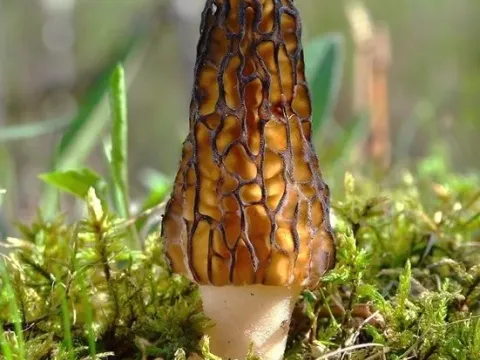
Black morel
Morchella elata
The black morel (lat. Morchella elata) is a representative of the class of Ascomycetes. It is crucial to note that this organism is not a plant disease and does not belong to the category of phytopathogens affecting agricultural crops.
What the section contains
Black morel
Biologically, this fungus is a saprotrophic organism that actively participates in the mineralization of organic matter in forest soils. Its mycelium develops in the soil litter without forming parasitic connections with living plant tissues.
Many novice agronomists confuse it with pathogenic fungi due to its early appearance in the spring. However, scientific classification clearly categorizes it as an edible mushroom, rather than an infectious disease agent.
Unlike diseases such as powdery mildew or rust, Morchella elata does not produce toxins that inhibit the development of cultivated plants. It lacks specialized organs (haustoria) for extracting nutrients from plant cells.
Its mycological life cycle involves the formation of ascospores that are dispersed by wind, settling on the soil rather than on leaves or stems, thus precluding the development of any plant infection.
For the successful fruiting of the black morel, specific conditions typical of the spring season are required. The optimal environment consists of warmed forest soils rich in humus.
The mushroom prefers areas with disturbed soil cover or sites following forest fires. Such conditions foster the development of a favorable microflora for its mycelial growth.
Soil moisture levels following snowmelt represent a key factor. High moisture content combined with moderate air temperatures ensures the massive appearance of fruit bodies.
Typical habitats include coniferous and mixed forests. Unlike agronomic pathogens, the morel does not require a living host to complete its life cycle.
Light intensity plays a secondary role, although the fungus performs better in areas where spring sunlight reaches the soil surface, accelerating the metabolism of the mycelium.
The black morel does not cause any harm to agricultural crops as it lacks the capacity to penetrate plant tissues. No economic damage to orchards or fields has been recorded in relation to its presence.
The absence of harmful impact is confirmed by the fact that this mushroom is not a subject of agronomic pest control. The application of fungicides against it is unnecessary and not economically justified.
On the contrary, the presence of such fungi in forest ecosystems may indicate healthy soil formation processes. They indirectly improve soil structure by decomposing fallen needles and woody debris.
In agronomic practice, this mushroom can be considered an indicator of soil cleanliness. It is sensitive to chemical pollutants and intensive pesticide application.
Therefore, this species is not included in any registry of quarantine or harmful organisms, which allows it to be excluded from the lists of objects requiring plant protection.