
Black milk cap
Lactarius picinus
Description
Pathogen
The black milk cap (Lactarius picinus) is a species of fungus in the family Russulaceae. It is essential to note that it is not a plant pathogen and does not cause diseases in agricultural or forest crops.
This fungus functions as a mycorrhizal partner, establishing a symbiotic relationship primarily with spruce trees. The mycelium forms a network around tree roots, aiding in nutrient uptake and contributing to the tree's overall vigor.
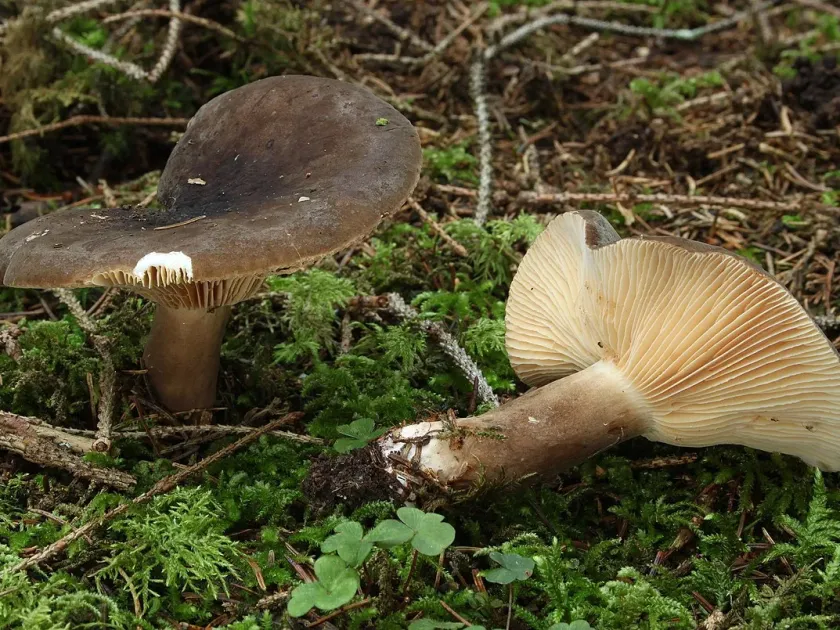
Physically, the mushroom is characterized by a dark, velvety cap and a white latex that turns reddish upon exposure to air. These morphological traits help mycologists distinguish it from related species in the field.
In terms of agricultural impact, it is considered beneficial rather than harmful. By improving the root environment of spruce trees, it plays a key role in the forest ecosystem's long-term health and sustainability.
Its biology is strictly bound to the presence of host trees. Without the specific chemical signals from the root systems of spruce trees, the fungus cannot complete its lifecycle effectively.
Conditions for development
Growth and development of the black milk cap require specific environmental conditions found in coniferous forests. High soil moisture levels and acidic pH are primary requirements for the mycelium to thrive.
The fungus is highly sensitive to habitat degradation. Any significant soil compaction, pollution, or deforestation directly inhibits the expansion of the mycelium and prevents the development of fruiting bodies.
Seasonal patterns play a major role, with most fruiting occurring during late summer and autumn. Stable, cool temperatures accompanied by regular rainfall provide the necessary moisture for the fungus.
The organic layer of the forest floor is vital for the survival of the fungus. This layer acts as a buffer against temperature fluctuations and maintains the level of humidity required for spore production.
Unlike parasitic fungi, Lactarius picinus does not spread as an infectious disease. Its population dynamics are governed by the health and density of the local spruce population rather than by pathogen transmission methods.
Discussion
No discussions yet — be the first.