
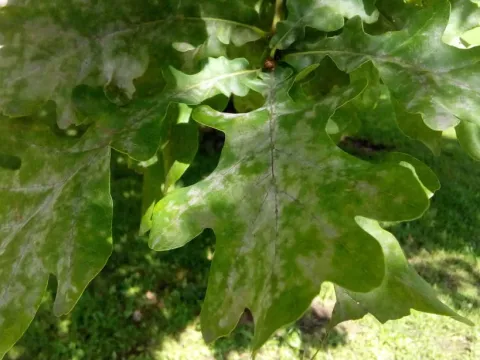
Powdery mildew
Microsphaera
The causal agents of powdery mildew, specifically within the genus Microsphaera, are ascomycete fungi belonging to the Erysiphaceae family. These are obligate parasites that derive nutrients directly from the host plant's epidermal cells using specialized structures known as haustoria.
What the section contains
Powdery mildew
The life cycle of the pathogen involves an asexual phase characterized by the production of abundant conidia, which facilitate rapid spread during the growing season. Towards the end of the season, the fungus produces sexual fruiting bodies called cleistothecia, allowing the pathogen to overwinter in plant debris.
These fungi exhibit a wide host range, attacking various trees, shrubs, and ornamental plants. Different species of Microsphaera show high specificity to their hosts, meaning management strategies must often be tailored depending on the plant species affected by the infection.
The fungus persists as dormant mycelium in buds or as overwintering fruiting bodies on fallen leaves. As spring temperatures rise, spores are wind-dispersed to healthy new growth, initiating primary infections that can quickly escalate into widespread outbreaks.
The adaptability of the Microsphaera genus makes it a persistent challenge in both commercial and domestic horticulture. Understanding its biology is essential for effective disease management, as these pathogens are notoriously efficient at colonizing host tissues in favorable conditions.
The primary symptom is the appearance of white, powdery, mycelial patches on the upper surface of leaves. Initially localized, these patches eventually expand and coalesce, potentially covering the entire leaf surface with a thick, felt-like, grayish-white layer of fungal growth.
As the infection progresses, the patches become denser, and small black or brown dots — the cleistothecia — become visible within the mycelium. This indicates that the fungus is maturing and preparing for the next reproductive cycle or overwintering stage.
Infected leaves often curl, turn yellow, and wither prematurely. Young shoots may become stunted, twisted, or distorted, significantly hindering the plant's overall growth potential and aesthetic appeal. Heavily infected shoots may eventually die back completely.
When the infection reaches fruit or flowers, it can cause necrotic spotting, cracking, and decay, rendering the harvest unmarketable. The presence of the pathogen disrupts the plant's cuticle, making the affected areas highly susceptible to secondary bacterial and fungal pathogens.
Effective monitoring requires inspecting both leaf surfaces, particularly in the canopy's interior where light and air circulation are limited. Detecting the disease during the early stages of spot formation is crucial for implementing successful containment and treatment measures.
Powdery mildew development is favored by warm weather with temperatures ranging from 18 to 25 degrees Celsius. While high relative humidity (60–80%) is ideal for conidial germination, the fungus is unique in that it does not require free water on leaves to thrive, unlike many other fungal pathogens.
Dense planting and lack of pruning create microclimates with limited air circulation, which are highly conducive to disease spread. These humid, stagnant environments allow spores to settle and germinate quickly on succulent, young plant tissues.
Diurnal temperature fluctuations that lead to condensation or morning dew help anchor spores to the foliage, facilitating the initial infection. Even without requiring standing water, the slight increase in surface moisture assists the fungus in establishing its first haustoria.
Over-application of nitrogen fertilizers can stimulate excessive, succulent growth that is highly attractive to the pathogen. These tissues are softer and easier for fungal hyphae to penetrate, leading to faster colonization and more severe disease outbreaks.
Drought stress can also weaken the plant's natural immune system, making it more vulnerable to infection. Proper irrigation management, combined with balanced nutrition, plays a vital role in maintaining the plant's vigor and resistance against Microsphaera colonization.
The primary damage caused by powdery mildew is the significant reduction in photosynthetic capacity. By covering the leaves with a dense mycelial mat, the fungus deprives the plant of the energy required for survival, bud development, and overall winter hardiness.
Premature leaf drop leads to severe depletion of energy reserves within the plant. This leaves the host vulnerable to further environmental stress, potentially leading to long-term decline or, in severe cases, the eventual death of the affected tree or shrub.
For ornamental plants, the impact is primarily on visual value, which is critical in landscaping and nursery production. Deformed growth and withered foliage can ruin the aesthetics of an entire collection, leading to economic losses and the need for expensive remedial measures.
In young trees, the infection of apical buds can cause significant structural defects such as shoot distortion or the development of "witches' brooms." This necessitates intensive corrective pruning, which may take several seasons to resolve effectively.
Commercial nurseries often face major economic damage as large batches of plants can be rendered unsellable due to the presence of symptoms. Early management is essential to prevent the fungus from spreading throughout the nursery and causing widespread financial impact.
Good sanitation is the cornerstone of control: promptly removing and destroying infected plant material, including fallen leaves and diseased shoots, helps significantly reduce the primary inoculum load in the garden for the following season.
Improving air circulation through regular thinning and pruning is essential. By opening the canopy to light and airflow, gardeners can create a less hospitable environment for Microsphaera, effectively slowing or preventing the development of new infections.
Chemical control strategies should focus on the use of systemic or contact fungicides. Products based on sulfur, as well as modern triazoles or strobilurins, are highly effective when applied at the first sign of symptoms to halt disease progression.
Resistance management is crucial; it is recommended to rotate fungicides with different modes of action to prevent the pathogen from developing immunity. Treatments must be applied consistently throughout the high-risk periods to maintain control over the disease.
Biological control agents, such as beneficial microorganisms or microbial fungicides, provide an excellent alternative for gardens and crops intended for human consumption. These products work by outcompeting the pathogen and boosting the plant's natural defense responses.