
Powdery mildew of aster family
Golovinomyces cichoracearum
Description
Symptoms
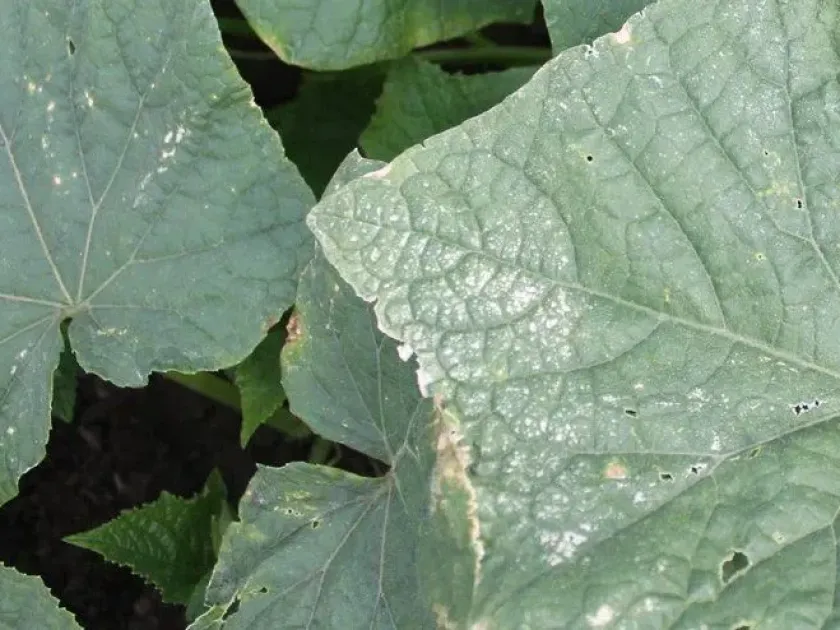
The hallmark symptom is the appearance of white, dusty, or cobweb-like patches on the upper surface of the leaves.
As the infection progresses, the white mycelium spreads to cover leaves, stems, flower buds, and sometimes the entire plant surface.
Infected leaves often lose their vibrant color, turning yellow, brown, or brittle as the fungal growth restricts photosynthesis.
Small, pinhead-sized black dots, known as cleistothecia, may appear within the white fungal mat during the later stages of the disease.
- Stunted growth of young shoots.
- Leaf curling and deformation.
- Premature yellowing and leaf drop.
Pathogen
The causal agent of this disease is Golovinomyces cichoracearum, an obligate biotrophic fungus that relies on living host tissue to complete its life cycle.
The fungus colonizes the plant surface by producing a network of hyphae (mycelium) that extracts nutrients through structures called haustoria, which penetrate the epidermal cells.
Reproduction occurs primarily through the production of conidia, which are asexual spores distributed by wind currents to healthy plant parts or neighboring hosts.
The fungus survives the off-season by producing cleistothecia, which are small, dark, spherical structures that overwinter on plant debris in the soil.
This pathogen belongs to the family Erysiphaceae and is known for its wide host range, frequently affecting various species within the Asteraceae family.
Conditions for development
Powdery mildew thrives in conditions characterized by high humidity at night followed by warm, dry days, which triggers spore production.
Poor air circulation within dense plantings significantly increases the risk of infection by maintaining high humidity levels around the foliage.
Shaded areas or locations with low light intensity often see faster fungal development compared to well-lit, sunny positions.
Excessive nitrogen fertilization can lead to soft, succulent growth that is highly susceptible to penetration by fungal hyphae.
Rapid spread is often observed during periods of moderate temperatures (between 18°C and 25°C) and persistent high relative humidity.
Why it matters
The primary damage caused by the fungus is the depletion of plant reserves, which weakens the host and stunts its overall physiological growth.
Heavy infections can lead to total loss of aesthetic value, as the plants become covered in unsightly white fungal mats and necrotic spots.
If left untreated, severe infestations cause premature leaf senescence, leading to a significant reduction in plant vigor and shortened lifespan.
Flowering quality is compromised, as buds may fail to open or produce deformed, small flowers due to the nutrient diversion by the fungus.
The overall weakening of the plant makes it more susceptible to environmental stress and secondary attacks by other pests or pathogens.
Protection
Sanitation is the first line of defense; removing and destroying infected plant debris during autumn is crucial to reduce the primary inoculum for the next year.
Promoting good airflow by spacing plants correctly and pruning back dense vegetation helps create a microclimate less favorable for fungal spores.
Fungicides containing sulfur or systemic active ingredients from the triazole group are highly effective at suppressing and eradicating established colonies.
Applying preventative treatments during periods of high risk or at the first sign of symptoms can protect healthy foliage from new infections.
Incorporate disease-resistant cultivars when planning new gardens to minimize the reliance on chemical interventions against common fungal diseases.
Discussion
No discussions yet — be the first.