
Powdery mildew (Leveillula)
Leveillula
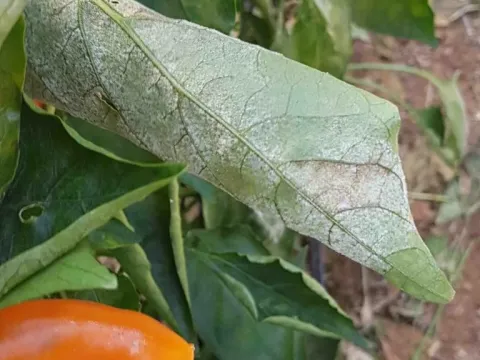
The primary symptom of Leveillula infection involves the appearance of yellow or chlorotic spots on the leaves, which eventually become necrotic. Unlike many other powdery mildew species, the mycelium often develops endophytically, making the white fungal growth less visible on the upper leaf surface.
What the section contains
Powdery mildew (Leveillula)
As the disease progresses, the lesions expand, turn brown, and cause the leaves to wilt and drop prematurely. This process typically starts from the lower canopy and works its way up, leading to severe defoliation of the plants.
Visible sporulation is often found on the underside of the leaves. In many cases, the symptoms can be mistaken for nutrient deficiencies or physiological yellowing, which makes accurate and early diagnosis critical.
Infected plants show stunted growth and a general decline in vigor. The loss of foliage significantly disrupts photosynthetic activity, directly impacting the plant's ability to support fruit development.
The presence of necrotic patches on foliage is a clear indicator that the fungus has already penetrated deep into the leaf tissue, necessitating immediate management action.
The pathogen is Leveillula taurica, an obligate biotrophic fungus that exhibits a unique endophytic lifestyle. It infects plants by sending mycelia into the leaf mesophyll through the stomata.
The fungus produces conidiophores that emerge through the stomatal openings to release spores. This internal growth habit protects the parasite from many traditional contact fungicides that only cover the leaf surface.
It has an extremely wide host range, attacking various crops including tomatoes, peppers, onions, and various ornamental species. Its adaptability allows it to persist in diverse agricultural environments.
The sexual stage of the fungus results in the formation of chasmothecia, which can overwinter in plant debris, serving as an inoculum source for the following growing season.
The ability of the fungus to survive within internal plant tissues makes it a formidable challenge for plant pathologists and growers alike, as it can remain dormant or latent until conditions become favorable.
Leveillula thrives in warm, dry climates, which is a major distinction from other powdery mildew species that prefer high humidity. Optimal temperatures for disease spread range between +20°C and +30°C.
In greenhouse settings, poor ventilation and high plant density are key drivers for outbreaks. The fungus flourishes when air circulation is limited, allowing spores to accumulate and settle on susceptible foliage.
Infection is often exacerbated by rapid fluctuations in temperature and humidity. While the fungus prefers dry conditions, it requires enough ambient moisture for initial spore germination.
Plant debris and weeds act as primary reservoirs for the pathogen. In the absence of strict sanitation, the inoculum can quickly build up, leading to devastating epidemics in commercial crops.
Balanced crop nutrition is essential, as excessive nitrogen supply can create soft, succulent tissue that is highly susceptible to penetration by fungal hyphae.
The economic impact of Leveillula is primarily driven by yield reduction. Defoliation prevents the plant from producing enough carbohydrates to fill fruits, leading to smaller, lower-quality yields.
Exposed fruit is prone to sunscald, which causes significant cosmetic damage and renders produce unmarketable. This is particularly problematic in tomato and pepper production.
Severe infestations weaken the plant's overall system, leaving it susceptible to secondary infections and environmental stresses, ultimately leading to total crop failure in some instances.
The cost of controlling a full-blown outbreak is substantial. Frequent application of systemic fungicides significantly increases production costs and may lead to resistance development in the pathogen.
Early intervention is vital because once the fungus has established an endophytic colony, eradicate-type treatments are much less effective compared to preventative measures.
Effective management begins with rigorous field sanitation, including the removal and destruction of crop residues. Eliminating weeds that harbor the fungus is essential to reduce the primary inoculum.
Systemic fungicides, particularly those containing triazoles or strobilurins, are recommended as they are capable of penetrating the leaf tissue to reach the internal mycelium.
- Implementing strict crop rotation schedules.
- Improving greenhouse ventilation to reduce spore density.
- Using preventative applications of sulfur-based fungicides.
- Monitoring crops for the first signs of leaf yellowing.
Integrated Pest Management (IPM) practices, including the use of biocontrol agents and resistant cultivars, should be prioritized to reduce reliance on heavy chemical interventions.
Maintaining optimal plant density and avoiding excess nitrogen fertilizers helps in creating a less favorable environment for the pathogen's establishment.