
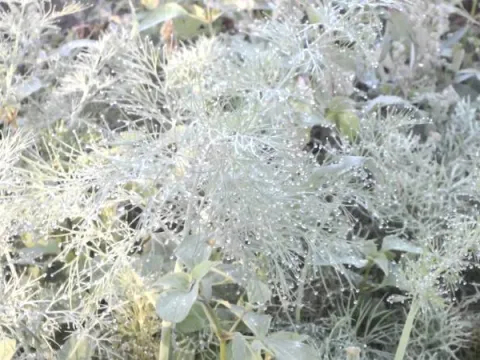
Powdery mildew of Apiaceae
Erysiphe heraclei
The causal agent of this disease is Erysiphe heraclei, an obligate biotrophic fungus belonging to the Erysiphales order. It is a highly specialized parasite that exclusively infects plant species within the Apiaceae family.
What the section contains
Powdery mildew of Apiaceae
The fungus colonizes the leaf surface by producing a superficial white mycelium. It penetrates the host tissue using specialized structures called haustoria, which draw nutrients directly from the epidermal cells.
Asexual reproduction occurs via the production of conidia. These spores are released in large numbers and are easily dispersed by wind currents, allowing the pathogen to spread rapidly throughout a field.
The fungus survives the off-season by producing cleistothecia, which are small, dark fruiting bodies containing ascospores. These can remain on crop debris or sometimes on seeds, providing a source of primary inoculum for the next season.
Due to its high level of host specialization, Erysiphe heraclei has developed efficient mechanisms to bypass plant defense systems, making it a persistent threat in vegetable production.
The primary symptom is the appearance of white, powdery patches on the leaves, petioles, and stems. These patches gradually expand and merge, eventually covering the entire aerial part of the plant.
Infected leaves often become chlorotic, yellowing and drying out from the bottom of the plant upward. Severe infections cause leaves to curl, wither, and drop prematurely.
In the case of seed crops, the fungus colonizes the umbels, leading to stunted growth of flower stalks and poor seed development or complete sterility.
Small, black, spherical structures known as cleistothecia may appear within the white fungal mats later in the growing season, serving as indicators of the pathogen's sexual reproductive phase.
Symptoms are typically most noticeable on mature leaves first, as these tissues provide the most stable environment for the fungus to establish itself.
The disease thrives in moderate temperatures ranging from 18 to 25 degrees Celsius. These conditions are optimal for the rapid germination of conidia and mycelial colonization of the host.
High relative humidity is the most critical environmental factor. Dew formation during cool nights often provides sufficient moisture for the fungus, even in the absence of rain.
Crowded plantings and poor air circulation significantly increase the risk of infection by keeping the plant canopy humid and shielding it from direct sunlight.
Excessive application of nitrogen fertilizers leads to lush, succulent growth, which is highly susceptible to infection, as the thinner cell walls are easier for the fungus to penetrate.
The combination of warm days and cool, damp nights creates a perfect cycle for the exponential multiplication of the pathogen population during the summer months.
Powdery mildew significantly reduces the photosynthetic capacity of the plant, leading to a marked decrease in yield and quality of root crops such as carrots, parsnips, and celery.
Infected crops are often smaller and contain fewer soluble sugars and essential vitamins, making them less desirable for the fresh market and reducing their storage shelf life.
Weakened plants are significantly more susceptible to secondary infections by saprophytic fungi and bacteria, which can cause rotting during post-harvest storage.
For seed production, the disease leads to a drastic reduction in seed vigor and germination rates, causing substantial financial losses to growers.
In cases of severe outbreaks, total crop loss is possible if no protective measures are taken early in the development of the infection.
The most effective management strategy is crop rotation, ensuring that Apiaceae crops are not grown on the same plot for at least three consecutive years to break the infection cycle.
Sanitation practices, such as the removal and destruction of crop residues after harvest, are essential to reduce the primary inoculum load in the field.
When necessary, fungicides such as sulfur-based products or systemic triazoles should be applied at the first sign of infection to prevent further spreading.
Implementing wider row spacing and effective weed control helps to improve air movement, which creates a less favorable environment for the development of the fungus.
Utilizing resistant or tolerant cultivars is the most sustainable approach to controlling powdery mildew, as it reduces reliance on chemical interventions throughout the season.