
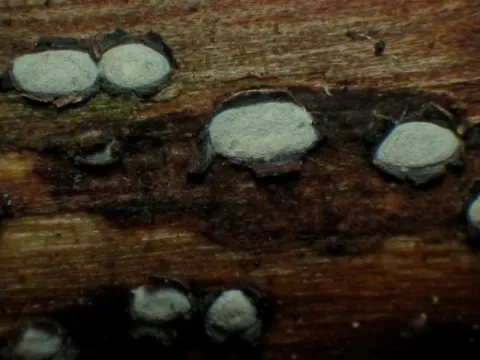
Powdery mildew of aspen
Propolis farinosa
The causative agent of this disease is the fungus Uncinula adunca, which is a common parasite found on various species of poplar and aspen.
What the section contains
Powdery mildew of aspen
This obligate biotrophic fungus relies entirely on the nutrients derived from the host tree, extracting them through specialized hyphal structures.
The life cycle involves the formation of cleistothecia, which serve as the primary overwintering structures surviving on fallen foliage.
In the spring, these structures release ascospores, which are then dispersed by the wind to infect newly emerged leaves and succulent green stems.
The fungus continues its reproduction throughout the growing season by producing conidia, which spread the infection quickly under favorable conditions.
The disease is easily recognized by the presence of a white, powdery fungal growth that appears on the surface of the leaves.
Early infections manifest as small, white patches that eventually expand until they cover the entire surface of the leaf blade.
Severely infected leaves often curl, turn yellow, and eventually become necrotic, leading to premature leaf drop during the summer months.
As the season progresses, small black fruiting bodies appear scattered within the white mycelium, marking the transition to the sexual stage of the fungus.
New shoots may also show signs of infection, appearing stunted and distorted, which significantly affects the growth pattern of young aspen trees.
Powdery mildew thrives in environments with high humidity and mild temperatures, typically ranging from 18 to 25 degrees Celsius.
Stagnant air within dense forest stands or poorly ventilated nursery beds provides the ideal climate for spores to settle and germinate successfully.
Extended periods of cool, cloudy weather with intermittent rain often lead to widespread outbreaks across large forest areas.
Trees that are already under stress, whether from drought, soil nutrient deficiencies, or insect pressure, are more susceptible to the infection.
The lack of proper sanitation in affected areas allows the fungus to remain in the leaf litter, ensuring a source of inoculum for the following year.
The disease causes a reduction in the photosynthetic capacity of the tree, which restricts overall development and wood production.
Premature leaf loss disrupts the tree's metabolic balance, making it difficult for the plant to store adequate reserves for winter dormancy.
Young trees are particularly vulnerable, as repeated infections can lead to stunted growth, loss of vigor, and an increased risk of mortality.
The physiological stress caused by the fungus makes aspen trees more vulnerable to secondary invaders, including wood-boring insects and other diseases.
In commercial forest plantations, the disease causes significant economic loss by reducing the quality and volume of the harvestable timber.
Sanitary practices, such as raking and destroying infected fallen leaves, are essential to minimize the initial spore load in the spring.
Chemical intervention with sulfur-based fungicides or systemic chemical treatments can effectively control outbreaks when applied at the early onset of symptoms.
Proper forest management, including selective thinning to improve light penetration and air circulation, is a sustainable way to reduce disease pressure.
Maintaining tree vigor through balanced soil management helps the aspen trees mount a natural defense against the invading fungal pathogens.
Regular inspection of nurseries and plantations is crucial for early detection and rapid deployment of control measures to prevent a total infestation.