
Stellaria smut
Microbotryum stellariae
The causative agent of this disease is the fungus Microbotryum stellariae, which is classified within the basidiomycetes. It is an obligate parasite specifically adapted to infect plants of the Caryophyllaceae family, primarily Stellaria media.
What the section contains
Stellaria smut
The pathogen's life cycle begins when teliospores germinate in the soil or on plant debris, leading to the systemic infection of young seedling shoots during the early stages of weed development.
Once inside the host, the fungal mycelium spreads systemically throughout the plant's tissues, remaining largely latent until the host reaches the reproductive phase.
A dramatic transformation occurs during the flowering stage, where the fungus hijacks the plant's resources to produce its own reproductive structures instead of seeds.
The infected plant remains alive, serving as a carrier for the fungus, which allows for the long-distance dispersal of spores by wind or water, perpetuating the disease cycle.
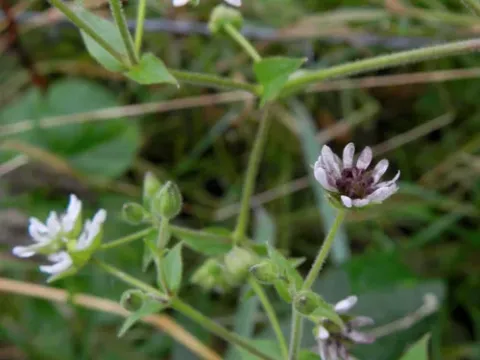
The most visible symptom of Stellaria smut is the replacement of the floral parts with a dark, dusty mass of spores, giving the flowers a charred or "smutty" appearance.
Infected flowers are usually significantly deformed, appearing swollen with shattered petals, as the stamens and pistils are consumed by the developing fungal spores.
Plants affected by the pathogen may exhibit altered growth patterns, such as increased branching or stunted overall stature, caused by the systemic colonization of the mycelium.
The presence of fine, dark brown to black dust (teliospores) on the flowering parts is a diagnostic indicator that confirms the infection in the field.
During humid conditions, these spore masses become highly visible, turning the flowering tips of the chickweed plants into dark, powdery clusters.
##conditions##The development and spread of Microbotryum stellariae are highly favored by cool, moist environmental conditions, which typically occur in early spring or during temperate autumn periods.
High soil moisture is essential for the germination of teliospores, ensuring that the fungus can successfully penetrate the emerging chickweed seedlings.
The presence of dense chickweed populations facilitates the rapid spread of the disease, as spores are easily transferred between closely growing plants by wind currents.
Minimal tillage practices may contribute to the persistence of the disease, as the fungal spores remain on the surface of the soil, ready to infect the next generation of weeds.
Mild winters and cool, wet springs provide the perfect window for the buildup of the inoculum in the field, leading to more frequent infection events.
The harm caused by this fungus is primarily limited to its effect on the weed population, as it reduces the reproductive success of chickweed by replacing seeds with spores.
However, from an agronomic perspective, this disease does not provide effective control of chickweed, as the host plant continues to compete for resources throughout most of the growing season.
Relying on this fungus to control weeds is ineffective and risky, as it does not prevent the initial competition between the weeds and the crops for water, sunlight, and nutrients.
The accumulation of massive amounts of spores in the soil and on vegetation increases the risk of contamination in the field, necessitating strict weed management programs.
Chickweed itself acts as a reservoir for other agricultural pests and diseases, making its presence in crop fields a constant threat, regardless of whether it is infected by smut.
Effective management requires a proactive approach centered on standard agricultural practices to eliminate chickweed before the flowering stage.
- Implementation of crop rotation to break the life cycle of weeds.
- Application of systemic herbicides during the early stages of chickweed development.
- Deep plowing to bury plant debris and reduce the surface concentration of fungal spores.
- Regular sanitation of field borders, irrigation ditches, and nearby non-crop areas.
- Use of certified, weed-free seeds to prevent the introduction of new populations.
Integrated weed management should prioritize the physical or chemical elimination of the weeds rather than waiting for biological suppression by the smut fungus.
Frequent field scouting allows for the identification of weed hotspots, enabling targeted interventions that prevent the further spread of both the weed and the fungal pathogen.