
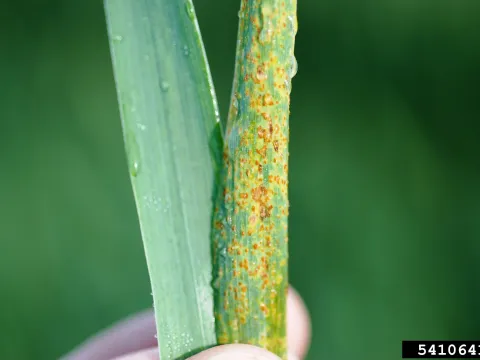
Stem rust
Puccinia graminis
The causative agent of stem rust is the fungus Puccinia graminis, a highly specialized basidiomycete that poses a global threat to cereal production.
What the section contains
Stem rust
This pathogen is an obligate parasite, meaning it requires living host tissue to complete its life cycle, primarily targeting wheat, barley, rye, and oats.
It possesses a complex life cycle involving different host plants, including cereal crops and barberry (Berberis), where the sexual phase of the fungus occurs.
The fungus produces various spore types, including urediniospores, which can be dispersed by wind currents over hundreds of kilometers, facilitating rapid spread.
Puccinia graminis is notorious for its ability to evolve quickly, generating new races that can bypass the resistance genes previously incorporated into commercial crop varieties.
The primary symptom involves the appearance of elongated, rust-colored pustules, known as uredinia, which develop on stems, leaf sheaths, and sometimes on the heads.
As the infection progresses, the pustules rupture the plant epidermis, exposing masses of dusty spores that are easily detached and spread by the wind.
In the later stages of plant development, these pustules transition to a black color, signaling the formation of teliospores, which are the survival structures of the fungus.
Heavy infection causes the stems to weaken, leading to lodging, which severely hinders mechanical harvesting and increases yield losses at the end of the season.
Visually, infected fields may appear to have a brownish, scorched appearance, which is most noticeable when inspecting the stems closely during early morning hours.
The development of stem rust is heavily dependent on moisture and temperature, with optimal infection occurring in warm and humid weather conditions.
Temperatures ranging from 18 to 25 degrees Celsius are ideal for spore germination and the penetration of the fungus into the plant's vascular tissue through stomata.
Prolonged periods of leaf wetness, such as dew, fog, or frequent rainfall, are critical prerequisites for the successful establishment of the disease in a field.
Dense, high-yield canopies often trap humidity, creating a microclimate that is exceptionally favorable for the rapid secondary spread of the fungal pathogen.
Wind direction and speed play a decisive role in the long-distance migration of spores, allowing the disease to transition from regional focal points to widespread epidemics.
Stem rust is considered one of the most destructive diseases in agriculture, capable of causing total yield loss if environmental conditions favor the pathogen.
The fungus diverts vital nutrients and water away from the developing grain, leading to shriveled kernels, lower test weights, and poor milling quality.
Lodging caused by structural damage to the stems complicates harvesting operations and often leads to secondary losses due to grain spoilage or germination in the ear.
Besides immediate yield reduction, the economic impact includes the costs of intensive fungicide programs required to mitigate the disease during high-risk seasons.
Infected crops often lack sufficient vigor, which can also affect the subsequent germination potential and vitality of the seeds used for the following season.
The most effective strategy for long-term management is the breeding and deployment of resistant crop cultivars that possess durable resistance genes.
Eradicating barberry bushes near agricultural areas helps break the fungal life cycle, reducing the initial inoculum pressure at the start of the season.
Good agricultural practices, such as crop rotation and the management of volunteer cereal plants, are essential to reduce the overall disease pressure in a region.
Timely application of systemic fungicides, particularly those containing triazoles or strobilurins, is crucial when the first signs of pustules are detected.
Careful management of nitrogen fertilization helps to prevent overly lush canopy growth, which can otherwise create an environment more conducive to rust development.