
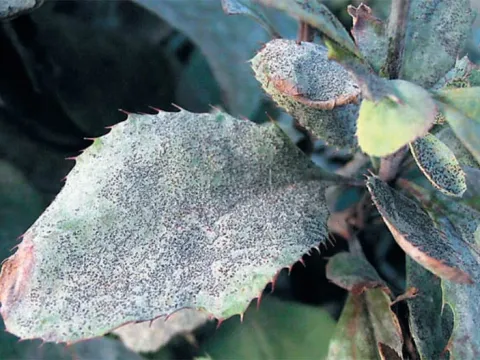
Powdery mildew of barberry
Erysiphe berberidis
The disease is caused by the fungus Erysiphe berberidis (formerly known as Microsphaera berberidis), a specialized obligate parasite.
What the section contains
Powdery mildew of barberry
This fungus survives by extracting nutrients from the living cells of the host plant, forming an extensive network of hyphae on the surface.
The pathogen completes its life cycle by producing asexual conidia for rapid dispersal and sexual cleistothecia for overwintering.
It remains dormant in infected buds or as fruiting bodies on fallen leaves during the winter months, awaiting favorable conditions.
Host susceptibility is generally restricted to the Berberis genus, making various ornamental barberry species particularly vulnerable.
The primary symptom is the appearance of white, powdery fungal growth on the leaves, young shoots, and occasionally the berries.
Initially, the spots are small and scattered, but they gradually expand and merge, giving the plant a dusty or flour-coated appearance.
As the infection matures, the white mycelium may turn grayish, and small black pinpoints (cleistothecia) become visible within the fungal mat.
Affected leaves tend to curl, become distorted or brittle, and often drop prematurely, significantly impacting the shrub's aesthetic value.
Young twigs exhibit stunted growth, twisting, and dieback, which alters the natural architecture and healthy shape of the barberry bush.
Powdery mildew thrives in conditions characterized by high relative humidity and moderate temperatures, typically during late spring or summer.
Fluctuating day and night temperatures combined with heavy morning dew promote the rapid germination of fungal spores.
Poor air circulation, often resulting from dense, overgrown plantings or lack of pruning, creates a stable microclimate for the fungus.
Excessive use of nitrogen-based fertilizers results in rapid flushes of succulent, tender growth that are highly susceptible to infection.
Shaded locations or lack of proper sunlight exposure further weaken the plant's natural defenses, allowing the fungus to spread unchecked.
The fungus disrupts the plant's photosynthesis process by covering leaf surfaces, leading to overall physiological stress and reduced vitality.
Reduced vigor makes the barberry plant more susceptible to winter injury and environmental stress, potentially leading to branch dieback.
Severe infestations ruin the ornamental appeal of the plant, rendering it unsuitable for landscaping purposes due to its sickly appearance.
Chronic infection limits the production of flower buds, resulting in decreased blossom potential and stunted fruit development.
Persistent infestations weaken the structural integrity of the shrub, making it more prone to secondary attacks by other pests or diseases.
Immediate sanitation, including the pruning and destruction of severely infected branches, is the first and most critical step in management.
Proper horticultural practices, such as annual thinning of the canopy, improve airflow and light penetration, reducing fungal pressure.
Application of fungicides, such as sulfur-based products, triazoles, or strobilurins, should be scheduled at the first sign of mildew symptoms.
- Remove and discard all debris and fallen leaves from beneath the shrubs.
- Avoid overhead irrigation to minimize leaf wetness.
- Ensure adequate spacing between plants to maintain ventilation.
- Use balanced fertilizers and avoid high nitrogen during the peak infection season.
Always rotate fungicidal modes of action to prevent the development of resistant fungal strains within the garden environment.