
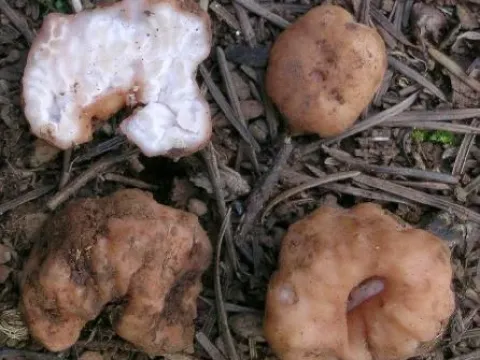
Leucogaster citrinus
Leucogaster citrinus
Leucogaster citrinus is a species of hypogeous fungus belonging to the family Albatrellaceae. It typically develops its fruiting bodies beneath the soil surface, closely associated with the roots of various woody plants.
What the section contains
Leucogaster citrinus
The fungus functions as an ectomycorrhizal partner, forming complex networks around plant roots. While mycorrhiza is often beneficial, excessive colonization can disrupt the metabolic balance of the host plant under certain conditions.
Morphologically, Leucogaster citrinus is characterized by yellowish fruit bodies that produce spores dispersed primarily by soil fauna. Its presence is often indicative of specific soil chemical profiles.
Scientific interest in this fungus stems from its ability to alter nutrient uptake efficiency. Understanding its biological cycle is essential for managing root health in sensitive crops and forest nurseries.
Taxonomists highlight its adaptability to varying soil types. Its role in the rhizosphere is complex, requiring careful observation to distinguish between a beneficial symbiont and a pathogen affecting plant vitality.
Optimal development of Leucogaster citrinus occurs in moist, humus-rich soils with a slightly acidic reaction. It thrives in shaded, cool environments with stable soil moisture.
Temperature range is a critical factor, with active growth favoring cooler temperatures between 10°C and 15°C. Heat stress significantly limits the development of its mycelial network.
Soil aeration plays a vital role in its distribution. While it prefers moist environments, waterlogged soils can restrict the mycelium, leading to distinct patterns of growth in the root zone.
The presence of root exudates from compatible host plants is essential. Without these specific nutrients, the fungus cannot complete its lifecycle and form its characteristic subterranean fruiting bodies.
Changes in soil composition, especially the overuse of artificial fertilizers, can disrupt the natural environment needed by this species, often forcing it into a dormant phase.
The harm associated with this fungus involves the competition for limited soil nutrients, particularly nitrogen and phosphorus, which the fungus may sequester for its own growth.
Prolonged heavy colonization of the root system can result in reduced growth rates of the host plant. This impact is most pronounced in younger plants that are still establishing their root structures.
Mechanical damage to root tissues can occur during the formation of extensive mycelial mats, creating entry points for secondary soil-borne pathogens and potentially leading to root rot.
The presence of the fungus might serve as a stressor, reducing the overall resistance of the crop to other diseases or environmental conditions such as drought or frost.
Economic damage is typically limited but can be significant in forest nurseries or specialized agricultural plots where root health is critical for plant uniformity and marketability.
Effective management includes maintaining a balanced soil pH and preventing excess soil moisture. These environmental controls are more sustainable than relying on chemical interventions.
Crop rotation and proper soil cultivation techniques help disrupt the continuity of mycelial mats, preventing the buildup of large fungal colonies in the rhizosphere.
Introducing beneficial soil microorganisms can help restore the ecological balance and prevent the dominance of species that may negatively impact the target crop.
Using well-decomposed organic matter improves soil structure and promotes healthy plant growth, making plants more resilient to any potential interference from subterranean fungi.
Regular site monitoring and soil analysis allow for early detection of fungal activity, enabling proactive adjustments to fertilization and irrigation strategies to protect crop health.