
Leucopaxillus
Leucopaxillus
The genus Leucopaxillus consists of basidiomycete fungi belonging to the Tricholomataceae family. It is crucial to emphasize that these fungi are not plant pathogens and do not cause diseases in agricultural crops.
What the section contains
Leucopaxillus
Biologically, these organisms function as saprotrophs, primarily feeding on leaf litter, humus, and decaying wood. They are essential for soil ecosystem health as they facilitate the decomposition of organic matter.
By breaking down complex plant remains, they contribute significantly to the carbon and nitrogen cycles, making nutrients more accessible in forest and field soil ecosystems.
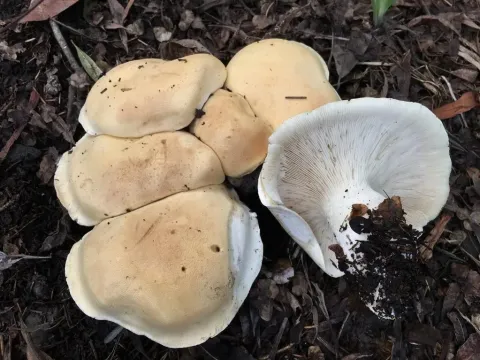
Morphologically, Leucopaxillus species are characterized by light-colored or white fruit bodies with lamellate hymenophores. A white spore print is a key diagnostic feature for mycologists.
Some species within this genus may form mycorrhizal associations with trees, contributing to the health and vitality of woodland areas rather than acting as a parasitic threat to crops.
The main sign of Leucopaxillus presence in the soil is the appearance of fruit bodies, which often grow in clusters or distinct arcs within wooded or organic-rich areas.
The caps of these fungi are typically firm, with white or cream-colored flesh. The gills are often crowded and can be attached to the stem or slightly decurrent.
Seeing these mushrooms indicates high soil organic matter content and good moisture levels, which are generally positive traits for overall soil fertility.
Unlike true plant pathogens, their presence does not cause foliage wilting, necrosis, or stunted growth in nearby plants, as they do not attack living plant tissues.
Fruit bodies usually appear during periods of high humidity, particularly in late summer and autumn, when environmental conditions favor fungal reproduction.
Successful growth of the Leucopaxillus mycelium requires an abundance of organic residues, such as woody debris or heavy leaf mulch, in the topsoil layers.
These fungi thrive in slightly acidic to neutral soil environments with consistent moisture, which supports the expansion of their underground fungal network.
Temperature is a critical factor; moderate temperatures during the transition seasons are ideal for the development of fruit bodies above the soil surface.
Good soil aeration is necessary for mycelial development, as these fungi prefer environments that are not excessively compacted or waterlogged.
In highly managed agricultural soils, routine tillage and the use of chemical inputs typically create conditions that are unfavorable for these saprotrophic fungi.
Leucopaxillus poses no threat to agricultural production and is not considered a harmful organism for crops or ornamental plants.
There is no economic loss associated with the presence of these fungi in farming operations, as they occupy an ecological niche that does not conflict with crop cultivation.
Misidentifying these saprotrophs as pathogens can lead to unnecessary concerns, but they have no capability to degrade living plant structures.
Their role is strictly limited to soil organic decomposition, which serves to enhance, rather than detract from, the long-term biological potential of the field.
Farmers do not need to implement any monitoring or mitigation strategies for this genus, as it is a harmless component of the soil biodiversity.
There are no control measures recommended for Leucopaxillus, as it is not a pest or disease vector within an agricultural or gardening context.
If the appearance of mushrooms is considered aesthetically undesirable in landscaping, simple mechanical removal of the fruit bodies is sufficient.
Maintaining a clean field surface by removing excess woody debris can help prevent the accumulation of organic matter that supports fungal growth.
Standard soil preparation and irrigation management are sufficient to keep the local ecosystem balanced without needing specific antifungal treatments.
The application of fungicides against these mushrooms is discouraged as it is both unnecessary and potentially harmful to beneficial soil microflora.