
Leucoscypha leucotricha
Leucoscypha leucotricha
Visible signs of infection include the appearance of small, cup-shaped fruiting bodies, which typically display bright yellow or orange colors.
What the section contains
Leucoscypha leucotricha
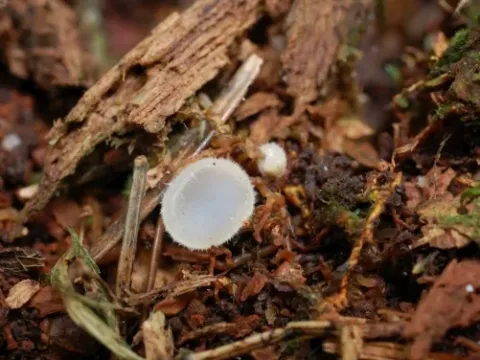
A diagnostic feature of this fungus is the presence of distinct white hairs along the margins of the apothecia, which are easily observable under slight magnification.
The host plant tissues often exhibit signs of necrosis or rapid decay, as the fungus actively decomposes organic matter in its vicinity.
Mycelial growth can spread across moist substrates, covering affected areas with a delicate network before the formation of visible fruiting bodies.
Early stages of infection might be difficult to detect, as the structures are often minute and reside within the decomposing surface tissues of plants.
The pathogen is the fungus Leucoscypha leucotricha, a member of the order Pezizales that functions primarily as a saprotroph but can exhibit opportunistic parasitic traits.
The life cycle involves the production of spores that are easily dispersed by wind and splashing water, facilitating the spread of the fungus across new sites.
As an ascomycete, it produces asci containing ascospores, which are the main structures for sexual reproduction and dispersal.
The fungus is adept at breaking down complex organic compounds, particularly cellulose, allowing it to thrive on various types of plant debris.
Morphological identification is usually achieved through microscopic examination of the spores and the characteristic marginal hairs of the fruiting bodies.
High relative humidity is the most critical environmental requirement for the growth and successful reproduction of the fungus.
Optimal development occurs in temperate climates with temperatures ranging between 15 and 22 degrees Celsius, favoring both vegetative and reproductive phases.
Accumulated plant debris on the soil surface acts as a primary reservoir for the pathogen, sustaining it throughout periods of unfavorable conditions.
Poor soil aeration and high plant density create a microclimate that traps moisture, providing a perfect incubator for fungal development.
Inadequate sunlight exposure in dense crop canopies further exacerbates the situation by maintaining moisture levels on the ground for extended periods.
The harm caused by Leucoscypha leucotricha is primarily related to the accelerated degradation of plant tissues, which weakens the host's overall vitality.
When the fungus attacks the base of the plant or the root system, it disrupts physiological processes, potentially leading to wilting and stunted growth.
In agricultural settings, it can cause premature breakdown of organic mulch, reducing the effectiveness of soil moisture conservation efforts.
It can also serve as a secondary colonizer, allowing more aggressive pathogens to invade tissues that have been weakened by the initial fungal activity.
While often seen as a saprotrophic recycler, in high-density nurseries or greenhouses, it can become a nuisance by damaging young seedlings and transplant material.
Control strategies emphasize sanitation and the modification of environmental conditions to make them less favorable for fungal colonization.
Incorporating plant residues deep into the soil through tilling helps to accelerate decomposition by soil microorganisms, reducing the surface area available to the fungus.
Improving drainage and ensuring proper spacing between plants are key cultural practices to lower humidity levels and prevent moisture accumulation.
Fungicidal applications are generally reserved for high-risk environments like nurseries, where prophylactic measures are necessary to protect young crops.
- Promote good air circulation through proper plant density.
- Maintain clean greenhouse conditions to avoid spore buildup.
- Avoid overhead irrigation that keeps soil surfaces constantly wet.
- Remove and properly dispose of heavily infested organic debris.