
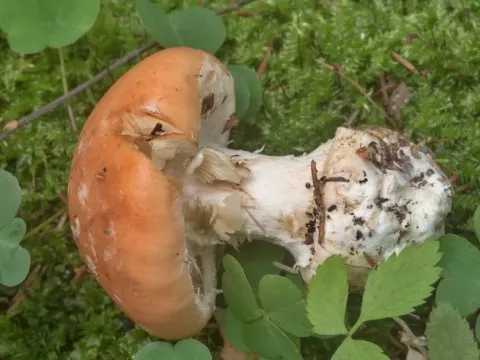
Leucortinarius
Leucortinarius
The genus Leucortinarius belongs to the family Tricholomataceae. In the context of agronomy, it is crucial to recognize that this fungus is not a plant pathogen and does not cause agricultural diseases in crops.
What the section contains
Leucortinarius
The primary species is Leucortinarius bulbiger, which functions primarily as a saprotroph or a mycorrhizal associate within forest ecosystems. It lacks the specialized virulence factors required to attack live tissues of agricultural crops.
The fungus propagates via spores that disperse naturally in environments with high humidity and abundant organic matter. It does not infiltrate plant vascular systems or cause cellular decay in cultivated fields.
From a botanical standpoint, it is often confused with Cortinarius due to morphological similarities. However, the white spore print of Leucortinarius serves as a key diagnostic feature for mycologists to distinguish it from other genera.
Scientific studies confirm that this fungus occupies a niche in forest soil decomposition processes. It is completely benign concerning commercial farming, vegetable production, and large-scale grain cultivation.
The development of Leucortinarius is governed by forest soil conditions rather than agricultural practices. It thrives in acidic soils, specifically in temperate zones where organic matter accumulates in layers.
Mycorrhizal associations with host trees are essential for its continued survival in the wild. High soil moisture levels and stable temperatures during the autumn months facilitate the production of fruit bodies.
In fields, the regular tilling of the soil disrupts the fungal mycelial network, making it nearly impossible for Leucortinarius to establish a permanent colony in well-managed agricultural land.
Environmental factors such as pH levels and the availability of lignin-rich substrates determine the extent of its presence. It rarely ventures beyond the edges of forested areas or woodlots.
The fungus is adapted to undisturbed environments. Consequently, intensive farming practices that involve high levels of mechanical disturbance are natural inhibitors to its growth cycle.
No protective measures or chemical interventions are necessary to control Leucortinarius. Since it does not threaten plant health, it is excluded from all integrated pest management (IPM) programs.
Standard agronomic practices, such as soil cultivation and crop residue management, are more than sufficient to prevent any accidental fungal growth in field margins.
Maintaining a balanced ecosystem around agricultural plots helps to manage the presence of forest-dwelling fungi. There is no economic loss associated with this species.
Farmers do not need to apply fungicides specifically for this fungus. If fungicides are used for other crop diseases, they may suppress mycelial activity, but this is incidental rather than a targeted control measure.
Field monitoring should remain focused on true pathogens rather than non-pathogenic forest species like Leucortinarius to ensure efficient allocation of resources.