
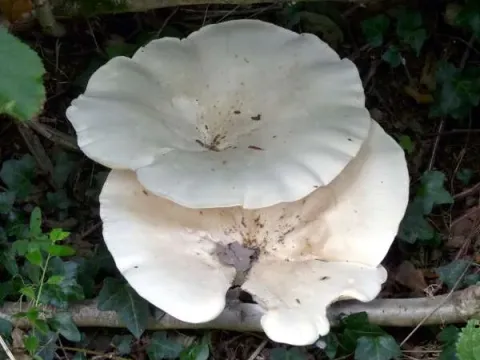
Leucopaxillus giganteus
Leucopaxillus giganteus
Leucopaxillus giganteus is a basidiomycetous fungus that belongs to the Tricholomataceae family. While primarily a saprotroph, it is recognized in agronomy as the cause of fairy ring symptoms in turfgrass environments.
What the section contains
Leucopaxillus giganteus
The pathogen develops an extensive underground mycelial network. This network grows radially, decomposing organic matter but simultaneously altering soil hydrology by creating water-repellent zones.
Biologically, the fungus is characterized by the production of massive fruiting bodies that often appear in concentric circles, indicating the age and expansion rate of the colony beneath the surface.
It typically targets turfgrass, pastures, and meadow ecosystems. The presence of the fungus significantly disrupts the balance of the rhizosphere, leading to the decline of host grasses.
This is classified as a mycogenic growth disorder. It acts as a major competitor for soil resources, effectively starving the plants of essential nutrients and moisture.
The primary symptom is the appearance of fairy rings, which manifest as circular or arc-shaped bands of discolored grass. The grass may appear darker green or, more commonly, chlorotic and withered.
During humid weather, large, white to cream-colored mushrooms emerge along the perimeter of these rings. These fruiting bodies are the most visible evidence of a mature fungal colony.
The soil inside the affected circle becomes extremely hydrophobic. Due to the density of the mycelium, water cannot penetrate the root zone, leading to rapid plant stress and drought damage.
A dense, white, felt-like layer of mycelium can often be observed in the root zone when the soil is inspected, which actively inhibits gas exchange and nutrient uptake.
In later stages, the grass within the ring may die off completely, resulting in bare soil patches that are often colonised by secondary weed species.
The fungus thrives in soils with high organic content, particularly where there are buried logs, thick layers of thatch, or other non-decomposed plant materials.
Moderate moisture levels combined with warm temperatures promote the rapid growth of the mycelium and the emergence of visible sporocarps (mushrooms).
Dispersal occurs via airborne spores and the continuous lateral expansion of the vegetative mycelium through the soil profile.
Soil aeration and pH levels play a role in colony growth. The fungus tends to dominate in well-drained soils where organic debris is readily available for decomposition.
Poor lawn maintenance, especially the lack of proper dethatching, provides the organic substrate necessary for the fungus to establish itself and thrive.
The primary damage is aesthetic, as the rings cause unsightly discoloration and patches in lawns, golf courses, and managed landscapes.
The hydrophobic nature of the colonized soil creates a permanent drought effect, which eventually kills off desired grass species, requiring significant renovation efforts.
By competing for nutrients and space, the fungus suppresses the growth of competitive turf species, making the area more susceptible to weed invasion.
The fungal exudates may have allelopathic effects on nearby vegetation, preventing proper root development and causing long-term damage to the plant community.
In agricultural settings, the fungus can decrease the quality of forage on pastures, making the area less productive for livestock feeding.
Routine aeration and dethatching are the most effective cultural practices to disrupt the mycelial network and improve soil water penetration.
Applying high-quality wetting agents is crucial to overcome soil hydrophobicity and ensure that water and fertilizers reach the root zone of the grass.
Regular mowing and proper nitrogen management help maintain a dense turf, which can often outcompete or mask the presence of minor fungal colonies.
Manual removal of fruiting bodies before they release spores can help slow down the expansion of the fungus into adjacent areas.
For severe infestations, removing the affected soil, including the mycelium layer, followed by soil remediation and reseeding, is the most reliable way to clear the infection.