
Leucogastraceae
Leucogastraceae
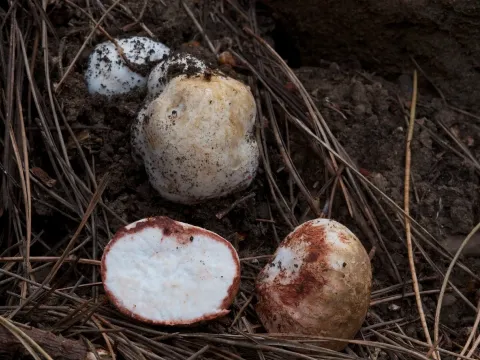
The family Leucogastraceae consists of hypogeous fungi that produce their fruiting bodies beneath the soil surface or within leaf litter.
What the section contains
Leucogastraceae
These fungi are well-known as obligate ectomycorrhizal symbionts, establishing intimate relationships with the roots of various forest tree species.
While they are often ecologically beneficial, in specific nursery conditions, they can behave as opportunistic competitors for host resources.
The pathogen spreads primarily via spores, which remain dormant in the soil until environmental conditions become optimal for germination.
Their mycelial structure allows them to colonize the rhizosphere extensively, sometimes forming dense mats that affect root nutrient uptake.
Identifying Leucogastraceae presence in the field is challenging because the fruiting bodies are typically hidden from view.
Above-ground symptoms often include stunted growth and chlorotic leaves, indicating that the root system is under significant stress.
Below-ground examination reveals a whitish mycelial coat surrounding the finer roots, which effectively inhibits the plant's ability to absorb water.
In heavily colonized areas, fine root necrosis may occur, leading to poor plant vigor and eventual wilting of susceptible seedlings.
Fruiting bodies can be detected during physical excavation as white, rounded, and sometimes aromatic structures embedded in the upper soil horizon.
The development of Leucogastraceae is strongly favored by forest soils characterized by a thick layer of organic matter and high moisture levels.
Temperatures ranging from 15 to 22 degrees Celsius provide the ideal metabolic window for rapid mycelial expansion and colonization.
Poor soil aeration and compaction create an anaerobic environment that often triggers increased fungal activity and inhibits plant root respiration.
Acidic soil environments, typical of coniferous forests, support the persistence and long-term viability of these hypogeous fungal communities.
Lack of crop rotation in forest nurseries creates a reservoir of spores, facilitating recurrent infection cycles in successive plant generations.
The primary harm caused by Leucogastraceae involves competition with the host plant for essential minerals and water within the root zone.
Increased mycelial density restricts root development, making the seedlings susceptible to environmental stresses such as drought or frost.
Nutrient uptake inhibition leads to decreased biomass production, resulting in significant growth delays that impact forestry output goals.
In cases of severe infection, secondary pathogens may invade the damaged root tissues, potentially leading to widespread seedling mortality.
Economic losses arise from the necessity of culling infected nursery stock and the increased labor costs associated with soil remediation efforts.
Integrated management begins with proper site preparation, such as deep tilling to improve soil aeration and disrupt fungal mycelial networks.
Applying systemic fungicides to the soil substrate can effectively reduce spore load and protect younger seedlings during their critical growth stage.
Incorporating beneficial microbial agents, such as Trichoderma species, helps promote a healthy rhizosphere and naturally suppresses growth.
Adjusting soil pH through liming can often create unfavorable conditions for these acid-loving hypogeous fungi, thereby limiting their spread.
Regular sanitation measures, including the disposal of infected plants and surrounding soil, are essential to contain localized outbreaks.