
Lachnellula calyciformis
Lachnellula calyciformis
Lachnellula calyciformis is a fungal pathogen belonging to the class Leotiomycetes that causes stem and branch canker diseases in various conifer species.
What the section contains
Lachnellula calyciformis
This fungus behaves as a facultative parasite, primarily targeting trees that are already under stress, eventually colonizing and destroying the living tissues of the host plant.
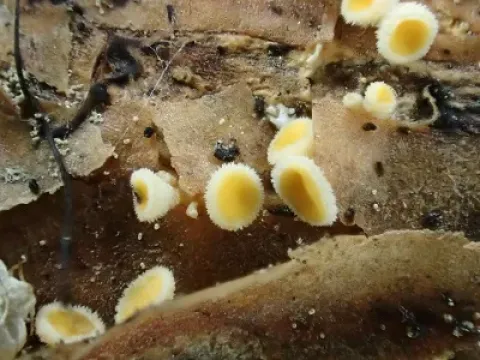
The fungus is easily identified by its reproductive structures known as apothecia, which appear as small, bright orange, cup-shaped discs on the bark of the infected tree.
The mycelium of the fungus penetrates the periderm and cambium layers, disrupting the flow of nutrients and moisture, which leads to the formation of localized necrosis or cankers.
Dissemination is facilitated by spores produced in the apothecia, which are released into the atmosphere and spread by wind or water splashes, initiating new infections on susceptible hosts.
The most visible symptom of an infection is the development of sunken lesions or cankers on the branches and stems, which are often accompanied by resin exudation.
During the sporulation stage, clusters of characteristic orange or yellowish cup-shaped apothecia emerge from the cracked bark within the margins of the necrotic areas.
Infected branches exhibit progressive yellowing and browning of the needles, which eventually fall prematurely, signaling an impairment of the vascular transport system.
Callus tissue often forms around the edges of the canker as the tree attempts to wall off the infection, creating a raised, swollen appearance in the bark.
When the bark is removed from an infected site, the underlying wood often appears discolored, brownish, and degraded due to the colonization by the fungal mycelium.
The development of Lachnellula calyciformis is strongly favored by cool, humid weather conditions, particularly during spring and autumn seasons.
Dense, poorly managed forest stands or plantations with limited air circulation are highly susceptible to outbreaks, as they maintain the high humidity required for spore germination.
Trees that are weakened by environmental stressors such as drought, frost cracks, or poor site conditions are significantly more prone to initial fungal colonization.
Dead wood and infected slash left on the forest floor act as reservoirs for the fungus, allowing it to survive during dormant periods and spread to healthy trees.
Mechanical damage to the bark caused by heavy machinery or wildlife provides entry points for spores, significantly increasing the probability of successful infection.
The primary economic impact involves the degradation of timber quality, as the resulting cankers and wood decay render the affected logs unsuitable for high-value uses.
Progressive stem girdling by the cankers can eventually lead to the death of the entire tree, causing mortality rates that vary depending on the severity of the infection.
In forest nurseries, the fungus poses a significant threat to seedling stocks, potentially causing substantial losses and increasing the costs of reforestation programs.
Infection reduces the overall vigor of the trees, making them more susceptible to secondary attacks by bark beetles and other wood-boring insects.
The loss of tree aesthetic value and canopy density negatively impacts urban and recreational forest areas, necessitating costly removal and sanitation measures.
Effective management begins with strict sanitation practices, including the removal and disposal of infected trees or branches to reduce the amount of inoculum in the stand.
Thinning and proper site management to improve air circulation within the forest canopy are critical for creating an environment less favorable to fungal growth.
In nursery settings, the application of fungicides may be employed to protect young seedlings, especially during periods of high humidity and spore release.
Minimizing mechanical injury during silvicultural activities is essential to prevent wounding, which serves as a primary portal for fungal colonization.
Regular monitoring of forest health and early detection of canker symptoms are vital for implementing timely control actions before the disease reaches epidemic levels.