
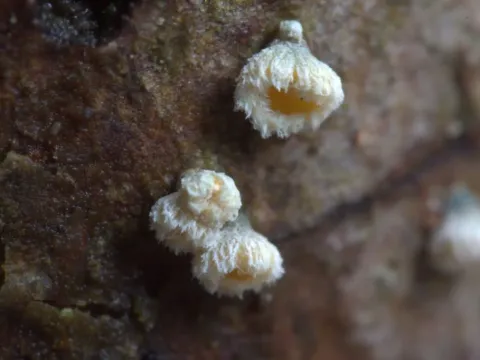
Lachnellula pseudofarinacea
Lachnellula pseudofarinacea
The disease is caused by the fungus Lachnellula pseudofarinacea, an ascomycete species that acts as a pathogen on various coniferous tree species.
What the section contains
Lachnellula pseudofarinacea
This fungus primarily colonizes the bark and cambium layers, where it develops its vegetative mycelium and eventually produces reproductive structures.
The fungus produces characteristic small, cup-shaped fruiting bodies known as apothecia, which emerge through the bark of the infected host plant.
The life cycle involves the dispersal of ascospores via wind and rain, which land on susceptible host tissue and initiate new fungal infections.
Survival of the pathogen occurs through established mycelium within the wood, allowing it to persist throughout unfavorable seasons until conditions improve.
The most visible sign of infection is the presence of small, whitish to cream-colored cup-shaped apothecia clustered on the bark of twigs or stems.
Infected bark areas often display symptoms of necrosis, characterized by darkening, drying, and longitudinal cracking of the outer bark layers.
Resinosis, or excessive sap flow, is a common defensive response by the tree in areas where the fungus is actively degrading the living tissue.
Needles on infected branches may turn yellow and eventually drop prematurely, leading to thinning of the crown and branch dieback over time.
- Small cup-like fruiting bodies on branches.
- Localized bark necrosis and cracking.
- Increased resin exudation (resinosis).
- Premature needle chlorosis and abscission.
High humidity and moderate temperatures are the most critical environmental drivers for the development and spread of Lachnellula pseudofarinacea.
Dense, overcrowded plantations that lack proper air circulation create a microclimate that remains damp for long periods, favoring spore germination.
Trees that are under stress, whether from drought, frost damage, or insect attacks, are significantly more susceptible to infection by this pathogen.
Frequent rainfall episodes facilitate the splash dispersal of spores and maintain the bark surface in a state conducive to fungal establishment.
The presence of physical wounds or bark injuries provides an ideal entry point for the fungal mycelium to penetrate the tree's natural defenses.
The primary damage caused by this fungus includes the dieback of branches, which impairs the tree's photosynthesis and reduces its overall aesthetic value.
Severe infections can girdle stems, cutting off nutrient and water supply, which may eventually lead to the death of the entire tree.
In forest stands, the fungus reduces the growth rate and wood quality, leading to economic losses and reduced environmental health of the area.
Infected trees act as reservoirs for spores, spreading the disease to healthy neighboring trees and creating widespread infection patches.
The cumulative effect of tissue necrosis and stress makes the affected conifers more prone to further opportunistic pests and secondary diseases.
Sanitary pruning and the removal of infected branches, followed by the safe disposal or destruction of debris, is essential for stopping the spread.
Ensuring proper spacing between trees improves airflow, which helps to lower humidity levels in the canopy and reduces the risk of fungal growth.
Chemical control involving copper-based fungicides applied during susceptible periods can help protect healthy bark from successful spore colonization.
Maintaining tree vigor through appropriate fertilization and site management helps the plant better resist the onset and spread of the pathogen.
Regular inspections are necessary to detect the disease early, as removing localized infections before they spread is key to successful long-term control.