
Lachnellula flavovirens
Lachnellula flavovirens
Lachnellula flavovirens is an ascomycete fungus that acts as a pathogen on various conifer species. It belongs to the order Helotiales and is typically associated with bark and cambium tissues of weakened trees.
What the section contains
Lachnellula flavovirens
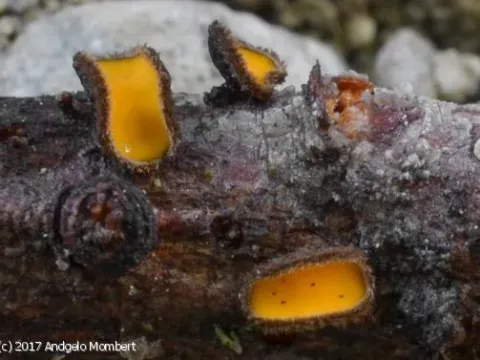
The fungus produces distinct reproductive structures known as apothecia. These are small, cup-shaped fruiting bodies that exhibit a characteristic bright yellow-green color, serving as a primary identifier of the species.
Dissemination occurs via spores, which are dispersed primarily by wind and rain splashes. Once they land on suitable substrate, they germinate and penetrate the host tissue, eventually establishing a vegetative mycelium.
The fungus is often considered a secondary or opportunistic pathogen, colonizing trees already stressed by drought, insect damage, or poor site conditions rather than attacking fully vigorous trees.
Overwintering occurs within the host tissue as mycelium, allowing the fungus to survive cold temperatures and initiate new rounds of infection during the favorable moisture conditions of spring.
The most visible symptom of an infestation is the presence of small yellow-green apothecia scattered across the bark of twigs, branches, or trunks, particularly during damp weather.
Infected areas often exhibit localized necrosis or sunken bark lesions. As the disease progresses, the bark may crack or peel away, revealing the underlying woody tissue weakened by the mycelial growth.
Needle yellowing and premature needle cast are common indicators of the disease. This occurs when the fungal infection disrupts the flow of water and nutrients through the conductive tissues of the branches.
Dieback of branches is a classic sign, as the lesions eventually girdle the branch, cutting off transport to the distal portions and leading to rapid drying and discoloration of the needles.
In advanced cases, the bark may show signs of structural decay and fragmentation, which provides visual evidence of the chronic stress the tree is experiencing due to the fungal pathogen.
High relative humidity and consistent moisture are essential for the development and spore release of Lachnellula flavovirens. Dense stands with poor air circulation are particularly prone to outbreaks.
Trees subjected to environmental stress, including water deficit or atmospheric pollution, are much more susceptible to the fungal colonization of their bark tissues.
Physical injuries to the tree, caused by snow weight, hail, or wood-boring insects, provide entry points for the fungal spores, facilitating deep tissue infection.
Optimal growth for the fungus is achieved under moderate temperatures, typically ranging from 10 to 20 degrees Celsius, often coinciding with the wet seasons of spring and late autumn.
Poor site management, including lack of thinning and failure to remove dead wood, fosters a microclimate that keeps the humidity levels high enough to support fungal reproduction.
The disease contributes to reduced growth rates in young conifer plantations, impacting the overall productivity and economic value of the forest stand over time.
Loss of foliage due to needle cast reduces the tree's photosynthetic capacity, which leads to a general decline in health and vitality, making it prone to secondary pest infestations.
Branch dieback significantly reduces the aesthetic value of ornamental and landscape trees, often necessitating pruning or removal of affected specimens.
While typically not causing sudden catastrophic mortality, the fungus plays a role in the gradual thinning of forest stands, especially in stressed or neglected environments.
Severe infestations can lead to structural damage to the stems and branches, which predisposes the trees to further decay by other wood-rotting organisms in the forest ecosystem.
Sanitation practices, such as the systematic removal and destruction of infected branches, are crucial for reducing the inoculum load within the forest or garden setting.
Proper silvicultural management, including thinning to increase air circulation and reduce stand density, helps in creating a microclimate unfavorable for fungal growth.
Fungicides containing copper can be used as a preventative measure in nursery settings, particularly when young plants are exposed to prolonged damp conditions.
Maintaining high tree vigor through proper site selection, fertilization, and insect control is the best long-term strategy for preventing colonization by opportunistic pathogens.
Sterilization of pruning tools between trees is a necessary operational standard to prevent the mechanical transmission of fungal spores from diseased individuals to healthy ones.