
Lachnellula canker
Lachnellula
Description
Symptoms
Early symptoms include localized depressions and necrotic patches on the bark, which progressively develop into elongated, sunken lesions.
Callus tissue formation is a common defensive response, resulting in swollen, bulging ridges of bark around the edges of the active canker.
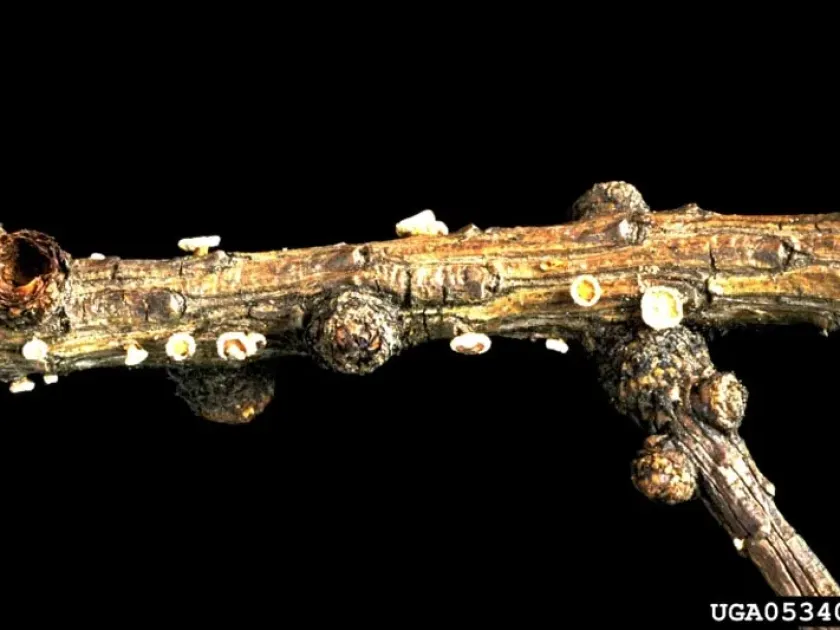
The appearance of vibrant orange or cream-colored apothecia bursting through the bark is the most characteristic sign of an active infection.
Needle yellowing and premature shedding are frequently observed on branches located above the point of infection, signaling a failure in nutrient and water transport.
Severe infestations often result in the formation of large, deep open wounds that can eventually girdle the trunk, causing the death of the upper crown.
Pathogen
Lachnellula canker is caused by ascomycete fungi, primarily Lachnellula willkommii, known for causing the larch canker, a devastating disease of conifer species.
The fungus produces small, cup-shaped fruiting bodies known as apothecia, which typically display bright orange to yellow colors when mature.
The pathogen colonizes the bark and cambium layers of the host, spreading its mycelium into living tissues and effectively disrupting the vascular system of the tree.
Spores are dispersed by wind and rain, infecting the tree through wounds, cracks in the bark, or the bases of needles, particularly during cool and moist weather.
The life cycle of the fungus allows it to persist in the host for several years, gradually expanding the canker as the mycelium grows and consumes the bark.
Conditions for development
The disease thrives in areas with high humidity, frequent rainfall, and cool temperatures, making spring and autumn the periods of highest risk.
Dense, overcrowded plantations provide the perfect environment for the fungus, as poor air circulation keeps branches wet for extended periods.
Frost cracks, hail damage, and insect punctures provide easy entry points for spores to infect the susceptible tissues of the conifer.
Trees planted in low-lying areas or boggy sites with poor drainage are significantly more susceptible to outbreaks due to physiological stress.
Lack of direct sunlight and poor soil nutrition further weaken the host's natural defenses, allowing the fungus to establish itself more easily.
Why it matters
The primary damage is caused by the interruption of the flow of water and nutrients, which leads to branch dieback and overall tree decline.
In forestry, the disease causes significant economic loss by reducing timber quality and leading to the death of young, vulnerable trees.
In ornamental landscaping, trees lose their aesthetic value as they become deformed, sparse, and brittle due to the spreading cankers.
Without intervention, repeated infection cycles can kill individual trees and threaten the health of the entire coniferous population in the area.
Persistent infections act as a local reservoir for fungal spores, ensuring the disease remains a constant threat to nearby healthy plants.
Protection
Effective management begins with aggressive pruning of all infected branches, ensuring cuts are made well below the visible signs of the canker.
All removed materials should be promptly destroyed or removed from the site to prevent the further spread of fungal spores via air currents.
Applying copper-based fungicides during the dormant season and early spring can provide a protective barrier against new spore infections.
Proper site management, including thinning stands to improve airflow and selecting sites with adequate drainage, is vital for long-term prevention.
- Sanitary pruning and tool sterilization after each cut.
- Sealing pruning wounds with protective fungicides or wound dressings.
- Regular inspection of the bark for early symptoms.
- Improving tree vigor through proper fertilization and watering.
Discussion
No discussions yet — be the first.