
Chaga
Inonotus obliquus
The causative agent of this disease is the wood-decaying fungus Inonotus obliquus, commonly known as the chaga mushroom or clinker polypore. It is a parasitic fungus that primarily attacks hardwood trees.
What the section contains
Chaga
The fungus enters the host through wounds in the bark, such as frost cracks or broken branches. Once inside, it begins to decompose the heartwood of the tree over many years.
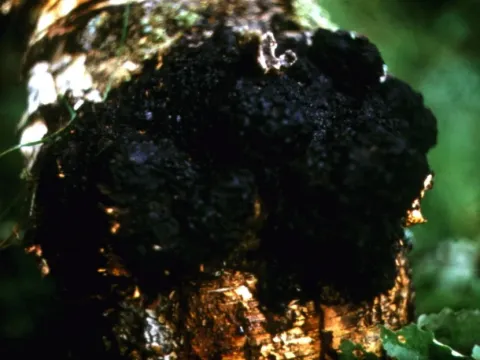
The sterile conk, which is the part used for medicinal purposes, is actually a mass of mycelium and wood tissue. It has a rough, black, charcoal-like exterior surface.
Internally, the conk is dense and rusty-brown in color. The fungus secretes enzymes that break down lignin and cellulose, leading to a condition known as white rot.
Only after the tree has died does the fungus produce its true, fertile sporocarp, which releases spores to propagate the infection to new host trees.
The most prominent sign is the presence of hard, black, sterile growths on the trunk of the tree. These growths are irregular and can reach significant sizes.
The foliage of infected trees often shows signs of stress, such as thinning or premature yellowing. This occurs because the fungus disrupts the transport of water and nutrients.
Deep inside the trunk, the wood becomes soft and decayed. When a tree is felled, the characteristic light-colored decay with black lines can be observed in the cross-section.
Crown dieback is a common symptom in late-stage infections. Branches in the upper part of the canopy may become brittle and break off easily during wind events.
Trees affected by the fungus show reduced vigor and growth rates. Over time, the structural integrity of the entire trunk is compromised.
The fungus thrives in cool, humid climates, which is why it is most commonly found in birch forests across the northern hemisphere. High humidity facilitates spore germination.
The spread of Inonotus obliquus is dependent on the availability of entry points on the tree surface. Physical injuries caused by humans, animals, or weather are essential for infection.
Old-growth forests provide a stable environment for the fungus to persist. Dense stands with poor airflow can create a conducive microclimate for spore dispersal.
Seasonal patterns also play a role, with spring being a critical time for infection as the tree's sap flow creates a moist environment for fungal spores to lodge.
Trees growing in suboptimal conditions or experiencing environmental stress are less capable of compartmentalizing the infection, allowing the fungus to spread more rapidly.
The primary harm caused by this fungus is the destruction of the tree's heartwood, which significantly lowers the commercial value of the timber.
Infected trees become major safety hazards in recreational areas and along roadsides due to the risk of stem failure. They are prone to snapping during high winds.
The ecosystem services provided by the tree are gradually lost as it slowly declines and eventually dies. This affects the biodiversity of the surrounding area.
Chaga disease acts as an infectious agent, turning an infected tree into a source of inoculum that can affect the entire stand if left unmanaged.
Financial losses can be substantial in managed forests, as the presence of rot makes entire logs unusable for high-quality wood production.
Effective management begins with regular forest monitoring to identify and remove infected individuals. Sanitation logging is the most common method to reduce inoculum levels.
Preventative measures include protecting trees from mechanical injuries during forestry operations. Minimizing logging damage is key to long-term control.
In urban forestry, pruning wounds should be treated with appropriate sealants to discourage fungal colonization, although the efficacy is debated among specialists.
Encouraging tree health through proper fertilization and avoiding soil compaction can boost the tree's natural defense mechanisms against fungal pathogens.
- Frequent forest health assessments.
- Removal of heavily infected trees.
- Sterilization of pruning tools.
- Protective maintenance of valuable specimen trees.