
Chalkbrood disease
Ascosphaera
Chalkbrood disease is caused by the fungus Ascosphaera apis, a specialized pathogen that affects honey bee larvae. This fungus is widely recognized in beekeeping due to the distinct appearance of the infected brood.
What the section contains
Chalkbrood disease
The life cycle of the fungus involves the production of spores that are incredibly resilient. These spores can persist for years in the hive environment, on hive equipment, and in the soil, awaiting favorable conditions to germinate.
Infection occurs when worker bees feed larvae contaminated food. Once inside the larval gut, the spores germinate, producing a mycelium that spreads throughout the host's tissues, eventually killing the larva.
Upon the death of the larva, the fungus erupts through the cuticle, forming fruiting bodies. These bodies appear as white or grey fungal mats that give the dead larvae a chalk-like, mummified appearance.
Spread within the colony is facilitated by nurse bees attempting to clean infected cells. Additionally, the movement of combs between colonies by beekeepers can spread the spores across the entire apiary.
The most diagnostic sign of the disease is the presence of hard, chalk-like mummies in the brood nest. These mummies are brittle, dry, and easily dislodged from the comb cells.
Early-stage infections show dead larvae covered in a fluffy, white mold-like growth. Before mummification, the larvae may appear swollen and slightly moist, which is the primary period for fungal proliferation.
A "shot-brood" pattern is often observed, where patches of sealed brood are interspersed with open cells containing mummified larvae. This uneven brood pattern indicates colony distress and infection.
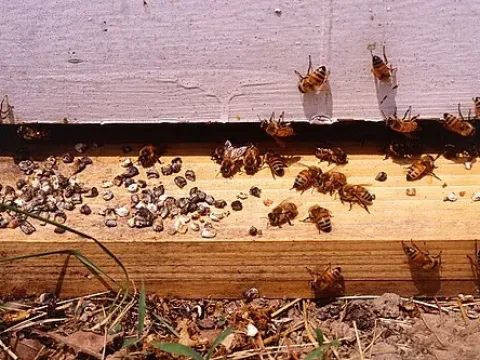
Beekeepers may notice mummified larvae at the hive entrance or on the bottom board, as adult bees work to remove the infected brood from the nest. This is a common behavioral response, though often insufficient.
In severe cases, the colony population begins to decline as the brood dies before emerging. This leads to a weaker workforce and a significant decrease in the colony's ability to maintain thermal regulation and collect nectar.
The development of chalkbrood is closely linked to high humidity and temperature fluctuations within the hive. Colonies that struggle to maintain optimal microclimates are significantly more prone to infection.
Nutritional stress, including a lack of pollen or poor-quality feed, weakens the larvae's immune system, making them more susceptible to fungal colonization. Chronic stress from other pathogens also plays a role.
Poor beekeeping practices, such as excessive use of antibiotics that disrupt beneficial gut flora or the sharing of contaminated equipment between colonies, are primary drivers of disease transmission.
Springtime conditions, characterized by cold nights and damp environments, are highly favorable for Ascosphaera apis growth. During this time, the colony's ability to keep the brood nest warm is often challenged.
Inadequate ventilation in the hive leads to moisture accumulation, creating the perfect damp environment for the fungus to sporulate and infect young larvae successfully.
The primary damage caused by chalkbrood is the loss of developing bees. This reduces the size of the adult population, directly impacting the colony's honey production and overall vigor.
The colony incurs economic losses due to the need for treatment, colony management time, and the potential loss of comb resources that must be discarded to prevent further spread.
Infected apiaries act as reservoirs for the fungus, threatening neighboring colonies. The spores can be transported by foraging bees or during robbing events, complicating the control of the disease.
The increased labor demand on nurse bees to clean out dead larvae leaves fewer bees available for foraging, further depressing colony productivity and winter preparedness.
If left unmanaged, chronic chalkbrood infections can lead to colony collapse, especially in temperate regions where the colony needs a robust workforce to survive the winter season.
The foundation of chalkbrood management is optimizing hive conditions. Beekeepers should focus on adequate ventilation, keeping colonies dry, and ensuring the brood nest is properly insulated.
- Regular sanitization and disinfection of all hive equipment and tools.
- Culling of old, dark, or potentially contaminated combs where spores may reside.
- Requeening with genetics known for hygienic behavior, which helps bees clean out infected cells more effectively.
- Applying recommended fungicidal treatments when infestations are significant and environmental conditions remain unfavorable.
- Ensuring the colony has access to high-quality protein sources to bolster larval immunity.
Prevention focuses on maintaining strong, healthy colonies through good apiary management. Avoid splitting weak colonies and ensure that hive density does not promote the rapid spread of pathogens.
Consistent monitoring of brood frames allows for the early detection of mummies. Early intervention is key to preventing a localized infection from becoming a colony-wide crisis.