
Inocybe terrigena
Inocybe terrigena
Inocybe terrigena is a species of gilled mushroom belonging to the Inocybaceae family. It is important to note that this fungus is not a plant pathogen and does not cause diseases in agricultural crops; instead, it plays a vital role in soil ecology as a saprotroph and mycorrhizal associate.
What the section contains
Inocybe terrigena
The fungus acts as a decomposer of organic matter, breaking down plant residues such as leaf litter and woody debris. This process contributes significantly to the formation of humus, enhancing soil fertility and structure in forest and garden ecosystems.
Mycelial networks of this fungus permeate the upper soil layers, facilitating nutrient cycling. By breaking down complex organic molecules, the fungus releases nitrogen and other essential elements back into the soil, making them available for plant uptake.
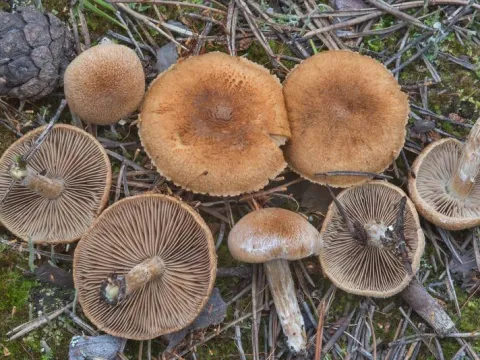
Morphologically, Inocybe terrigena is distinguished by a scaly cap and a distinct ring-like zone on its stem. The fruiting bodies are typical of the genus Inocybe, exhibiting a characteristic fibrous texture that gives the genus its name.
Due to the presence of muscarine in many Inocybe species, this fungus is considered toxic to humans. While it poses no threat to plant health, it is essential for field workers and agriculturalists to recognize it as a non-edible species.
The primary sign of Inocybe terrigena is the emergence of fruiting bodies during late summer and autumn. The cap, typically 3 to 8 centimeters in diameter, features a brownish, scaly surface that is easily recognizable to trained eyes.
As the mushroom matures, its gills transition from a pale beige to a darker brownish-grey hue due to spore production. This color change serves as a diagnostic feature when attempting to identify the species in natural settings.
Presence in the soil can be confirmed by observing white, thread-like mycelial strands radiating through damp organic matter. These mycelia are indicative of the fungus's active feeding phase on decaying plant materials near tree roots.
The stem is usually sturdy, with a noticeable fibrous texture and a prominent ring near the top. This morphology helps distinguish it from other soil-dwelling fungi that may share similar habitats but lack these specific structural characteristics.
When examined in the field, the lack of immediate color change upon bruising the flesh is a key observation. This stability helps mycologists differentiate it from other species that might react with color changes upon exposure to air.
The development of Inocybe terrigena fruiting bodies is heavily dependent on specific environmental conditions, particularly moisture levels. Adequate soil humidity following rainfall is the primary trigger for the fungus to initiate reproductive growth.
A moderate temperature range, typically between 15°C and 22°C, is optimal for the metabolic activity of the mycelium. Prolonged drought or excessive heat can cause the fungus to go dormant, limiting its visibility above ground.
Soil composition significantly influences the distribution of this fungus. It thrives in well-aerated soils that are rich in partially decomposed organic content, such as forest loam or garden beds supplemented with mulch.
The pH of the soil is another critical factor, with the species showing a preference for slightly acidic to neutral environments. Highly alkaline or saline soils can be detrimental to the growth and development of the mycelial network.
Dispersal occurs primarily via microscopic spores, which are easily transported by wind currents. This allows the fungus to colonize new sites rapidly whenever environmental conditions meet its ecological niche requirements.