
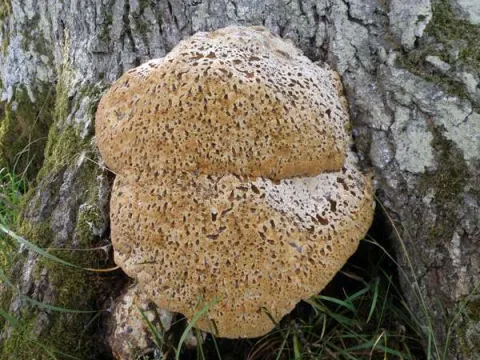
Inonotus dryadeus
Inonotus dryadeus
Inonotus dryadeus is a parasitic basidiomycete fungus known to cause white heart rot in various tree species, particularly oaks.
What the section contains
Inonotus dryadeus
The fungus enters the tree through open wounds, exposed roots, or bark cracks, colonizing the sapwood and heartwood. It breaks down cellulose and lignin, leading to severe decay.
The fungus produces perennial fruiting bodies, typically near the base of the tree or on the buttresses, which release spores to spread the infection.
It acts as a primary decomposer of living hardwood trees, slowly compromising their structural integrity over several years.
The presence of Inonotus dryadeus often goes unnoticed until visible fruiting bodies emerge, by which time the internal damage to the tree is usually advanced.
The most distinctive symptom is the presence of large, fleshy, bracket-like fruiting bodies that are initially yellowish-brown and eventually turn dark brown.
Young fruiting bodies often exude a viscous amber-colored liquid, which gives the fungus its common name, the «weeping bracket».
Internally, the wood exhibits a characteristic white, mottled rot, often with black lines separating the decaying areas.
Infected trees may show a decline in canopy health, with yellowing leaves and premature leaf drop occurring throughout the growth season.
The decay at the base of the tree leads to instability, making the tree highly susceptible to being toppled by wind or heavy snow.
This fungus thrives in moist environments, particularly in forest areas where humidity levels remain consistently high.
Soil compaction and poor drainage are significant environmental stressors that favor the establishment of the fungus in tree root systems.
Trees that are already stressed due to drought, pollution, or poor soil nutrition are significantly more susceptible to infection.
The spread of the fungus is facilitated by the close proximity of trees, allowing the mycelium to move through interconnected root systems.
Warmer temperatures in the spring and early autumn promote the rapid development of new fruiting bodies and spore dispersal.
The primary threat of Inonotus dryadeus is the destruction of the tree's basal support, which leads to total tree failure.
Trees infested with this fungus represent a significant safety hazard in urban landscapes, parks, and around infrastructure.
Timber value is completely lost once the rot reaches the merchantable sections of the trunk, causing economic loss in forestry management.
The disease contributes to the thinning of canopy cover, altering the microclimate within the affected area.
Prolonged presence of the fungus creates a permanent infectious site, endangering all surrounding susceptible tree species.
Prevention is the best approach; avoid mechanical injury to tree trunks and roots during landscaping or forestry operations.
Maintain optimal tree vigor through proper irrigation and soil management, as healthy trees are better able to compartmentalize fungal infections.
Infected trees with visible fruiting bodies should be assessed by an arborist and removed if they pose a risk to property or public safety.
When pruning, always use clean tools and treat any large wounds with appropriate sealants to prevent fungal entry.
In forest stands, monitor for early signs of decay and remove dead or diseased trees to reduce the overall spore load in the environment.