
Inonotus radiatus
Inonotus radiatus
Description
Symptoms
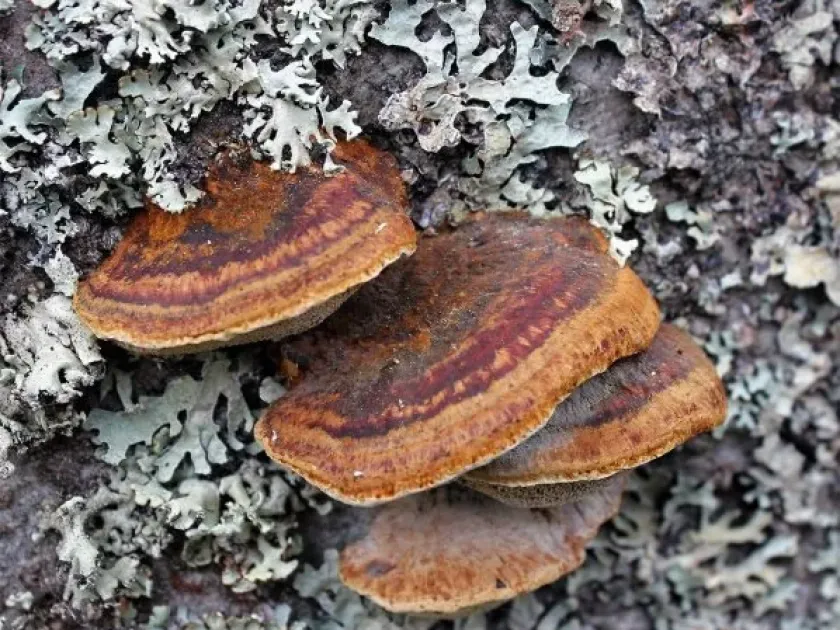
The primary sign of infection by Inonotus radiatus is the appearance of perennial, woody fruiting bodies on the trunk or branches of the host tree. These fungal brackets are typically semi-circular or cushion-shaped.
The upper surface of the fruiting bodies is usually ochre-brown to rust-brown, while the internal tissue displays a distinctive radial-fibrous structure. These brackets are often clustered, making them easy to spot during regular tree inspections.
Internally, the infected wood undergoes a significant change. Initially, the healthy wood darkens to a reddish-brown color, eventually becoming brittle and losing its structural integrity as the fungus decomposes the wood tissue.
In advanced stages of decay, deep cracks appear in the wood, often filled with mycelial mats. This internal degradation renders the tree extremely unstable and prone to snapping or falling during storms.
The visible decline of the tree crown, characterized by branch dieback and thinning foliage, often corresponds to extensive internal decay caused by the fungal activity inside the heartwood.
Pathogen
The disease is caused by the fungus Inonotus radiatus, a member of the Basidiomycota division. It is a parasitic agent responsible for causing white mottled rot in both heartwood and sapwood of various hardwood species.
The pathogen enters the tree primarily through wounds in the bark, broken limbs, frost cracks, or sites of insect infestation. Once inside, the mycelium secretes powerful enzymes that break down cellulose and lignin.
This fungus primarily targets broad-leaved trees, most notably alder and birch, though it can also affect beech, oak, and other deciduous species. In some cases, it persists as a saprotroph on fallen logs and stumps.
Reproduction occurs via basidiospores, which are released from the fruiting bodies and dispersed by air currents. These spores settle on susceptible wounds of neighboring trees, perpetuating the infection cycle.
The fungus is highly resilient, capable of surviving in dead wood for extended periods and enduring harsh winter conditions, which ensures its persistence within forest ecosystems.
Conditions for development
The development of Inonotus radiatus is heavily dependent on moisture levels. It thrives in environments with high relative humidity and consistent wood moisture content, which is necessary for the active growth of mycelium.
Overcrowded plantations or dense forest stands with poor air circulation create a microclimate that promotes the spread of spores and the successful colonization of new host trees.
Open wounds that remain untreated serve as primary entry points for the pathogen. Trees experiencing physiological stress—due to drought, soil compaction, or pollution—show decreased resistance to fungal invasion.
The temperature range typical of temperate climates is optimal for the fungal life cycle. The fruiting bodies are highly adaptable, maintaining their capacity to produce spores throughout the vegetative season.
Poor forestry practices, such as excessive damage during logging operations or the failure to clear infected debris, significantly increase the risk of disease outbreaks in both urban and natural forest settings.
Why it matters
The most severe threat posed by Inonotus radiatus is the loss of mechanical strength in the host tree. As the fungus consumes the structural wood, the tree becomes a significant hazard, capable of collapsing suddenly.
Economic damage is substantial in the forestry sector, as heart rot significantly reduces the volume of merchantable timber, rendering infected wood useless for high-quality construction or carpentry.
In urban landscapes, infected trees pose a severe risk to public safety. Falling limbs or entire trees can cause significant damage to buildings, power lines, and automobiles, while also endangering pedestrians.
Ecological degradation occurs as the disease accelerates the death of canopy trees. This leads to gaps in the forest cover, which can alter local light conditions and negatively impact the surrounding flora and fauna.
The weakening effect of the fungus makes trees more susceptible to secondary attacks from stem-boring insects, further compounding the damage and accelerating the eventual death of the affected plant.
Protection
Effective management requires strict sanitation measures, including the prompt removal and destruction of infected trees to eliminate the source of inoculum within the area.
Wounds caused by pruning or natural damage must be treated with appropriate fungicides and wound dressings to create a protective barrier against fungal colonization.
Maintaining proper stand density is a crucial preventive step. Thinning allows for better air circulation and sunlight penetration, which reduces humidity and discourages fungal growth.
Regular phytopathological monitoring is essential, especially in public areas. Early detection of fungal brackets allows for timely interventions, such as pruning infected limbs, to save the tree.
- Perform pruning during dry weather to minimize infection risk.
- Sterilize all pruning tools with alcohol or bleach between trees.
- Clear all stumps and decaying wood that may harbor the fungus.
- Enhance tree vitality through proper fertilization and watering to boost immune defenses.
Discussion
No discussions yet — be the first.