
Inocybe whitei
Inocybe whitei
Description
Symptoms
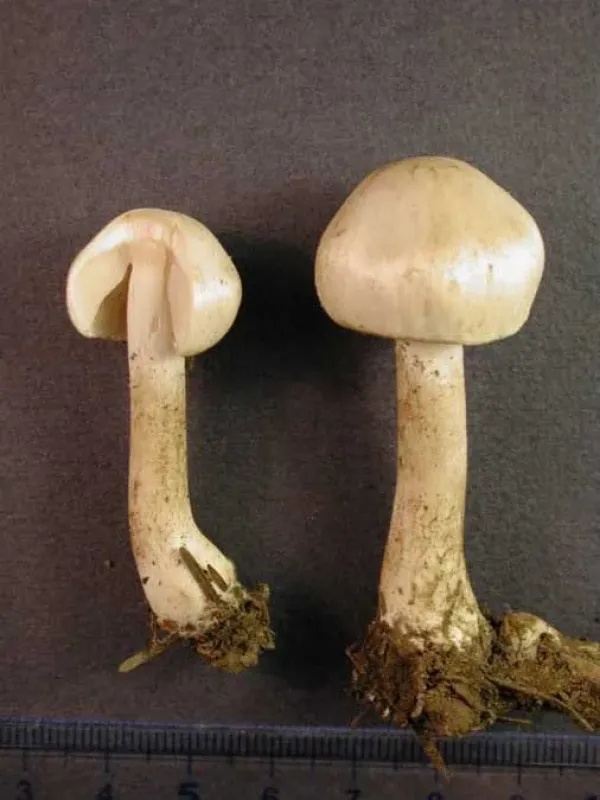
The primary sign of its presence is the emergence of fruiting bodies. The cap is initially conical or bell-shaped, often developing a prominent umbo as it matures, with a surface that can appear reddish or ochre-toned.
The gills are adnate to nearly free and change color from whitish to a distinctive tobacco-brown or rusty-brown as the spores ripen. This color shift is a helpful indicator for identifying mature specimens in the wild.
The stem is generally fibrous and firm, often lighter in color than the cap. It does not exhibit signs of decay or localized tissue necrosis, which would typically be associated with pathogenic fungal colonization.
Microscopic analysis reveals that the gills are covered in specialized cells. For professional identification, observing the shape and wall thickness of these cystidia under a microscope is standard practice.
No symptoms of wilting, chlorosis, or root rot are associated with the presence of this fungus. In fact, its growth is often found in thriving, healthy forest areas where mycorrhizal networks are intact.
Pathogen
Inocybe whitei, commonly known as White's fibercap, is a fungal species belonging to the family Inocybaceae. It is essential to clarify that this fungus is not a plant pathogen and does not cause diseases in agricultural crops.
This species is a known mycorrhizal fungi, which lives in a symbiotic relationship with the root systems of various tree species. Biologically, it is a basidiomycete that forms visible fruiting bodies on the soil surface under favorable conditions.
The fungus interacts with the host plant at the rhizosphere level, providing essential nutrients such as phosphorus to the plant in exchange for carbohydrates. This interaction is beneficial to forest health rather than detrimental.
Systematically, Inocybe whitei is characterized by specific microscopic structures on its gills, known as cystidia, which are key for identification. These structures distinguish it from other related fungi within the diverse Inocybe genus.
It does not possess the enzymatic ability to digest live plant tissue or trigger immune responses characteristic of pathogenic attacks. Therefore, it should not be categorized as a plant disease in any agronomic context.
Conditions for development
Inocybe whitei thrives in moist, humus-rich soil, typical of deciduous forests and parklands where suitable host trees are present. It requires specific moisture levels in the leaf litter to develop its fruiting bodies.
The peak period for fruit body formation is generally during late summer and autumn. Increased precipitation and moderate temperatures are the primary environmental drivers for its emergence.
Spore dissemination is primarily driven by air currents, allowing the fungus to colonize new areas where root symbiosis is possible. Soil pH and aeration are also significant factors influencing the stability of its mycelial network.
While the mycelium is persistent, its activity is largely dictated by the metabolic state of the host plant. A healthy tree host supports a more extensive and stable fungal colony within the rhizosphere.
The fungus is well-adapted to temperate climates, showing a high degree of resilience to fluctuating temperatures, provided that the soil ecosystem remains undisturbed by heavy chemical contamination.
Why it matters
Inocybe whitei does not pose any harm to agricultural or commercial horticultural crops. It is not an invasive species and does not compete for resources in a way that would limit plant growth or productivity.
The main concern regarding this fungus is human health, as many species within the Inocybe genus contain muscarine, a toxin that causes adverse effects if ingested. It is strictly classified as non-edible.
In forestry, the presence of such fungi is often viewed positively, as they contribute to the biological health of the ecosystem. They play a role in nutrient cycling and soil structure improvement through their symbiotic networks.
No economic damage is associated with this fungus. Consequently, there are no established thresholds or management protocols for "control" in agricultural or forestry production systems.
It is not subject to quarantine regulations, and its presence does not require phytosanitary measures or the application of fungicides, as it is a natural component of healthy woodland soils.
Protection
Since Inocybe whitei is not a pathogen, no control measures are required. Standard agronomic practices emphasize maintaining the balance of soil microbiota rather than attempting to eradicate beneficial or neutral fungal species.
In public areas or landscapes where children and pets are present, the manual removal of fruiting bodies is recommended purely as a safety precaution to prevent accidental ingestion of the toxic mushrooms.
Education is the most effective management strategy. Informing the public and staff about the identification of poisonous fungi prevents potential health incidents without disturbing the local ecosystem.
The use of fungicides is strongly discouraged, as it would negatively affect the beneficial mycorrhizal fungi essential for tree vitality and overall soil health.
Overall, maintaining healthy soil conditions and following safety protocols for mushroom handling is sufficient to manage any issues related to the presence of this species in recreational or natural environments.
Discussion
No discussions yet — be the first.