
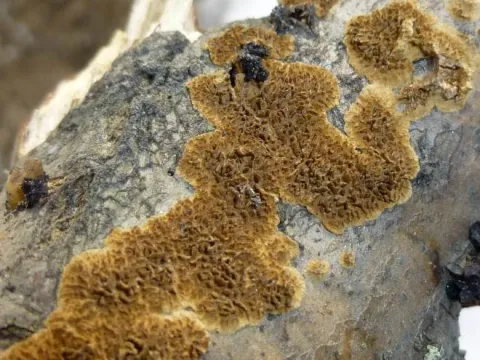
Inonotus rickii
Inonotus rickii
Inonotus rickii is a fungal pathogen belonging to the Basidiomycota division. It functions primarily as a wound parasite, capable of causing significant decay in the heartwood and sapwood of various host trees.
What the section contains
Inonotus rickii
The fungus is characterized by its ability to cause white rot, a process where the pathogen enzymatically degrades lignin and cellulose, leading to a loss of wood structural integrity.
The life cycle of the fungus includes the production of distinctive fruiting bodies that may appear directly on the bark or near previous mechanical injuries.
The mycelium of Inonotus rickii penetrates deep into the tree, spreading through the xylem and gradually compromising the tree's vascular system and overall health.
Biological studies highlight that this species can adapt to various environmental conditions, making it a persistent threat in both native forests and urban landscaped areas.
The most visible symptom is the formation of irregular, dark-colored fruiting bodies on the trunk or branches, often concentrated near wounds or cracks in the bark.
Infected wood exhibits typical white rot decay patterns, where the structural tissue becomes soft and fibrous. Cross-sections often reveal dark, distinct zone lines within the decayed area.
External symptoms include localized bark necrosis, cracking, and thinning of the canopy. Trees often show signs of general decline, including yellowing leaves and reduced annual growth.
As the decay progresses, the bark in affected areas may peel away or exhibit deep fissures, exposing the internal fungal growth and facilitating spore release.
- Dark, crust-like fruiting bodies on the stem.
- Soft, bleached wood texture (white rot).
- Development of bark cankers or lesions.
- Premature canopy thinning and dieback.
- Visible zone lines within the decayed wood.
The spread of Inonotus rickii is highly dependent on environmental moisture and temperature, which facilitate spore germination and fungal growth.
Wounds caused by storm damage, pruning, or insect activity provide the necessary entry points for the pathogen to colonize the tree's inner tissues.
Trees undergoing environmental stress, such as drought or poor soil conditions, are more susceptible to infection, as their natural chemical defense systems are weakened.
Favorable conditions for the disease typically involve warm temperatures and high humidity, which promote the development of spores and their transmission via wind or rain.
The presence of old, decaying stumps in the vicinity can act as a reservoir for the fungus, increasing the risk of infection for neighboring trees.
The primary damage caused by Inonotus rickii is the reduction of the tree's structural strength, which significantly increases the risk of trunk failure and windthrow.
In urban settings, the presence of this fungus renders trees hazardous, as they become prone to collapsing, potentially damaging property or causing injury to people.
The progression of white rot destroys the tree's transport systems, leading to a slow decline in health, reduced vitality, and eventual death of the affected specimen.
In forest management, the disease leads to significant economic losses as it degrades the quality of timber, making it unsuitable for commercial use.
The pathogen can persist for many years within the host tissue, causing long-term damage that is often difficult to reverse once the infection is established.
Management involves the systematic removal and destruction of heavily infected trees to prevent the spread of spores to healthy neighboring vegetation.
Preventative measures include avoiding mechanical injury to trunks during routine landscape maintenance and ensuring proper wound care for damaged limbs.
Regular inspections, especially during late summer and autumn, are essential for identifying early symptoms such as bark cracking or the appearance of fruiting bodies.
Disinfecting pruning tools after working on infected trees is a critical step to prevent the transfer of fungal spores between healthy and sick plants.
Promoting general tree vigor through adequate watering and nutrient management can help trees maintain their natural defenses against fungal infections.