
Inonotus cuticularis
Inonotus cuticularis
Description
Symptoms
The most prominent sign of an Inonotus cuticularis infection is the presence of the fungus's characteristic fruiting bodies on the trunk or large branches of the host tree.
These fruiting bodies often emerge from cracks, wounds, or the base of the tree. Affected bark may appear dead, sunken, or discolored, clearly indicating underlying tissue degradation.
Internally, the wood undergoes a rapid transformation. The decayed section becomes soft, fibrous, and whitish in color, losing its structural integrity and mechanical strength over time.
External symptoms in the tree's canopy include premature leaf yellowing, thinning foliage, and dieback of individual branches as the fungus interferes with the vascular supply of water and nutrients.
Advanced stages of the disease often lead to the formation of hollows or cavities within the trunk, significantly increasing the risk of structural failure and wind breakage.
Pathogen
Inonotus cuticularis is a wood-decay fungus belonging to the order Hymenochaetales. It acts as a parasitic pathogen that primarily colonizes various hardwood tree species, causing significant internal damage.
The fungus invades the tree through wounds or exposed wood, where its mycelium spreads throughout the heartwood and sapwood. It secretes enzymes that decompose lignin and cellulose, resulting in a distinct white rot.
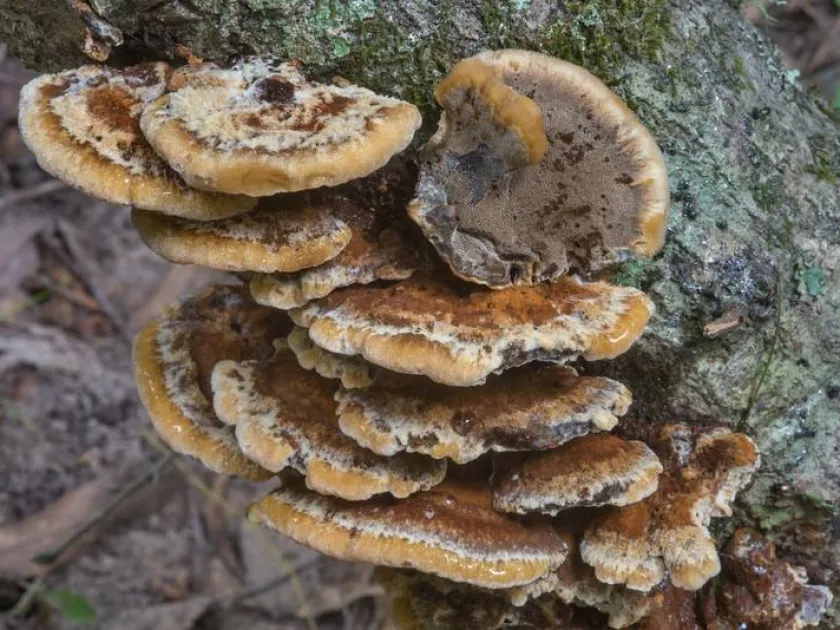
Its reproductive structures, or fruiting bodies, are annual and typically appear in late summer or autumn. They often grow in clusters and have a velvety, yellowish-brown surface, which eventually hardens as the season progresses.
The pathogen is capable of surviving both as a parasite on living hosts and as a saprotroph on dead, decaying wood, making it a persistent threat in forests and managed landscapes.
The biological cycle involves the production of basidiospores that are dispersed by wind and rain, enabling the fungus to spread to new hosts by infiltrating existing bark injuries.
Conditions for development
The development of Inonotus cuticularis is favored by high humidity and moderate temperatures, providing an ideal environment for spore germination and mycelial expansion.
The infection is almost always associated with pre-existing injuries. Frost cracks, sunscald, insect damage, or mechanical wounds caused by heavy equipment serve as entry points for the pathogen.
Trees that are already stressed due to environmental factors, soil compaction, or drought are significantly more susceptible to successful colonization by this fungal parasite.
Dense, poorly managed stands with low air circulation create moisture traps, which facilitate the buildup of spores and increase the frequency of infection in the area.
Spring and early autumn offer the most favorable conditions for the fungus, as these seasons provide the necessary moisture and stable temperatures for the fungus to thrive and reproduce.
Why it matters
This fungus causes severe economic and ecological damage by degrading the quality of wood and leading to the eventual decline and death of valuable hardwood trees.
Because it causes structural rot, the most significant risk is tree failure. Infected trees become hazardous in public parks, urban areas, and forest trails, posing a safety risk to people.
The decay renders the timber unusable for commercial purposes, reducing the overall yield and value of forest stands affected by the pathogen.
Beyond individual tree mortality, the fungus serves as a source of infection that can gradually degrade the entire health of a local forest ecosystem if not managed properly.
The loss of mature, healthy trees disrupts the ecosystem balance and decreases the aesthetic and environmental value of the landscape.
Protection
Effective management begins with strict sanitation practices, such as the early removal and disposal of infected trees to eliminate the source of fungal spores.
Prevention is centered on minimizing physical injuries to trees. Careful handling during forest maintenance and the avoidance of bark damage are critical steps in reducing infection risks.
Regular inspections, especially following severe weather events, help in detecting early signs of fungal growth and allow for timely intervention before the decay becomes critical.
In high-value ornamental trees, localized surgical removal of decaying tissue and application of fungicides to pruning wounds can sometimes slow the progression of the disease.
- Remove and destroy infected wood promptly.
- Protect tree trunks from mechanical damage.
- Monitor tree health periodically in high-traffic areas.
- Improve site drainage and manage stand density.
Discussion
No discussions yet — be the first.