
Boxwood leaf blotch
Hyponectria buxi
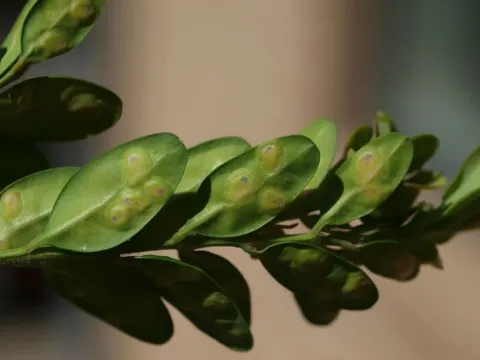
The primary symptom of Boxwood leaf blotch is the appearance of small, circular or irregular spots on the leaves. Initially light in color, they soon turn straw-yellow or brown.
What the section contains
Boxwood leaf blotch
Small black dots, known as apothecia, often develop in the center of these spots. These are the fruiting bodies of the fungus that emerge through the leaf tissue.
As the disease progresses, these spots expand, causing large portions of the leaf to dry out and eventually fall off. This leads to sparse foliage and bare branches.
Infections typically start from the lower, more humid parts of the plant. Over time, the fungus spreads to the upper foliage, significantly affecting the shrub's overall health.
Distinguishing this disease from other fungal spots is often possible by observing the specific structure of the black fruiting bodies on the surface of the necrotic leaf tissue.
The pathogen responsible for this disease is the ascomycete fungus Hyponectria buxi. It is a specialized parasite that primarily targets plants within the Buxus genus.
The fungus overwinters on fallen leaves, where it develops its reproductive structures. When spring arrives, these structures release ascospores into the environment.
Disseminated by wind or splashing water, these spores land on healthy leaves. If the environment is sufficiently moist, the spores germinate and penetrate the leaf surface to begin the infection process.
The fungus colonizes the leaf tissues, consuming nutrients and causing cell death. It persists in infected plant debris, ensuring a continuous cycle of reinfection each season.
The severity of the attack often depends on the plant's health; a stressed boxwood is more susceptible to aggressive colonization by this fungal pathogen compared to a vigorous one.
High humidity and poor ventilation are the most critical factors favoring the development of Hyponectria buxi. The disease thrives in damp, enclosed environments.
Plants grown in dense hedges or those with overcrowded foliage are particularly vulnerable, as stagnant air prevents leaves from drying out after rainfall.
Temperatures ranging from 15°C to 22°C (59°F–72°F) are optimal for the growth of the fungus and the rapid dissemination of its spores throughout the planting.
Shaded locations where sunlight does not penetrate deeply into the shrub canopy also contribute to a moist microclimate, increasing the likelihood of infection.
Excessive overhead watering that wets the foliage is a major trigger. Proper site selection and spacing are essential to minimize these environmental risks.
The most significant harm is the aesthetic damage to the boxwood, which is widely prized for its dense evergreen foliage and use in formal garden designs.
Severe defoliation weakens the plant, reducing its photosynthetic capacity and overall vigor, which makes it more susceptible to other pests and harsh winter conditions.
Repeated yearly infections can lead to the death of entire branches, potentially ruining the desired shape and size of topiary specimens or hedge structures.
Boxwood leaf blotch can spread quickly among nearby plants, turning a manageable problem into a major landscape challenge that requires significant intervention.
Economic losses are cumulative, involving the costs of chemical treatments, the labor involved in pruning, and the potential replacement of severely blighted shrubs.
Sanitation is the cornerstone of control. Regularly collecting and destroying fallen, infected leaves is vital to remove the primary source of the fungus for the following year.
Pruning is equally important; thinning the canopy improves air circulation and allows light to penetrate, which helps keep the foliage dry and inhibits fungal growth.
Chemical control involves applying copper-based fungicides or systemic options such as triazoles. Treatments should be timed to protect young leaves during the early spring flush.
- Water only at the base of the plant to keep leaves dry.
- Ensure proper spacing to avoid overcrowding between shrubs.
- Maintain plant health with adequate nutrition and mulching.
Always disinfect pruning tools after working on infected boxwoods to prevent the accidental transfer of spores to healthy portions of the plant or neighboring shrubs.