
Bovistella radicata
Bovistella radicata
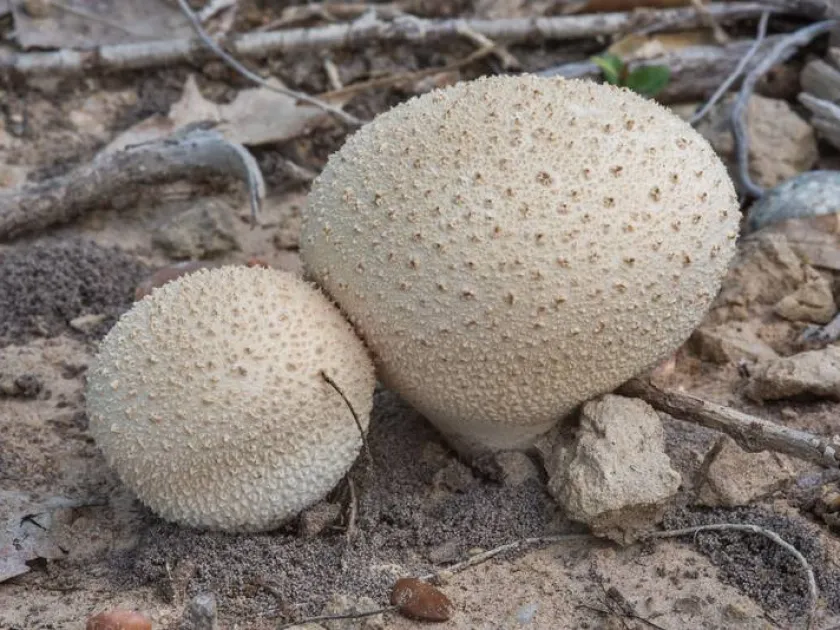
Description
Symptoms
Signs of this fungus are limited to the appearance of its fruiting bodies, typically during the summer and autumn months when moisture levels are optimal.
- Fruiting bodies appear as small, spherical or pear-shaped mushrooms (2–5 cm).
- A distinct mycelial tuft or "root" is visible at the base.
- The surface may appear slightly scaly or smooth.
- As the fungus matures, the interior turns into a powdery spore mass.
Plants located near these fungi show no symptoms of stress, such as wilting, chlorosis, or necrosis. The fungus does not colonize the root systems of living plants.
Distinguishing it from pathogenic root rot is simple: the mycelium of Bovistella radicata remains restricted to the soil layer or organic debris and does not invade the plant's vascular system.
The absence of any lesions or tissue decay on the stems or roots confirms that the plant is not being affected by this organism.
Pathogen
Bovistella radicata is a mushroom belonging to the Agaricaceae family. It is crucial to distinguish this organism from plant pathogens, as it does not cause any plant diseases.
Biologically, this species is classified as a saprotroph. It feeds exclusively on decaying organic matter, such as dead leaves, twigs, or wood fragments within the soil structure.
Unlike parasitic fungi that penetrate and destroy living plant cells, Bovistella radicata lacks the mechanisms required to infect agricultural crops or cause any form of plant damage.
From an agronomical standpoint, its presence indicates that the soil is rich in organic matter and maintains a healthy biological activity, which is generally beneficial for soil structure.
The name radicata refers to the presence of a distinct mycelial cord, or "root-like" structure, at the base of the fruiting body, which helps it stabilize in the substrate.
Conditions for development
The development of fruiting bodies occurs in environments with high humidity and significant amounts of organic debris in the topsoil, such as lawns, gardens, or forest edges.
Moderate temperatures ranging from 15°C to 22°C are ideal for the fungal mycelium to produce visible fruiting bodies on the surface of the ground.
Poor management of organic waste, such as leaving large amounts of leaf litter or wood chips near sensitive crops, can create a favorable microclimate for this species.
Spores are dispersed by wind and rain, allowing the fungus to colonize new areas that provide the necessary organic substrate for its growth.
The fungus thrives in loose, well-aerated soils where organic decomposition processes are actively taking place, contributing to the overall health of the soil ecosystem.
Why it matters
Bovistella radicata poses no threat to agricultural crops. It is not a pest or a disease, but rather a functional component of the soil food web.
It acts as a decomposer, breaking down complex organic molecules into simpler minerals, which may eventually support the nutrient uptake of nearby plants.
There is no evidence of competitive suppression between this fungus and the root systems of garden or orchard plants; it does not hinder their growth or development.
Any negative perception of this fungus is purely aesthetic, as it may be considered a nuisance on manicured lawns or flowerbeds, but this does not constitute actual harm.
In conclusion, the species has a neutral to positive ecological role and should not be considered a risk factor in any plant protection program.
Protection
The use of fungicides to control Bovistella radicata is both unnecessary and discouraged, as they may harm beneficial soil microbes without addressing a real disease.
If the fruiting bodies are considered undesirable for visual reasons, manual removal before the spores are released is the most effective and safe method.
Proper hygiene, such as clearing away excessive leaf litter or decaying wood, will naturally reduce the available food source and limit the appearance of the mushrooms.
Maintaining proper soil aeration and avoiding waterlogging can create conditions that are less conducive to the prolific growth of saprotrophic fruiting bodies.
Ultimately, the best approach is to embrace its role as a natural decomposer and focus on essential agronomic practices for healthy plant growth rather than eradication.
Discussion
No discussions yet — be the first.