
Brazilian phyllosticta
Phyllosticta brazilianiae
Description
Symptoms
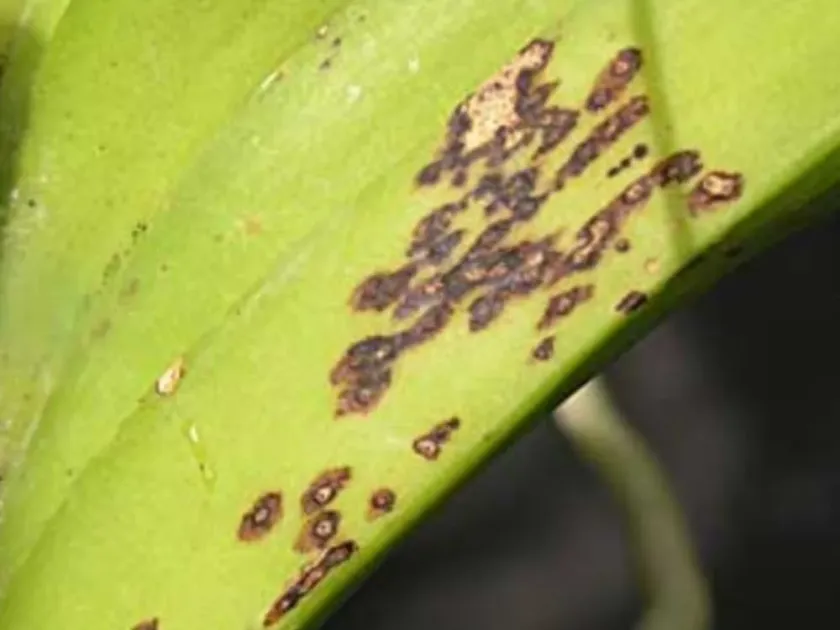
The primary symptom of this disease is the development of small, distinct spots on the leaf surface. These spots are initially light yellow or brown but gradually turn darker as the necrosis progresses.
A hallmark of this infection is the presence of a darker, often raised, margin surrounding the spots. In the center of these lesions, tiny black fruiting bodies (pycnidia) become visible to the naked eye.
Lesions frequently coalesce, creating larger blighted areas across the leaf. Eventually, the dead tissue may dry out, crack, or fall away completely, resulting in characteristic "shothole" patterns on the leaves.
If the infection impacts stems or petioles, the lesions may appear elongated. This type of damage can restrict nutrient flow, causing the distal parts of the plant to wither and eventually die off.
Affected plants often show signs of overall decline, including chlorosis and early senescence. The severity and manifestation of symptoms largely depend on the plant's resistance levels and environmental stress.
Pathogen
The disease is caused by the fungus Phyllosticta brazilianiae, a species belonging to the large genus Phyllosticta. It acts as a parasitic agent specifically targeting the vegetative tissues of various host plants.
The lifecycle of the pathogen involves the production of pycnidia, small fruiting bodies containing conidia. These asexual spores serve as the primary inoculum responsible for both initial infections and subsequent disease spread.
The fungus survives the off-season by hibernating within infected plant debris, fallen leaves, and diseased stems. When conditions become favorable in the spring, the spores are released and dispersed by wind or splashing water.
Infection occurs when spores land on susceptible leaves and penetrate the epidermis, often entering through stomata or mechanical wounds. Once inside, the fungus colonizes the mesophyll, leading to necrotic symptoms.
The biology of Phyllosticta brazilianiae is characterized by its reliance on the host plant for nutritional needs. Understanding this relationship is critical for developing effective agricultural management strategies.
Conditions for development
The development of Brazilian phyllosticta is heavily influenced by high relative humidity. Moist environments are essential for the germination of spores and the subsequent colonization of plant tissues.
The pathogen thrives at temperatures between 20°C and 25°C. Within this range, the incubation period is significantly shortened, allowing the fungus to complete its reproductive cycle rapidly.
Surface wetness, caused by rainfall, dew, or overhead irrigation, is a critical prerequisite for infection. Spores require a film of moisture on the leaf surface to successfully germinate and enter the host.
Poor airflow, often caused by high planting density, creates a stagnant microclimate that retains moisture longer. This environment is highly conducive to the rapid spread of Phyllosticta brazilianiae.
Plants that are weakened by improper fertilization, insufficient light, or environmental stress show increased susceptibility to infection compared to vigorous, well-maintained specimens.
Why it matters
The primary economic impact of this disease is the reduction in photosynthetic capacity, which directly results in stunted growth and lower biomass production in affected plants.
For ornamental plant producers, the loss of aesthetic value is catastrophic. Spotted or blighted foliage renders plants unsalable, leading to substantial financial losses for nurseries and garden centers.
Continuous infection drains the plant's energy reserves, making it more vulnerable to secondary pest infestations or other opportunistic pathogens that thrive on weakened plant tissues.
Severe infestations can lead to premature defoliation, which severely compromises the plant's health and ability to withstand winter or other unfavorable seasonal conditions.
The rapid dispersal of spores through irrigation spray or wind means that a single infected plant can quickly become a focal point for an outbreak throughout an entire greenhouse or field.
Protection
Sanitation is the cornerstone of disease management. Removing and destroying all infected plant material is crucial to reduce the inoculum load and prevent the disease from carrying over to the next season.
Preventive fungicide applications, particularly those containing copper, can be effective in creating a protective barrier on the foliage during periods of high humidity and risk.
Improving spacing and ensuring adequate airflow between plants will significantly reduce leaf wetness. This limits the ability of the fungal spores to germinate and infect the plant leaves.
Implementing a balanced nutrition program helps maintain strong cellular structures, making the plants more resilient against pathogen penetration. Avoiding excess nitrogen is key to preventing overly succulent growth.
If an outbreak occurs, systemic fungicides should be employed to treat the infection. These products are better at managing established colonies by inhibiting mycelial growth deep within the leaf tissue.
Discussion
No discussions yet — be the first.