
Brasiliomyces
Brasiliomyces
The fungus Brasiliomyces is an obligate parasite belonging to the Erysiphaceae family, responsible for causing powdery mildew-like symptoms on various host plants.
What the section contains
Brasiliomyces
The pathogen completes its life cycle by forming mycelium on the surface of plant tissues and producing both asexual conidia for rapid dispersal and sexual cleistothecia for overwintering.
It obtains nutrients from host cells via specialized structures called haustoria, which penetrate the plant epidermis without killing the host cell immediately, ensuring a continuous food supply.
The genus is distinct due to the specific morphology of its cleistothecia appendages, which are critical for identification under microscopic examination by phytopathologists.
As an obligate parasite, Brasiliomyces relies entirely on living host tissues to complete its life cycle and is highly adapted to tropical and subtropical climates.
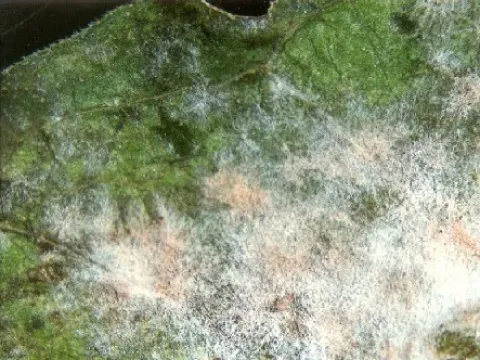
The hallmark symptom of a Brasiliomyces infection is a white, flour-like mycelial growth that appears as patches on the upper and lower surfaces of leaves.
Over time, the white growth becomes thicker and may develop a grayish tint. Tiny, spherical fruiting bodies known as cleistothecia appear, initially yellowish-brown and turning black at maturity.
Severe infestations cause leaves to curl, distort, and eventually dry out, leading to premature leaf drop which significantly stunts the overall development of the plant.
On young shoots and fruit, the infection manifests as discolored spots that gradually expand, covering the entire surface and negatively affecting the quality of agricultural produce.
Chlorosis and necrosis may appear in the later stages of the disease, as the fungal mats prevent the plant from performing photosynthesis efficiently, causing general physiological stress.
Optimal development of the fungus occurs in environments with mild temperatures ranging from 18°C to 25°C and high humidity levels, which promote rapid spore germination.
Lack of proper ventilation in dense plantings or greenhouse environments significantly increases the risk of infection, as stagnant air allows moisture to persist on leaf surfaces.
High nitrogen availability in the soil promotes the growth of succulent, tender plant tissues that are significantly easier for the fungus to penetrate and colonize.
Fluctuating weather conditions, particularly those involving cycles of dryness and humidity, stimulate the release of conidia, facilitating the quick spread of the disease through a field.
Inadequate sanitation in agricultural areas allows the pathogen to persist, as cleistothecia remain viable in leaf litter and crop debris throughout the off-season.
The damage caused by Brasiliomyces is largely due to the diversion of energy from the host plant to the fungal parasite, resulting in reduced vegetative growth and lower yields.
By interfering with photosynthesis, the disease causes the plant to become weaker, which directly impacts its ability to produce fruit and store energy for the next growing season.
In ornamental plants and nursery stock, the aesthetic damage is often severe enough to make the products unmarketable, causing substantial financial losses to growers.
Plants affected by the fungus are inherently more susceptible to secondary infections, such as those caused by opportunistic bacteria or fungi that thrive on damaged plant tissues.
Under favorable epidemic conditions, Brasiliomyces can lead to the total loss of harvest for susceptible crop varieties if no protective measures are taken in time.
Integrated management is essential, focusing on reducing the inoculum density through sanitation and utilizing chemical protection to prevent the establishment of the fungus.
Systemic fungicides, particularly those containing triazoles or strobilurins, are highly effective in managing active infections when applied at the first signs of symptoms.
Cultural practices, such as pruning to ensure proper airflow and removing infected plant parts, are critical to limiting the spread of the pathogen within the orchard or field.
Biological control agents, including specific fungi that hyperparasitize the mildew, are increasingly used in organic or sustainable farming systems to manage the disease.
- Regular field scouting to detect the initial outbreaks of the disease.
- Selecting resistant cultivars as a primary strategy for long-term control.
- Optimizing fertilization programs to avoid over-reliance on high-nitrogen fertilizers.
- Sanitizing tools and equipment to prevent the mechanical transmission of spores.