
Description
Symptoms
Initial symptoms manifest as small, water-soaked spots that elongate along the leaf veins. Over time, these spots turn brown or straw-colored, giving the leaves a characteristic striped appearance.
Under high humidity, a bacterial exudate may be visible on the surface of the lesions. Once it dries, this exudate forms a thin, shiny film or small, dried scales, which is a key diagnostic feature.
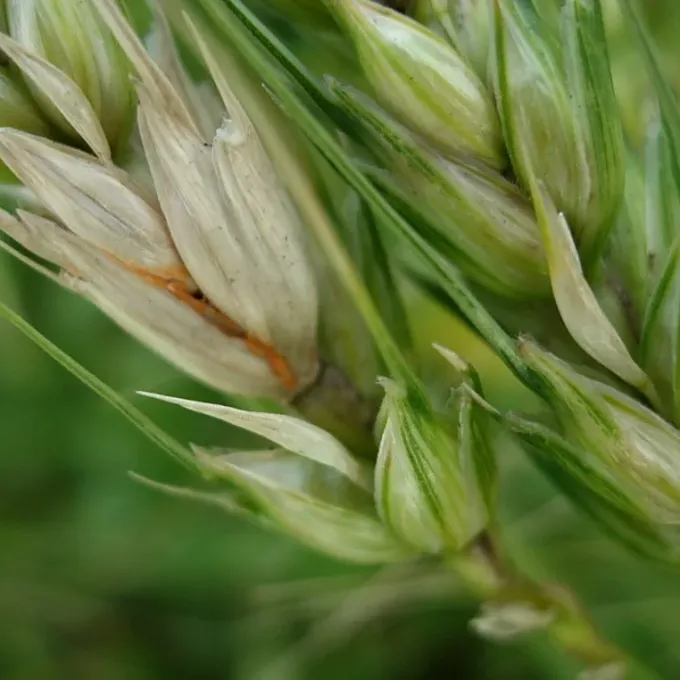
As the disease progresses, leaves turn yellow and die prematurely, significantly reducing the plant's photosynthetic area. Severe infections can spread to stems and glumes, causing widespread necrosis.
Infection of the head often leads to underdeveloped grains, grain shriveling, and a decrease in seed quality. In extreme cases, complete blackening of the spikelets or the entire ear can occur.
Visual inspections should be conducted in the early morning when humidity is high, as the bacterial signs are most visible and distinct at that time of day for accurate identification.
Pathogen
The causal agent of this disease is the bacterium Xanthomonas campestris pv. undulosa. It is a specialized pathogen that affects cereal crops, causing systemic bacterial infection of plant tissues.
The disease is classified as a bacterial blight, primarily affecting the aerial parts of plants during periods of high humidity. The pathogen colonizes the intercellular spaces of leaves, stems, and glumes.
The infection is characterized by rapid dissemination within a field. Bacteria can survive on crop residues, in seeds, and on volunteer grasses, providing a persistent source of inoculum.
The microorganism enters host tissues through natural openings like stomata or through mechanical wounds caused by rain, hail, or agricultural machinery. Once inside, it secretes enzymes that degrade cell walls.
Spread is facilitated by rain splashes, wind, and insect vectors. High plant density creates a microclimate that accelerates the movement of bacteria from one plant to another.
Conditions for development
The most critical factor for the development of the disease is high relative humidity. Frequent rainfall, fog, and heavy dew create the necessary environment for the pathogen to thrive.
The optimal temperature range for bacterial development is between 20°C and 25°C. Fluctuations in moisture combined with warm temperatures accelerate the necrotic processes within the leaf tissue.
Mechanical damage to leaves, often resulting from hail or field operations, significantly increases the plant's susceptibility by providing entry points for the bacterial infection.
Dense planting configurations reduce airflow within the crop canopy, leading to prolonged leaf wetness. This stagnant microclimate is ideal for the colonization and proliferation of the bacteria.
Infected crop debris on the soil surface is a primary source of inoculum. The bacteria can persist in the soil for several months, awaiting favorable conditions to infect the next crop cycle.
Why it matters
The primary economic impact is a substantial reduction in grain yield due to the destruction of the leaf tissue, which inhibits the plant's ability to accumulate necessary nutrients.
Grain quality is also severely compromised, with grains becoming shriveled and having reduced seed vigor. This makes the harvested product less suitable for market and lowers its overall value.
Contaminated seeds act as a vector for the disease in subsequent seasons. Using seeds from infected fields significantly increases the risk of early-season outbreaks in the following year.
Massive outbreaks during the early vegetative stages can lead to thin stands and poor plant establishment, necessitating costly interventions or replanting efforts.
The disease affects the biochemical composition of the grain, rendering it less desirable for processing. This degradation in quality leads to significant financial losses for the producer.
Protection
Effective management begins with the use of healthy, certified seeds. Treating seeds with appropriate antibacterial agents can help reduce the initial risk of seed-borne transmission.
Adherence to a robust crop rotation program is essential to break the pathogen's life cycle. Avoiding continuous planting of wheat or other susceptible cereal crops is highly recommended.
Thorough incorporation of crop residues into the soil helps accelerate the decomposition of infected matter. Controlling volunteer weeds, which may harbor the bacteria, is also vital for sanitation.
Maintaining balanced mineral nutrition, particularly adequate potassium levels, strengthens the plant's natural defenses and thickens cell walls, making them more resistant to penetration.
Regular monitoring of the fields during critical growth stages is necessary to detect outbreaks early. Minimize field operations during wet weather to avoid causing mechanical wounds that favor infection.
Pathogens and affected parts
Affects crops · 1
Discussion
No discussions yet — be the first.