
Boxwood blight
Calonectria pseudonaviculata
Description
Symptoms
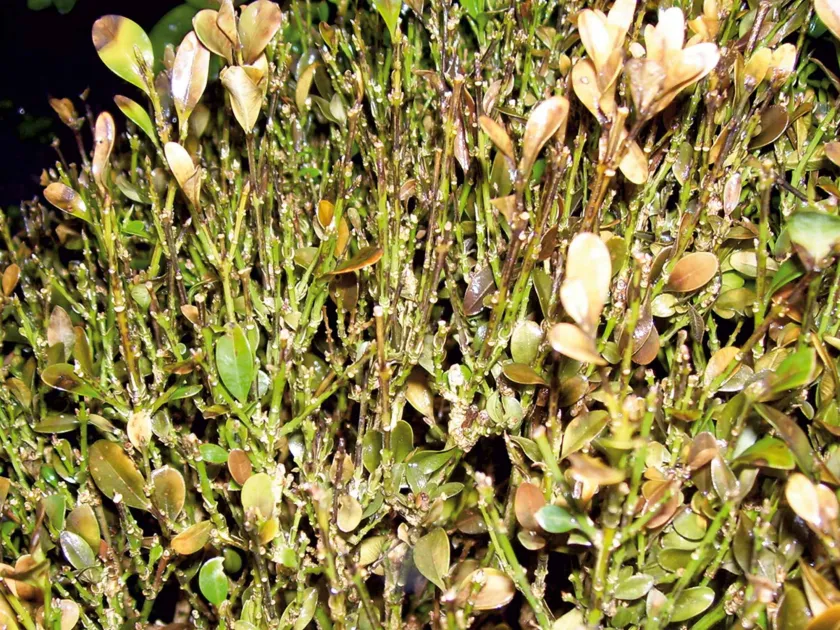
Symptoms often start as small, circular, dark brown leaf spots that rapidly expand, often with a darker margin, eventually causing large patches of necrosis.
A distinctive sign of active infection is the presence of fluffy white fungal growth, representing spores, clearly visible on the underside of infected leaves.
Dark, elongated stem lesions or black streaks appear on twigs and stems, leading to girdling, which subsequently causes the death of the distal parts of the branch.
Massive, premature leaf drop is a classic indicator of the disease, often leaving branches completely bare within a very short period of time.
Affected shrubs show a rapid decline in vigor, characterized by a transition from healthy green foliage to brown, brittle, and sparse branches.
Pathogen
The causal agent of this severe disease is the fungus Calonectria pseudonaviculata, a highly destructive pathogen that specifically targets boxwood (Buxus) species.
The fungus produces long-lived microsclerotia in the soil and on infected plant debris, which can remain viable for many years, acting as a persistent source of infection.
It reproduces through conidia, which are easily dispersed by rain splash, irrigation water, and even through contaminated tools or clothing.
This pathogen has evolved to thrive in high-humidity conditions, making it particularly devastating in regions with frequent summer rainfall.
Due to its high virulence and rapid spread, it is categorized as a significant phytosanitary threat in both commercial nurseries and private landscapes.
Conditions for development
High humidity and temperatures between 15°C and 25°C create the optimal environment for the germination and spread of the pathogen's spores.
Lack of air circulation within dense, overgrown boxwood hedges traps moisture on the leaf surface, which is essential for the fungal infection process.
Rainy seasons significantly accelerate the spread of the disease, as water droplets transport spores from the ground or lower branches to the top of the plant.
Infection is often introduced into new areas through infected nursery stock that may show no obvious symptoms at the time of purchase.
Shaded locations or areas with poor drainage are more susceptible to severe outbreaks due to the prolonged retention of moisture on foliage.
Why it matters
Boxwood blight is capable of causing total plant death, resulting in the loss of valuable specimen shrubs and historic formal garden structures.
The disease spreads with extreme speed, often turning a healthy, lush boxwood into a skeletonized, dead plant in a matter of weeks under favorable conditions.
The persistence of the fungus in the soil renders planting sites unsuitable for replanting with susceptible Buxus species for several years without extensive soil treatment.
The economic impact on the nursery industry is substantial, as entire inventories can be wiped out, leading to strict quarantine regulations for plant movement.
Beyond the immediate plant loss, the degradation of the landscape aesthetics creates a long-term management challenge for groundskeepers and homeowners.
Protection
Sanitation is the most critical control step: all infected plant material must be carefully removed and destroyed by burning or bagging—never composted.
Fungicide applications, including protective treatments like chlorothalonil or systemic ones like tebuconazole, can help manage the disease, though they are rarely curative.
Practice excellent cultural management by pruning for air circulation and avoiding overhead irrigation, which directly fuels the spread of the pathogen.
Disinfect all tools and equipment thoroughly with alcohol or bleach solutions between plants to prevent mechanical transmission of the spores.
- Purchase disease-free stock from reputable sources.
- Avoid planting Buxus in high-humidity, low-airflow areas.
- Monitor regularly during warm, humid spring and summer months.
- Establish a quarantine area for new plants before introducing them to the garden.
Discussion
No discussions yet — be the first.