
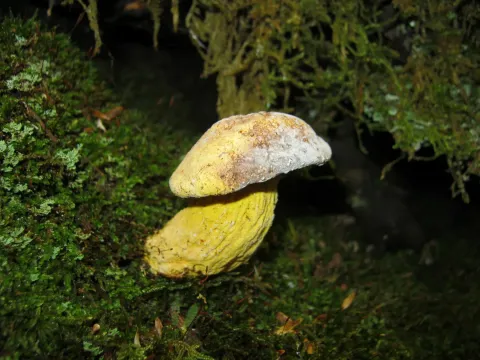
Hypomyces chrysospermus
Hypomyces chrysospermus
The first sign of infestation is a thin, white, cottony mycelium growing on the surface of the mushroom fruiting body. As the infection progresses, the growth thickens and becomes visibly distinct.
What the section contains
Hypomyces chrysospermus
A hallmark symptom is the transition of this mycelium to a bright, golden-yellow color. This pigmentation is caused by the mass production of the parasite's spores on the host surface.
In advanced stages, the infected mushroom loses its structural integrity, becoming soft and mushy. The surface often appears dusty due to the release of powdery conidia into the environment.
The mushroom may exhibit severe deformities, making it unrecognizable or completely rotten. A distinct, slightly pungent odor is frequently associated with the decomposition caused by the parasite.
Unlike natural senescence, the infection by this fungus is characterized by rapid spread and the presence of the pigmented layer, which clearly distinguishes it from normal aging processes.
The pathogen responsible is Hypomyces chrysospermus, an ascomycete fungus known as a mycoparasite. It specifically targets various basidiomycete mushrooms, particularly boletes and related species.
This fungus survives in the soil or substrate as resting spores, waiting for favorable conditions to germinate. Once it encounters a suitable host, the mycelium penetrates the mushroom's tissues rapidly.
The biology of the parasite relies on the destruction of the host's cellular walls using specialized enzymes. It effectively hijacks the host's nutrients to fuel its own growth and reproduction.
Reproduction occurs primarily through the formation of numerous conidia. These microscopic spores are highly mobile and serve as the main vehicle for the pathogen to spread to healthy neighboring mushrooms.
The fungal parasite acts as an aggressive opportunistic pathogen. Its ability to proliferate within a single mushroom fruiting body allows it to complete its life cycle in a very short duration.
High relative humidity is the most critical environmental factor for the development of the disease. Levels consistently above 80% create an optimal environment for the mycelium to thrive.
Moderate temperatures ranging from 18 to 25 degrees Celsius promote rapid fungal growth. These conditions mimic the natural forest environments where the parasite is most prevalent.
Poor ventilation leads to stagnant air and high moisture accumulation on surfaces. In mushroom farms, these conditions facilitate the rapid spread of spores throughout the facility.
Presence of water droplets on the mushrooms, often caused by improper watering techniques, acts as a primary entry point for infection. Damp conditions facilitate spore germination.
In wild settings, the infection is often triggered by sudden changes in weather, such as heavy rain followed by warmth. This creates the exact micro-climate required for the pathogen to explode in population.
The economic impact of this disease is significant for mushroom growers. Infected mushrooms lose all commercial value, and entire crops can be decimated within days if not addressed.
The parasite creates an unhealthy environment, potentially introducing other contaminants. The breakdown of tissues can attract secondary pests, further complicating the situation.
In ecological terms, the pathogen impacts wild mushroom populations, which can affect the local ecosystem and the availability of foraging resources for human and animal consumption.
The rapid spread of spores makes it difficult to manage without rigorous containment measures. A single infected area can easily compromise the entire growing facility or forest patch.
Consumers cannot use infected mushrooms as they may contain fungal toxins or degraded materials that are unfit for consumption. The resulting loss represents both time and resource waste.
Strict sanitation protocols are the foundation of controlling this pathogen. Growers must ensure that all tools and working surfaces are disinfected regularly to prevent spore buildup.
Maintaining a balanced environment is crucial. Proper ventilation is needed to lower surface moisture and prevent the stagnant air conditions favored by the parasite.
- Immediate removal and disposal of all infected specimens.
- Sterilization of substrates and casing materials.
- Restricting access between contaminated and clean growing areas.
- Installing filtration systems to prevent airborne spore entry.
- Applying specific, approved fungicides under strict management guidelines.
Early monitoring allows for the isolation of infected blocks before the parasite reaches the sporulation phase. Rapid containment is the best way to minimize overall damage.
A multifaceted approach combining physical removal and climate management remains the most reliable strategy. Frequent inspection of the growing environment is essential for prevention.