
Hypomyces viridis
Hypomyces viridis
Description
Symptoms
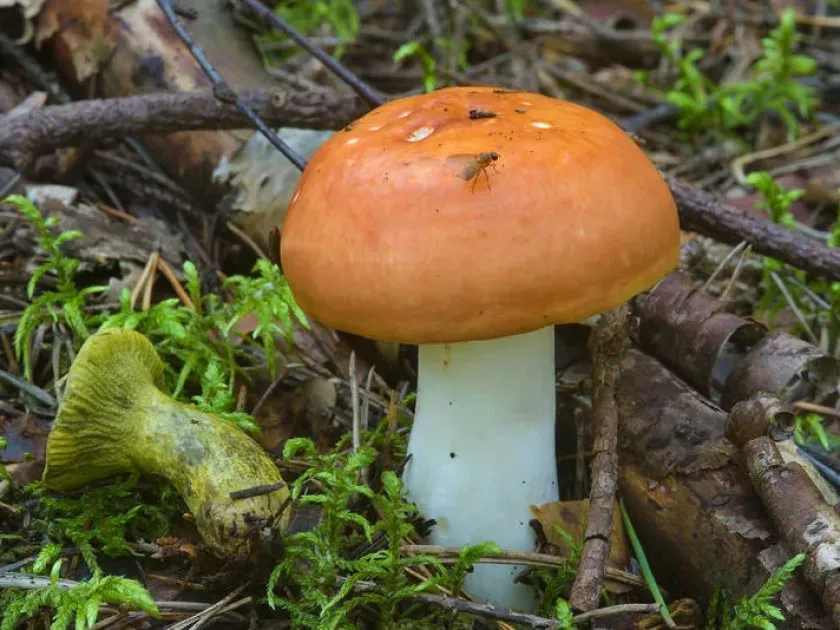
The most distinctive sign of Hypomyces viridis infection is the appearance of a bright green or olive-colored coating on the surface of the host mushroom. This layer consists of the fungus's mycelium and emerging perithecia.
Affected tissues lose their natural firmness and texture, becoming soft, spongy, and often emitting an unpleasant odor indicative of advanced tissue degradation.
As the infection progresses, the surface of the mushroom takes on a granular, dotted appearance, which is caused by the formation of the perithecia in the dense mycelial mat.
The shape of the host mushroom frequently becomes deformed or stunted, as the parasitic growth interferes with the normal development of the cap and gills.
Severe infestations often result in the total transformation of the mushroom into a shapeless, green-colored mass, clearly marking it as unsuitable for any culinary purpose.
Pathogen
Hypomyces viridis is a specialized mycophilic fungus belonging to the Ascomycota division. Unlike most plant pathogens, this fungus exclusively targets other fungi, acting as a parasite upon their fruit bodies.
The fungus produces a sexual stage known as teleomorph, characterized by the development of perithecia on the surface of the host mushroom. These structures are responsible for the production and dispersal of ascospores.
The pathogen colonizes the hyphae of the host, systematically breaking down its biological structure to extract nutrients for its own reproduction.
The primary hosts for this species include members of the Russula and Lactarius genera, which are common forest mushrooms, making it a well-known phenomenon in mycological studies.
The rapid life cycle of this pathogen allows it to dominate the surface of a host mushroom within a few days when environmental conditions are suitable for its growth.
Conditions for development
The proliferation of Hypomyces viridis is heavily dependent on high ambient humidity and moderate temperatures, typically occurring after heavy or prolonged rainfall.
High moisture levels (often above 85% relative humidity) facilitate the germination of spores and the subsequent rapid colonization of the host's surface.
The optimal temperature range for the development of this parasite is between +15°C and +22°C, which coincides with the primary fruiting season of many forest mushroom species.
Dense clusters of mushrooms in forest areas increase the likelihood of rapid cross-infection, as spores are easily transmitted by water droplets, insects, or physical contact.
Poorly ventilated forest microclimates or stagnant air conditions contribute to the accumulation of spores and the successful establishment of the parasite on new host mushrooms.
Why it matters
The primary economic impact of this fungus is the destruction of edible mushroom crops, rendering them worthless for foraging and commercial trade.
By degrading the tissue of wild mushrooms, the parasite reduces the overall quality of forest yields and can make it difficult for foragers to find healthy specimens in a localized area.
From an ecological perspective, persistent colonization may disrupt the host's reproductive success, as the parasite consumes the resources intended for spore production.
Consumption of mushrooms infected with Hypomyces viridis is strictly discouraged due to the risk of toxicity from secondary metabolites produced by the pathogen during the decay process.
Furthermore, in agricultural or artificial cultivation settings, this pathogen can cause significant financial losses if hygiene protocols are breached and the fungus spreads across the beds.
Protection
Managing Hypomyces viridis in wild environments is primarily based on preventive foraging habits rather than chemical intervention, which is not feasible in forests.
Foragers are advised to exercise caution and avoid collecting any mushrooms that display abnormal coloring, unusual texture, or signs of decay.
- Discarding infected specimens away from the site to prevent further spore distribution.
- Ensuring clean tools and containers are used during mushroom harvesting.
- Avoiding the collection of mushrooms in swampy areas during humid weather.
In indoor cultivation, control is achieved through strict environmental management, including adequate ventilation to prevent condensation on fruit bodies.
Regular sanitation of the cultivation environment is essential to eliminate reservoirs of spores and to keep the substrate free from opportunistic mycophilic parasites.
Discussion
No discussions yet — be the first.